




Attraction Spell: A Seven-Night Candle Ritual That Draws Love Without Forcing It
What an attraction spell is, where the line sits between drawing love and forcing it, what research on attraction actually supports, and a seven-night pink candle ritual you can do yourself, with one real step toward people each day.


Most people who search for an attraction spell are not looking for magic tricks. They are lonely, or newly single, or tired of being overlooked, and they want something to change. We write and perform rituals for a living, under our own names, so here is the guide we would give a friend: what an attraction spell is, where the line sits between drawing love and forcing it, what the research on attraction actually supports, and a seven-night candle working you can do yourself.
Contents
An attraction spell is a ritual meant to draw love, affection or attention toward you. The traditional version uses a pink or red candle, rose, a written petition and a waxing moon or a Friday. The version we teach is aimed at you and your openness, not at a named person, because a spell aimed at someone's will crosses a consent line. No controlled study has tested an attraction spell, and the famous finding that the color red makes people more attractive did not hold up in preregistered replications. What research does support is plainer: people come to like those they see often, those who seem to like them, and those who approach. A good attraction spell pairs the candle with one real step toward people each night.
Students rated women who had simply attended a lecture more often, without speaking to anyone, as more familiar, attractive and likable than women who had attended less.
Source/tradition: Moreland & Beach (1992), Journal of Experimental Social Psychology 28(3), 255-276
People led to believe that a partner liked them disclosed more and acted more warmly, and their partners then liked them more.
Source/tradition: Curtis & Miller (1986), Journal of Personality and Social Psychology 51(2), 284-290
At speed-dating events where women moved between tables and men sat, the usual sex difference in romantic selectivity disappeared; approaching was linked to greater confidence.
Source/tradition: Finkel & Eastwick (2009), Psychological Science 20(10), 1290-1295
A meta-analysis of the red-attractiveness effect found a small average effect across 41 sources, while the authors' own preregistered replications found effects near zero.
Source/tradition: Lehmann, Elliot & Calin-Jageman (2018), Evolutionary Psychology 16(4)
The FTC received more than 64,000 romance-scam reports in 2023, with reported losses of about $1.14 billion and a median loss of $2,000.
Source/tradition: Federal Trade Commission, 'Love Stinks' when a scammer is involved, February 13, 2024
Ancient Greek love magic divided into agoge spells that led a specific person to the caster and philia spells that kept or increased existing affection.
Source/tradition: Faraone (1999), Ancient Greek Love Magic
Pink and red candles, rose, Queen Elizabeth root, lodestones, Friday and the waxing moon are the customary correspondences for attraction work.
Source/tradition: Hoodoo and 20th-century American candle magic (Yronwode 2002); European planetary tradition
Pairing each candle night with one small real action toward other people, and keeping a log, turns an attraction spell into something you can review after a month.
Source/tradition: Temple of Desire practice
A petition written in the present tense about your own openness works better in practice than one that names another person.
Source/tradition: Temple of Desire practice
That an attraction spell, a candle color or a moon phase draws love or changes how attractive others find you has not been shown in any controlled study.
Source/tradition: No controlled studies exist
VERIFIED = verifiable in scientific or official sources · TRADITIONAL = historically or culturally recorded · LIVED PRACTICE = widely practiced, experiential knowledge · NOT PROVEN = spiritual interpretation, not scientifically established.
Quick answer
An attraction spell is a ritual meant to draw love, affection or attention toward you. The traditional version uses a pink or red candle, rose, a written petition and a waxing moon or a Friday. The version we teach is aimed at you and your openness, not at a named person, because a spell aimed at someone's will crosses a consent line. No controlled study has tested an attraction spell, and the famous finding that the color red makes people more attractive did not hold up in preregistered replications. What research does support is plainer: people come to like those they see often, those who seem to like them, and those who approach. A good attraction spell pairs the candle with one real step toward people each night.
What an attraction spell is, and what it is not
"Attraction spell" is used for three quite different workings. Knowing which one you mean decides almost everything else, from the candle to the wording to whether we would help you with it at all.
| Drawing love in general | Drawing attention | Drawing one named person | |
|---|---|---|---|
| What you ask for | Love that is free to find you, from someone you have not met yet or have not noticed | To be seen: on a date, at work, in a room where you usually fade out | That a specific person wants you, calls you or comes back |
| Whose will it works on | Yours: your openness, your habits, where you go | Yours: how you carry yourself, closer to glamour work | Theirs, which is the problem |
| Traditional tools | Pink or red candle, rose, a petition, a Friday | Mirror, oil on the skin, a candle before going out | Name papers, personal items, figure candles |
| Our position | Yes, and this guide teaches it | Yes, see our piece on glamour magic | No, for the reasons in love spells and consent |
The first two columns are what most people need. The third is what most people search for at two in the morning, and it is where nearly all the money in the love-spell business is made. We will come back to that.
Where attraction magic comes from
Ancient Greece. The classicist Christopher Faraone, in Ancient Greek Love Magic (1999), sorted the surviving material into two broad families. Agoge spells, "leading" spells, were meant to drag a particular person to the one who cast them, often with images of burning and sleeplessness, and were mostly worked by men. Philia spells were gentler: ointments, knotted cords and charms meant to keep or increase affection that already existed, and were more often used by women. The split between pulling a person and warming a bond is more than two thousand years old. It is the same split as in the table above.
The spinning wheel. In the second Idyll of Theocritus, written in the 3rd century BC, a young woman named Simaetha spins a bronze wheel, the iynx, while she burns barley, bay leaves and a wax figure to bring her lover back. The poem is beautiful and also a little frightening, because she is not asking whether he wants to come. (The same word later gave English "jinx", which we traced in hex vs. curse vs. jinx.)
American folk magic. In hoodoo and in 20th-century American candle magic, attraction work gathers around a recognizable kit: red or pink candles, rose petals and rose oil, Queen Elizabeth root and Adam and Eve root, lodestones fed with magnetic sand, and dressing oils with names like "Come to Me" or "Attraction." Catherine Yronwode's Hoodoo Herb and Root Magic (2002) documents most of these. The planetary tradition adds Friday, the day of Venus, which you can still hear in the Romance languages: vendredi, venerdì, viernes.
None of that history tells you whether the spell works. It tells you that people have always wanted to be loved, have always reached for fire and flowers when they felt unseen, and have always argued about whether it is fair to aim that wish at somebody in particular.
What research says about attraction
No controlled study has ever tested an attraction spell. What has been studied, very thoroughly, is attraction itself. Four findings matter here, and one of them is a cautionary tale.
1. Familiarity breeds liking. In a 1992 study by Richard Moreland and Scott Beach, four women of similar appearance attended a large college lecture zero, five, ten or fifteen times during a semester. They never spoke to anyone. At the end, students rated photos of them, and the more often a woman had simply been in the room, the more attractive and likable she was rated. Being present, repeatedly, does real work.
2. We like people who seem to like us. In a 1986 experiment, Rebecca Curtis and Kim Miller led some participants to believe that their conversation partner liked them. Those participants disclosed more, disagreed less and spoke more warmly, and their partners ended up liking them more. The expectation shaped the behavior, and the behavior shaped the result.
3. The one who approaches feels more confident and chooses more freely. In speed-dating research published in Psychological Science in 2009, Eli Finkel and Paul Eastwick switched the usual setup so that at some events the women moved from table to table while the men sat. The well-known finding that women are pickier than men disappeared when women were the ones moving, and the authors traced the effect partly to the confidence that comes with approaching. Moving toward people changes how you feel in the encounter.
4. The red dress effect that faded. In 2008, Andrew Elliot and Daniela Niesta reported that men rated women as more attractive when they were shown on a red background or in red clothing. It became one of the most quoted findings in attraction research, and it is the reason so many love spells insist on red. A 2018 meta-analysis, co-written by Elliot himself, still found a small average effect across 41 sources, but it also reported the authors' own preregistered replications, and those found essentially nothing: effects between −0.11 and 0.10, in both directions of rating. Our reading is that if red has any effect on attraction, it is small and unreliable. Choose your candle color for its meaning to you, not because science said red works.
Put those together and an honest picture appears. Nothing in the literature shows that a candle draws love at a distance. A great deal shows that being present, expecting warmth and making the first move change what happens between people. A good attraction spell is built so that it pushes you toward exactly those three things. That is not a disappointing answer. It is the part you can control.

If you want a working written for your situation
The seven-night spell below is a sound general version, and many people need nothing more. If your situation has more layers, say you are coming out of a long marriage, you keep choosing the same kind of person, or you want the working tied to a date that matters to you, there is Personal Magic Ritual. You tell Leif Daniel in your own words what is going on and what you hope for. He writes a ritual for you alone, with materials, wording, timing and the steps you take between the candle nights, and sends it to you as a PDF guide that you then carry out yourself. Temple of Desire is a small family business, his real name is on the work, and the price is fixed before you begin. He will not write a working aimed at a named person's will, he does not promise that anyone will fall in love with you, and a ritual does not replace therapy or medical care.
$197, one time: written for you, done by you, no outcome promised
See how Personal Magic Ritual worksBefore you light anything: the name test
Ask yourself one question: is there a name in this spell? If the petition says "let Jordan want me" or "make him call me," you are not doing an attraction spell anymore, you are trying to override another person's choice. Our longer piece on love spells and consent explains why we refuse that work, and our guide to binding spells covers the related practice of tying a person to you.
There is also a practical reason, apart from ethics. A spell built around one person keeps your attention on that person: checking their messages, reading their silences, waiting. Every finding in the section above points the other way. Attraction grows where you show up, expect warmth and approach, and that is very hard to do while you are watching one phone.
If there is someone specific you like, the respectful version is simple. Work the spell for your own openness and courage, then talk to them. What they do next is theirs.
What you need
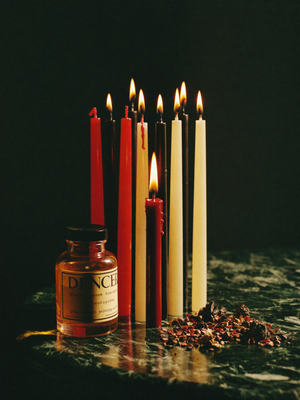
- A candle. Pink is the traditional color for tender, new or self-directed love. Red is the color of passion and desire. White works for anything. A small chime candle or a taper that you can burn a little each night is ideal. Our guide to candle color meanings goes deeper.
- A rose. One fresh rose or a handful of dried petals. Rose is the oldest and most widespread love plant in Western folk magic.
- A dressing oil (optional). Plain olive or almond oil with a pinch of dried rose or a drop of rose oil is enough. If you have never done it, see how to dress a candle with oil.
- A small stone (optional). Rose quartz is the modern favorite, a lodestone the older hoodoo choice.
- Paper and pen for the petition, and a notebook for the seven-night log.
- A fireproof dish and a spot where the candle can burn safely while you are in the room.
That is all. If someone tells you an attraction spell needs a rare root, a blessed candle shipped from abroad or a $300 "activation," you are reading a sales pitch, not a tradition.
Writing the petition
The petition is the most important part of the spell, because it is the only part that says what you actually want. Write it by hand, in the present tense, about yourself. Three lines are enough:
- What you are open to. "I am open to love that is freely given and good for me."
- What you are letting go of. "I let go of hiding, waiting and expecting to be overlooked."
- What you will do. "This week I will go where people are and speak first."
Compare that with the most common first draft: "Bring me my soulmate now." It names no action, sets a deadline you cannot meet and quietly assumes that love will arrive while you stay home. It is not wrong to want that. It is just not a petition you can work with. Our guide on how to write a petition paper has more examples and the traditional folds.
The seven-night attraction spell, step by step
This working follows a widely used pattern: one candle, burned in seven short sessions, with the same words each night and one small real action each day. It is designed to be done alone, at home, in about fifteen minutes a night.
The seven nights
- Night one: prepare. Wash your hands, clear a small space and set out the candle, rose and stone. Read your petition aloud once. Dress the candle with a little oil, stroking from the middle toward you, the traditional direction for drawing something in.
- Light and speak. Fold the petition toward you and set it under the candle holder. Light the candle and say your three lines. Then sit for a few minutes and picture an ordinary, specific scene: you laughing at a table with someone new, you saying yes to an invitation. Keep the scene small and believable.
- Name tomorrow's step. Before you put the candle out, say aloud one thing you will do tomorrow. Write it in your log. Snuff the candle rather than blowing it out.
- Nights two to six: repeat. Relight, read the petition, sit with the scene and name the next day's step. Add a rose petal to the dish each night.
- Days two to six: do the step. Small and real: reply to the message you have been ignoring, join the class, go to the event alone, update the dating profile with a recent photo, start a conversation with someone you see every week. Note in the log what you did and how it felt.
- Night seven: finish. Let the candle burn down while you are present. Read your log from the week aloud. Thank whatever you pray to, or simply say "it is done."
- Close. Keep the petition in a drawer or a small pouch with a few dried petals. Return the rest of the petals to the earth or a garden. Keep doing one step a week for the next month.
The daily step is not an add-on. Remember Moreland and Beach: the women who were simply present more often were liked more. The candle marks your intention. The steps put you where attraction can actually happen.
When to do it
Tradition gives attraction work to the waxing moon, the two weeks between new and full, when things are said to grow, and to Friday, the day of Venus. A Friday during a waxing moon is the classic starting point. If you are working on self-worth rather than on meeting people, some practitioners prefer the new moon itself. Our guide to the best time for a spell covers moon phases, days and hours. No study shows that timing changes results. Its practical value is that it gives you a start date and stops you from putting it off.
How to tell whether it is working
People often watch for omens after an attraction spell: a song on the radio, a stranger's smile, a dream. Those moments can be lovely, but they are not evidence, and reading signs can turn into the same anxious checking the spell was meant to end.
A better measure is in your log. After four weeks, look at three numbers: how many new people you spoke to, how many invitations you accepted, and how many times you made the first move. If those went up, the spell did its job, whatever happens next. If you feel lighter, less invisible and more willing to be seen, that matters too. Love itself depends on another person, and nobody can schedule that, but you can make it far more likely that you are in the room when it happens.
If you have done the work and felt nothing during the ritual, that is common and not a sign of failure. See felt nothing during a ritual.
Why attraction spells fizzle
- The spell replaces the step. The candle burns, the evenings stay the same and nothing changes. This is by far the most common reason.
- A name sneaks in. The petition is general, but every night you picture the same person. The working quietly becomes a waiting game.
- Repeating the spell every few days. Doing it over and over because nothing has happened yet is usually a sign of anxiety, not of practice. Give one working a month.
- Asking for proof instead of change. "Send me a sign" is not something you can act on. "Help me speak first" is.
- Working from self-dislike. If the honest petition is "make someone love me so I can stand myself," start with a self-love spell first. It is a different working, and often the right one.
When an attraction spell is the wrong tool
Some situations need more than a candle, and we would rather say so plainly.
- If loneliness has turned into hopelessness, or you are thinking about not wanting to be here, please reach out to a person now. In the US you can call or text 988, the Suicide & Crisis Lifeline.
- If you cannot stop thinking about one person who has told you no or stopped responding, an attraction spell will feed the loop. Talking to a counselor helps more than any ritual.
- If someone you want back hurt you, that is a safety question first. The National Domestic Violence Hotline is 1-800-799-7233.
- If anxiety in social situations is stopping you from leaving the house, that is treatable, and a therapist can help. A ritual can sit alongside that work, but it does not replace it.
The attraction-spell scam
Love work is the largest single market for fake spell casters, and it follows a recognizable script. The ad promises that a specific person will "come back in 24 hours." The first spell is cheap. Then the caster reports a problem: a rival's curse, a blockage in your aura, a spirit that needs a bigger offering. Each fix costs more. Payment is requested by gift card, wire, crypto or payment app. When you hesitate, you are told that stopping now will make things worse.
This is not a fringe problem. The Federal Trade Commission recorded more than 64,000 romance-scam reports in 2023, with reported losses of about $1.14 billion and a median loss of $2,000 per person. In Florida, the psychic Rose Marks was convicted on all fourteen federal counts in 2013 in a scheme of about $25 million, much of it from clients who were told their love lives were cursed.
The red flags are consistent:
- A promise that a named person will return, call or fall in love, especially with a deadline
- A price that rises after you share your story, or a second problem discovered after you pay
- Payment only by gift card, wire, crypto or payment app
- No real name, no address, no business behind the work
- Pressure, secrecy or warnings that something bad will happen if you stop
Our guides on how to spot a fake spell caster and how much a spell should cost go through this in detail.
What we do not promise
We do not promise that anyone will fall in love with you, return to you or call you. We do not write or perform workings aimed at a named person's will. We do not claim that a candle, a color or a moon phase has been shown to change attraction, and we label tradition as tradition. What we can say is that an attraction spell done this way gives you a clear intention, a month of small steps toward people and a record of what you did. That is a real thing to walk away with, whatever the next person decides.
Frequently asked questions
Do attraction spells work?
No controlled study has tested an attraction spell, and nothing shows that a candle draws love at a distance. Research on attraction does show that people come to like those they see often, those who seem to like them and those who approach. An attraction spell that pairs the ritual with one real step toward people each day uses exactly those effects.
What color candle is best for an attraction spell?
Tradition uses pink for tender, new or self-directed love, red for passion and desire, and white for anything. The popular claim that red makes people more attractive did not hold up in preregistered replications, so choose the color that means something to you rather than the one that promises a result.
Can I cast an attraction spell on a specific person?
We advise against it and do not write such workings. A spell aimed at a named person tries to override their choice, which is a consent problem, and it keeps your attention on waiting for one person. Work the spell for your own openness and courage, then talk to the person directly.
When is the best time to do an attraction spell?
Tradition favors the waxing moon, between new and full, and Friday, the day of Venus. A Friday during a waxing moon is the classic start. No study shows that timing changes results; its practical value is that it gives you a fixed start date.
How long does an attraction spell take to work?
Give one working a full month before judging it, and measure what you can see: how many new people you spoke to, how many invitations you accepted and how often you made the first move. Be wary of anyone who promises that a person will come to you within days.
Sources & further reading
- Moreland, R. L. & Beach, S. R.: "Exposure Effects in the Classroom: The Development of Affinity Among Students", Journal of Experimental Social Psychology 28(3), 255 to 276, 1992
- Curtis, R. C. & Miller, K.: "Believing Another Likes or Dislikes You: Behaviors Making the Beliefs Come True", Journal of Personality and Social Psychology 51(2), 284 to 290, 1986
- Finkel, E. J. & Eastwick, P. W.: "Arbitrary Social Norms Influence Sex Differences in Romantic Selectivity", Psychological Science 20(10), 1290 to 1295, 2009
- Elliot, A. J. & Niesta, D.: "Romantic Red: Red Enhances Men's Attraction to Women", Journal of Personality and Social Psychology 95(5), 1150 to 1164, 2008
- Lehmann, G. K., Elliot, A. J. & Calin-Jageman, R. J.: "Meta-Analysis of the Effect of Red on Perceived Attractiveness", Evolutionary Psychology 16(4), 2018
- Faraone, C. A.: Ancient Greek Love Magic, Harvard University Press, 1999
- Theocritus: Idyll 2, "The Sorceress," 3rd century BC
- Yronwode, C.: Hoodoo Herb and Root Magic, Lucky Mojo Curio Company, 2002
- Federal Trade Commission: "'Love Stinks' when a scammer is involved", February 13, 2024; Consumer Advice: "How To Avoid a Scam"
- U.S. Attorney's Office, Southern District of Florida: "Jury Convicts Defendant in $25 Million Fraud Scheme", September 2013
- 988 Suicide & Crisis Lifeline: call or text 988 · National Domestic Violence Hotline: 1-800-799-7233
More from Practical Magic & Rituals
All stories →
Fast Luck Oil: Meaning, History, Ingredients and How to Use It


Seven Knob Candle: Meaning, Colors and How to Burn One Knob a Day

