Collection: Fine & Collector Minerals
Fourteen collector-grade specimens with documented localities — Elmwood fluorite, Pune cavansite, Brazilian watermelon tourmaline, Bolivian amethyst. Crystal faces intact, matrix attached, condition stated.
In short: A collector mineral is bought for locality and condition, not carat weight. Look at the back of the specimen before you look at the price.
-
Lithium Quartz Cluster — 7.55 kg Brazilian Specimen for Calm
Regular price $1,225.95Regular priceUnit price / perSale price $1,225.95 -
Cavansite with Stilbite — Fine Mineral Specimen from Pune, India
Regular price $6,129.95Regular priceUnit price / perSale price $6,129.95 -
Elmwood Fluorite Cluster — 20.4 kg Purple Cubes with Sphalerite
Regular price $4,290.95Regular priceUnit price / perSale price $4,290.95 -
Bolivian Amethyst Cluster — 79.7 lb Collector Specimen
Regular price $7,968.95Regular priceUnit price / perSale price $7,968.95 -
Blue Indicolite Tourmaline on Matrix — Nuristan, Afghanistan Specimen
Regular price $919.95Regular priceUnit price / perSale price $919.95 -
Amethyst Stalactite Geode Sculpture — Rare Polished Statement Piece
Regular price $551.95Regular priceUnit price / perSale price $551.95 -
Botryoidal Pink Opal from Peru — Soft-Pink Collector Mineral Specimen
Regular price $73.95Regular priceUnit price / perSale price $73.95 -
Amethyst & Dogtooth Calcite Geode — Rare Collector Statement Sculpture
Regular price $858.95Regular priceUnit price / perSale price $858.95 -
Amethyst Geode Sculpture — Polished-Edge Statement Crystal for Altar & Home
Regular price $159.95Regular priceUnit price / perSale price $159.95 -
Indicolite Tourmaline Specimen — Rare Blue Collector Crystal from Africa
Regular price $91.95Regular priceUnit price / per$135.00Sale price $91.95Sold out -
Watermelon Tourmaline on Albite Matrix — Brazilian Collector Specimen
Regular price $612.97Regular priceUnit price / perSale price $612.97 -
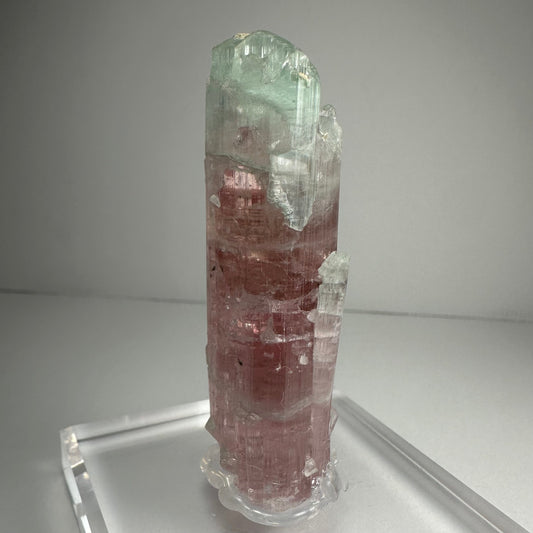
Watermelon Tourmaline Crystal — Brazilian Bicolor Specimen, 36 g
Regular price $1,961.95Regular priceUnit price / perSale price $1,961.95 -
Watermelon Tourmaline — Brazilian Bicolor Collector Crystal, 24 g
Regular price $3,677.95Regular priceUnit price / perSale price $3,677.95 -
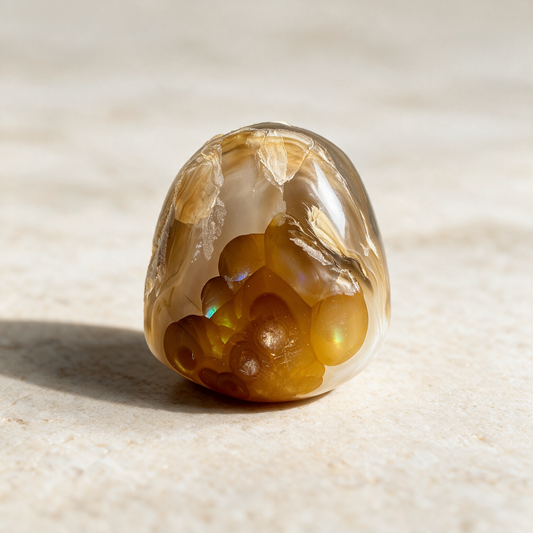
Fire Agate Specimen — Iridescent Collector Mineral, 9 g
Regular price $134.95Regular priceUnit price / perSale price $134.95
How to buy a collector mineral
A collector mineral is not a tumbled stone with a nicer price tag. It is a specimen that came out of the ground in a shape worth keeping — crystal faces intact, matrix attached, the locality known and recorded. What you are paying for is that survival. Most crystals that form underground are broken by the same forces that made them, or by the mining that finds them. The few that reach daylight with their terminations undamaged and their host rock still holding them are a tiny fraction of what was dug, and that fraction is what this collection is.
What actually sets the price
Four things, in roughly this order. Locality comes first: a fluorite from the Elmwood mine in Tennessee or a cavansite from Wagholi near Pune carries a premium a visually similar stone from an unnamed source will never reach, because those pockets are finite and in several cases closed for good. Damage comes second — a single chipped termination on a front-facing crystal can halve a specimen’s value, which is why condition is described here in words rather than photographed around. Color and clarity come third: bicolor watermelon tourmaline with a clean line between pink and green, amethyst that holds deep purple to the tips instead of fading to gray. Size comes last, and only within a locality — a small Afghan indicolite outranks a large common amethyst every time.
Reading a specimen before you buy
Look at the back. A specimen photographed only from the front usually has a reason. Find the contact point where it was removed from the pocket wall — a clean natural break there is normal and not a fault, but a sawn base is a trim or a repair and should be stated outright. Check whether crystals sit on the matrix or have been glued back onto it; reattachment is common in the trade and perfectly acceptable when disclosed, ruinous to value when it is not. Then think about weight before you think about the shelf: the pieces here run from a nine-gram fire agate to a 79.7 lb amethyst, and the heavy end needs a floor.
Which specimen for which collector
All fourteen pieces in this collection, with the locality as it is documented and the practical scale. Where a source was not recorded by the dealer we chain from, it says so — an invented locality is worse than an honest gap.
| Specimen | Locality | Scale | What it is |
|---|---|---|---|
| Cavansite with Stilbite | Wagholi, Pune, India | Cabinet | Vivid blue rosettes on a zeolite matrix — the classic Indian cavansite association |
| Elmwood Fluorite Cluster | Elmwood Mine, Tennessee, USA | 20.4 kg, floor or plinth | Purple cubes with sphalerite from a locality that no longer produces |
| Bolivian Amethyst Cluster | Bolivia | 79.7 lb, floor | Deep purple that holds color to the tips; the largest piece here |
| Blue Indicolite Tourmaline on Matrix | Nuristan, Afghanistan | Cabinet | Blue tourmaline still seated on its host rock — rarer than a loose crystal |
| Indicolite Tourmaline Specimen | Africa | Thumbnail | A loose blue tourmaline; the least expensive way into indicolite here |
| Watermelon Tourmaline | Brazil | 24 g | Bicolor crystal with a clean line between pink core and green rind |
| Watermelon Tourmaline Crystal | Brazil | 36 g | The largest of the three loose watermelon crystals |
| Watermelon Tourmaline on Albite Matrix | Brazil | 51 g | Bicolor tourmaline on white albite — the association, not just the crystal |
| Lithium Quartz Cluster | Brazil | 7.55 kg | A large lilac-toned quartz cluster; a shelf piece with real presence |
| Amethyst Stalactite Geode Sculpture | Not stated | Statement | A geode cut around a stalactite core, polished at the edge |
| Amethyst & Dogtooth Calcite Geode | Not stated | Statement | Two minerals in one pocket — sharp calcite crystals sitting in amethyst |
| Amethyst Geode Sculpture | Not stated | Shelf | The most affordable polished-edge amethyst geode in the collection |
| Botryoidal Pink Opal | Ica, Peru | Thumbnail | Soft pink grape-like botryoidal form; the only piece here stocked in depth |
| Fire Agate Specimen | Not stated | 9 g, thumbnail | Iridescent play of color from thin silica layers, not from dye |
If this is your first collector piece, start small and undamaged rather than large and compromised: the Peruvian pink opal and the fire agate are the two thumbnails here, both cheap enough to learn on and both with their form intact. If you want one piece that changes a room, that is the Bolivian amethyst or the Elmwood fluorite — and both need a floor plan before they need a credit card.
Living with one
Keep amethyst, fluorite and rose quartz out of direct sunlight; all three fade, and fluorite fades fastest. Dust with a soft dry brush rather than a cloth, which snags and can lever on crystal points. Never put a specimen with attached matrix into water — the rock behind the crystals is often softer than the crystals and can crumble, and clay-filled pockets turn to mud. Avoid sudden temperature changes: quartz that has spent a winter in a cold room and meets hot tap water can crack along an invisible flaw. These stones are traditionally used as focal points for meditation and altar work, and a large specimen does change how a room feels. Any effect beyond that is not scientifically established.
From the Desire Diaries
- Real vs. Treated Crystals: How to Tell What You’re Actually BuyingHeat, dye and irradiation, explained
- Which Crystals Cannot Go in Water (and Why the Mohs Rule Fails)Before you rinse anything with matrix
- What It Means When a Crystal Breaks — and Why It Actually HappenedChips, cleavage and thermal shock
- Which Crystals Fade in Sunlight (and Why They Do It)Where not to put an amethyst geode
- Amethyst Meaning: History, Symbolism and How to Work With ItThe stone behind four pieces here
Read more on crystals and stones in the magazine
Frequently asked questions
What makes a mineral specimen valuable?
Four things, in roughly this order: locality, condition, color and clarity, then size. A named pocket that is finite or closed carries a premium a visually similar stone from an unnamed source will never reach. Damage counts against a specimen hard — a single chipped termination on a front-facing crystal can halve its value. Size matters last, and only within a locality: a small Afghan indicolite outranks a large common amethyst.
What does “on matrix” mean?
The crystals are still attached to the host rock they grew on. Matrix specimens are generally more prized than loose crystals of the same quality, because the association is harder to preserve through mining and shipping and it shows how the piece actually formed.
How can you tell if a mineral specimen is natural or treated?
Ask for the locality first. In the wider market, heat treatment is routine for some amethyst and citrine, dyeing is common in agate, and irradiated “blue” quartz turns up constantly. A seller who cannot tell you where a piece came from usually cannot tell you what was done to it either. The specimens in this collection are natural and their source region is named on the product page where it is known.
Is a collector mineral a good investment?
Fine specimens from closed localities have historically held value well, but minerals are an illiquid market with no index, wide spreads and slow resale. Buy a specimen because you want to look at it every day, and treat any appreciation as a bonus rather than a plan. This is not financial advice.
How should a large geode or cluster be displayed?
On a low, stable, level surface, away from a radiator and out of direct sunlight. Large geodes are top-heavy and their weight sits in the base; a shelf rated for books is not rated for twenty kilos of quartz. The Bolivian amethyst here is 79.7 lb and belongs on a floor or a plinth, not on furniture.
Can I clean a mineral specimen with water or salt?
A soft dry brush, and nothing else, is the safe answer. Water is risky wherever there is matrix, clay in the pockets or a soft mineral such as selenite or calcite, and salt is corrosive to a long list of them. Never soak a specimen with attached host rock — the rock behind the crystals is often softer than the crystals and can crumble.
Do these specimens come with locality information?
Where the source is known, yes — from Wagholi near Pune to Nuristan to Minas Gerais to the Elmwood mine in Tennessee. It is stated on the product page. Where a locality is not documented, we say so rather than guessing, because an invented locality is worse than none.