Collection: Crystal Carvings & Skulls
Eleven carved stone forms — skulls, serpents, yoni eggs, a fluorite dodecahedron, a malachite bowl. Hand-finished from natural stone, from $15.99.
In short: A carving gives a working object a face. Match the stone's hardness to whether it will live in your hand or on a shelf.
-
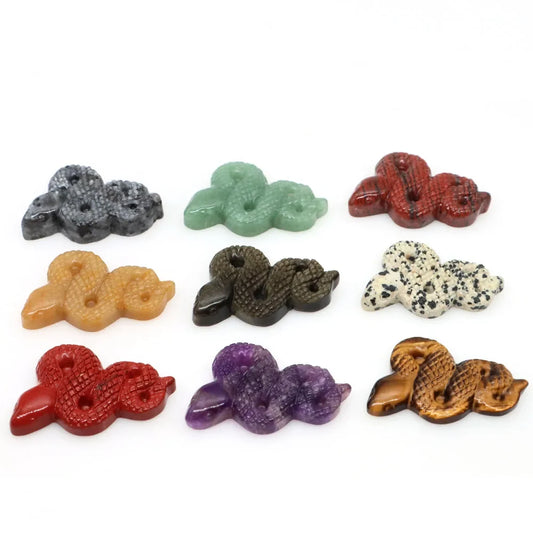
Crystal Snakes — Carved Gemstone Serpents for Transformation
Regular price $18.95Regular priceUnit price / perSale price $18.95 -
Crystal Skulls — Carved Gemstone Memento Mori for Your Altar
Regular price $19.95Regular priceUnit price / perSale price $19.95 -
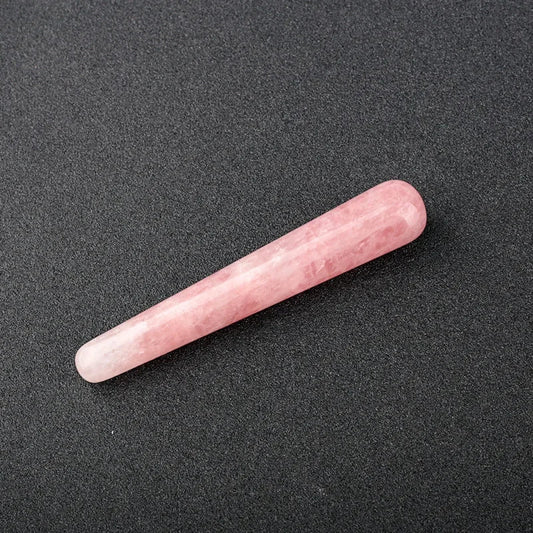
Crystal Massage Wands — Smooth Gemstone Roller for Face & Body
Regular price $26.95Regular priceUnit price / perSale price $26.95 -
Crystal Yoni Eggs — Hand-Carved Gemstone Eggs for Intention Work
Regular price From $26.95Regular priceUnit price / perSale price From $26.95 -
Crystal Cauldron — Carved Gemstone Cauldron & Crystal Ball Stand
Regular price $19.95Regular priceUnit price / per$19.99Sale price $19.95Sale -
Purple Fluorite Skull — Carved Crystal Skull for Focus & Clarity
Regular price $73.95Regular priceUnit price / perSale price $73.95 -
Polished Pyrite Sphere, Egg & Heart — Golden Abundance Stone from Peru
Regular price From $42.95Regular priceUnit price / perSale price From $42.95 -
Polished Labradorite Freeform — Flashing Blue Stone Sculpture
Regular price From $61.95Regular priceUnit price / perSale price From $61.95 -
Fluorite Dodecahedron — Polished Sacred-Geometry Crystal for Focus & Calm
Regular price $79.95Regular priceUnit price / perSale price $79.95 -
Malachite Bowl with Gold Rim — Polished Stone Catchall for Altar & Vanity
Regular price $245.95Regular priceUnit price / perSale price $245.95Sold out -
Unbroken — Gold Sheen Obsidian Serpent Totem
Regular price $34.95Regular priceUnit price / perSale price $34.95Sold out
How to choose a carved crystal
Carving turns a stone into a subject. A tumbled pebble is the material; a skull, a serpent or a dodecahedron is that material shaped into an idea you can hold. The shift is old — Mesoamerican and later European lapidaries cut skulls and animal forms from quartz, jade and obsidian long before the Victorian fashion for them, and the shapes carried different meanings in each context rather than one meaning across all of them. What a carving does today is give a working object a face: something specific to look at, set down, and pick up again.
Judging the carving, not just the stone
Look first at symmetry and finish. On a skull, the two eye sockets should sit at the same depth and the same distance from the center line; on a sphere or a dodecahedron, the form should not wobble when it rests. Run your eye across the polish for flat facets and tool chatter — machine-roughed pieces are finished quickly and leave slightly dulled patches where a hand-finished piece stays even. Then look into the stone: cheap carvings are often cut from rock that was too fractured to sell any other way, so check for cracks running under the polish, especially through a narrow point like a serpent’s tail or a wand’s tip. A visible fracture is where the piece will eventually break.
Which stone for which form
Hardness decides what survives handling, and it is the single most useful number to know before you buy. The Mohs scale runs 1 to 10; anything below 6 will pick up scratches from ordinary dust and pocket grit, which is quartz.
| Stone | Mohs | Water | Sunlight | Best use |
|---|---|---|---|---|
| Quartz family — clear, amethyst, smoky, rose, tiger’s eye | 7 | Short rinse is fine | Amethyst and rose quartz fade | Daily handling, pocket pieces, wands |
| Labradorite | 6–6.5 | Brief rinse, dry at once | Stable | Display; the flash needs a moving light source |
| Pyrite | 6–6.5 | Never — it rusts | Stable | Shelf and altar only, dry brush |
| Obsidian | 5–5.5 | Fine, but handle carefully | Stable | Hard but brittle; chips at an edge rather than scratching |
| Fluorite | 4 | No | Fades fastest of all | Shelf piece, not a pocket piece — a key will scratch it |
| Malachite | 3.5–4 | Never, and no acids | Stable | Display only; never for food or drink |
Which carving for which use
All eleven pieces in this collection. The assorted-gemstone listings are cut in several stones, so check the variant you are choosing against the hardness table above before you decide whether it lives in a pocket or on a shelf.
| Carving | Stone | What it is made for |
|---|---|---|
| Crystal Skulls | Assorted gemstone | Altar focal point, memento mori |
| Crystal Snakes | Assorted gemstone | Pocket and altar work on change and shedding |
| Crystal Yoni Eggs | Assorted gemstone | Intention work and display — see the note below |
| Crystal Massage Wands | Smooth polished gemstone | Face and body rolling; cool, smooth, easy to clean |
| Crystal Cauldron | Carved gemstone | Small offerings, jewelry, or as a stand for a sphere |
| Purple Fluorite Skull | Fluorite (Mohs 4) | A shelf skull — soft stone, keep it out of the sun |
| Fluorite Dodecahedron | Fluorite (Mohs 4) | Sacred-geometry form; machine-cut and genuinely symmetrical |
| Polished Pyrite Sphere, Egg & Heart | Pyrite | Golden shelf piece — never water, never damp |
| Polished Labradorite Freeform | Labradorite | Display where light moves across it; the flash is directional |
| Malachite Bowl with Gold Rim | Malachite | Catchall for rings and keys — not for food or liquid |
| Unbroken — Gold Sheen Obsidian Serpent Totem | Gold sheen obsidian | A single statement totem; sheen only shows in raking light |
A note on the yoni eggs: they are sold here as carved stones for intention work, altar use and display. Natural stone can be porous, and carved stone can hold hairline fractures that are impossible to see under polish, so if you are considering any other use, talk to a clinician first. We make no health claims for them.
Size, weight and where it lives
A carving meant for the hand and a carving meant for an altar are different objects. Palm-scale pieces — small skulls, serpents, eggs — are made to be turned over while you think, and a slightly heavier stone feels more settled in the hand than a light one of the same size. Bowls, cauldrons and freeform sculptures are display pieces first: check that the base is genuinely flat before you set anything precarious on top of one, and remember that a polished stone base will slide on a polished shelf. Carved crystals are traditionally used as focal points for meditation, intention-setting and altar work. Any effect beyond focus and atmosphere is not scientifically established, and nothing here is a substitute for medical or psychological care.
From the Desire Diaries
- Crystal Shapes Explained: Tumbled, Point, Tower, SphereWhat each form is actually for
- How to Cleanse a Secondhand or Thrifted Object Before You Bring It HomeFor a skull that had a life before you
- How to Cleanse Crystals (Without Ruining Them)The methods that damage soft stone
- Crystals for Protection: What Each Stone Is Used For and How to Carry OneObsidian, jet and the black stones
- How to Charge Crystals: Moonlight, Selenite, Sun and What to SayAnd which stones must never see sun
Read more on crystals and stones in the magazine
Frequently asked questions
What is a crystal skull actually used for?
As a focal object. People keep one on an altar or a desk as a memento mori — a deliberate reminder that time is finite — and use it the way others use a candle or a photograph: something specific to look at while you think, set an intention, or close a practice. It carries no single traditional meaning across cultures, and any effect beyond focus, atmosphere and personal meaning is not scientifically established.
Are carved crystal skulls antiques or reproductions?
Everything sold here is contemporary lapidary work cut from natural stone, and it is described that way. The famous “ancient” crystal skulls in museum collections have been examined under microscopy and carry modern rotary tool marks, so treat any claim of pre-Columbian origin in the wider market with skepticism — genuine pre-contact examples are not something that turns up in retail.
How do I clean a crystal carving?
Lukewarm water and a soft cloth for quartz-family stones — clear quartz, amethyst, smoky, tiger’s eye. For malachite, selenite, fluorite, pyrite and anything with a matte or waxed finish, use a dry soft brush only: water dulls or damages all of them, and pyrite rusts. Never put a carving in an ultrasonic cleaner; it finds every internal fracture and opens it.
Will the color fade?
Amethyst, fluorite, rose quartz and citrine all fade in direct sunlight, fluorite fastest of the four. Keep them out of a south-facing window and off a sunlit sill. Obsidian, tiger’s eye, pyrite, labradorite and jasper are stable and can live in daylight without changing.
Is a hand-carved piece better than a machine-cut one?
Usually in finish, not always in accuracy. Hand-finished pieces have more even polish and softer transitions between planes; machine-cut geometric forms such as a dodecahedron are often more precisely symmetrical than a hand could manage. Judge the piece in front of you — symmetry, polish, internal cracks — rather than the label on it.
Can I use a crystal bowl or cauldron for food, drink or burning?
No, unless the listing says so. Malachite is a copper carbonate and is unsafe in contact with acids or prolonged moisture, selenite dissolves in water, and most polished stone will craze or crack if charcoal is burned directly in it. Use a metal or ceramic insert and treat the stone piece as the holder, not the vessel.
Why do two carvings of the same stone look so different?
Because they are cut from different pieces of rock. Banding, inclusions, flash and color depth vary within a single deposit, and on freeform sculptures the carver follows the stone rather than a template. Expect variation, and read the photographs as representative of the type rather than as the exact piece where the listing says so.