




How to Cleanse a Secondhand or Thrifted Object Before You Bring It Home
Physical pass first, then the energetic one — matched to the material. Which method fits wood, textile, jewelry, stone and paper, and what the folk record actually says about cursed objects.


Contents
Do the physical cleaning first: inspect for pests, wash or wipe what can be washed, and let the object sit somewhere contained before it joins the rest of your things. Then do the energetic pass, matching the method to the material: smoke or a smokeless spray for textiles, wood and upholstery; salt only around hard, non-metal items and never on jewelry; sunlight for cotton and linen but not for dyed fabric or light-sensitive stones. Finish by handling the object deliberately and naming what it is now for. Nothing in the folk record supports the idea that a secondhand object carries a curse, and no cleansing method has been shown to remove anything but dirt, odor and particulates. What these practices reliably do is change your relationship to a thing that arrived with someone else's history on it.
The U.S. Consumer Product Safety Commission banned lead-based paint for consumer use, including on furniture and toys, in 1978 — so painted items made before then may contain lead.
Source/tradition: U.S. CPSC 1977 rule effective 1978; U.S. EPA lead-based paint program documentation (2024)
Secondhand upholstered furniture, mattresses and soft goods are a documented route by which bed bugs are introduced into homes, which is why inspection and staging come before anything else.
Source/tradition: U.S. EPA, Bed Bugs guidance on used furniture
Salt corrodes and pits metal and damages plating and settings, and dissolves or etches soluble minerals such as selenite, which is why it is unsuitable for jewelry and soft stones.
Source/tradition: Standard materials chemistry; gypsum-group minerals are water-soluble (Dana's Manual of Mineralogy)
Washing, blessing or exchanging something small for an object as it changes hands is a widespread threshold custom recorded across many cultures, functioning as a rite of incorporation rather than an exorcism.
Source/tradition: Arnold van Gennep, The Rites of Passage (1909); Owen Davies, Popular Magic (2003)
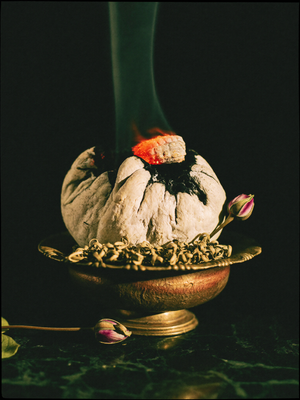
Smoke cleansing of objects — reaching drawer interiors, seams and undersides that cannot be wiped — is a long-standing practice across many traditions.
Source/tradition: Comparative folk practice; documented across numerous cultural traditions
Practitioners who work with secondhand objects regularly report that the first deliberate use of a thing — wearing it, cooking in it, sitting in it — is the point at which it stops feeling like someone else's.
Source/tradition: Reported practice among long-term thrifters and practitioners
A secondhand object can carry a curse or transferable harm, and cleansing removes an energetic residue or protects the owner from it.
Source/tradition: No evidence; cursed-object narratives are a folklore genre rather than a working tradition
VERIFIED = verifiable in scientific or official sources · TRADITIONAL = historically or culturally recorded · LIVED PRACTICE = widely practiced, experiential knowledge · NOT PROVEN = spiritual interpretation, not scientifically established.
How to Cleanse a Secondhand or Thrifted Object Before You Bring It Home
A practical route for clearing a thrifted, inherited or estate-sale object — what to do physically, what to do energetically, and in which order. What it will not do is tell you that an old object can carry a curse, or that skipping a step puts you at risk.
Quick answer
Do the physical cleaning first: inspect for pests, wash or wipe what can be washed, and let the object sit somewhere contained — a garage, a porch, a sealed bag — before it joins the rest of your things. Then do the energetic pass, matching the method to the material: smoke or a smokeless spray for textiles, wood and upholstery; salt or a salt bath only for hard, non-porous, non-metal items; sunlight for cotton and linen but not for dyed fabric or light-sensitive stones. Finish by handling the object deliberately and naming what it is now for. Nothing in the folk record supports the idea that a secondhand object carries a curse, and no cleansing method has been shown to remove anything but dirt — what these practices reliably do is change your relationship to a thing that arrived with someone else's history on it.
Why this question comes up at all
Thrifted furniture, estate-sale jewelry, a box of someone's books, an inherited mirror. Objects that have had a previous life arrive with something attached — not, in any demonstrable sense, an energy signature, but a genuine sense of unfinished ownership. You did not choose this object new. Somebody else lived with it, and in the case of estate sales, somebody else died and their things were sorted by strangers.
That feeling is worth taking seriously without inflating it. Most traditions that handle secondhand objects treat the practice as a threshold rite: a way of marking that a thing has changed hands and is now yours. That framing is more useful than the haunted-object framing, and it is closer to what the older material actually describes.
There is also a completely non-spiritual reason to have a protocol, and it is the reason we put physical cleaning first. Used goods can bring in things you very much do not want.
The physical pass comes first, always
This is the part most cleansing guides skip, and it is the part with actual consequences.
Pests. Upholstered furniture, mattresses and soft goods are the main route by which bed bugs move between homes. Inspect seams, folds, the underside of frames and the crevices around joins in strong light before the item enters your living space. If you have any doubt, keep the item bagged or outside the house until you have checked properly.
Lead. Painted furniture, painted toys and painted decorative items made before 1978 may carry lead-based paint — the U.S. Consumer Product Safety Commission banned lead paint for consumer use, including furniture and toys, that year. Chipping or chalky paint on an old piece is a reason to be cautious, especially if there are children in the house. A hardware-store lead swab costs a few dollars.
Mold and smoke. Musty books, damp-stored textiles and anything from a smoker's home carry particulates you can smell, and the smell is the point — that is you detecting the residue. Air these out before you decide anything else about them.
Then wash what is washable. Textiles: hottest wash the fabric tolerates, then a full dry cycle. Hard surfaces: soapy water, then dry thoroughly. Jewelry and metal: warm water, mild soap, soft brush — no salt, for reasons we come to below.
A great deal of what people describe as "heavy energy" on a secondhand item is dust, old body oils, cigarette residue and mildew. Removing them removes most of the feeling.
Match the method to the material
The single biggest mistake in energetic cleansing is applying one method to everything. Salt corrodes metal and etches soft stone. Water ruins wood glue, paper and porous minerals. Sunlight fades dyed textile and several common crystals. Here is what fits what.

From the temple
Palo Santo Smudge Spray — Smokeless Cleansing & Calm
Most thrifted objects arrive in an apartment, and most apartments are not places you want to fill with smoke. A mist reaches the same surfaces — upholstery seams, drawer interiors, the back of a frame — without setting off a detector or bothering a neighbor. $22.00. Ships within 3 business days.
View the Palo Santo spraySmoke, spray, salt, sound, light: what each one is actually for
Smoke is the oldest and most widespread of these methods, and it has one real practical advantage: it reaches into places you cannot wipe. Drawer interiors, the underside of a chair, the gap behind a frame. If you use white sage, it is worth knowing where it comes from and using it with some care — we wrote about that in white sage, honestly. For a secondhand object specifically, resin and wood smoke work as well as any sage.
Sprays do the same job in a form apartments tolerate. Mist from about a foot away, let it settle rather than saturating, and test on an inconspicuous corner of anything fabric first.
Salt is genuinely useful and genuinely destructive, and the line between the two is material. A bowl of dry salt around — not on — a hard object is harmless. Salt directly on metal, plated jewelry, soft stone or polished wood will corrode, pit or dull it. Salt water on anything porous is worse. When in doubt, don't.
Sound — a bell, a bowl, a clap — has the practical benefit of leaving no residue at all, which makes it the safest option for fragile, painted, antique or unidentified items. If you have inherited something you are afraid to touch with anything, this is the method.
Light. Moonlight is inert and safe for everything. Sunlight is a real cleaning agent for cotton and linen and a real hazard for dyed textile, old paper, and several stones — amethyst, rose quartz, fluorite and citrine all fade. We covered which ones in crystals that fade in sunlight.
Temple tip: the threshold pause
Do not carry a thrifted object straight to its final place in the house. Give it a staging spot — a hallway, a porch, the top of a washing machine — and let it sit there for a day or two while you clean it and look at it in daylight. This does two things at once. It gives you a quarantine window for pests, which is the concrete benefit. And it turns the acquisition into an arrival rather than an insertion, which is most of what the older threshold customs were doing in the first place. When you finally put the object where it belongs, that placement is the ritual, and it does not need anything added to it.
What method fits your object?
What did you bring home?
Estate sales, inherited objects, and the grief underneath
An object from an estate sale is different from an object from a thrift store, and pretending otherwise is where a lot of advice goes wrong. When someone searches for how to cleanse an inherited item, the discomfort is frequently not about the object.
Traditions that handle the belongings of the dead — and most cultures have some version — tend to do two things: they mark the transfer explicitly, and they give the living person a job to do with their hands. That combination is doing something real, and it is not removing a residue. It is giving grief a shape and a duration.
So if you have inherited something and you feel strange about it, clean it carefully, handle it, and say out loud who it belonged to and what you intend to do with it now. That is the practice. If the feeling is heavier than the object — if you cannot look at it, or you keep it hidden, or it is keeping you from sleeping — that is grief asking for support from a person, not a cleansing method.
What the folk record actually says about "cursed" objects
Cursed-object stories are a well-documented genre of folklore, and they are worth reading as folklore. The recurring shape — a beautiful thing changes hands, misfortune follows, the object must be given away or destroyed — is a story about inheritance, wealth and guilt, and it appears in versions across many cultures and centuries.
What is not in the historical record is a working tradition of ordinary secondhand goods carrying transferable harm. The instructions folklorists have collected around used objects are overwhelmingly about transfer and welcome: washing a thing before it enters, blessing it, giving something small in exchange, letting it sit at the threshold. Those are rites of incorporation, not exorcisms.
This distinction matters practically. If you approach a thrifted chair as potentially dangerous, no amount of cleansing will settle it, because the frame itself generates the anxiety. If you approach it as something that has changed hands and now needs marking, one pass is enough.
Voices from practice
Talking to people who thrift and work with secondhand objects regularly, a few patterns recur:
Experienced thrifters commonly report that the "heavy" feeling on a piece disappears after a thorough physical cleaning, before any energetic step is taken at all.
A frequent report from people who do this often: the objects that stay uncomfortable are almost always inherited ones, not bought ones — which points at the relationship rather than the item.
Practitioners who work with old objects tend to describe the first deliberate use of a thing — wearing it, cooking in it, sitting in it — as the moment it stops feeling like someone else's.
What we don't promise
We don't promise that objects carry energy in any measurable sense. There is no evidence that they do, and no cleansing method has been shown to remove anything beyond dirt, odor and particulates.
We don't promise that any of this protects you from anything. Smoke, salt, sound and light do not shield people. If you are frightened of an object, the useful response is to look at why, not to escalate the ritual.
We don't promise that cleansing makes a secondhand item safe. Pests, lead paint, mold and damaged wiring are physical hazards with physical remedies, and no spray addresses any of them.
And we don't promise that this resolves grief. An inherited object that hurts to look at is doing exactly what inherited objects do. That deserves time and, where it is heavy, real support from a professional or someone you trust.
Practically: how to work with this
1. Quarantine before it enters. Staging spot, contained, out of the bedroom. A day or two minimum for anything soft or upholstered.
2. Inspect in strong light. Seams, undersides, joins, drawer runners. Pre-1978 paint that is chipping gets a lead swab before it goes anywhere near a child.
3. Clean physically, by material. Hot wash and dry for textiles, soap and water for hard surfaces, dry air for paper. Do not skip to the incense.
4. Choose one energetic method that suits the material. Smoke or mist for porous things, moonlight or sound for fragile and unidentified things, dry salt around but never on. One pass. Repeating it is not stronger, it is just repeating.
5. Place it and use it deliberately. Put the object where it will live, then use it once on purpose while you are paying attention. If it helps, say what it was and what it is now.
If you are clearing a whole room rather than a single object, the order is different and worth getting right — see how to cleanse a room. Our Sacred Smoke & Cleansing range and the ritual oils and sprays cover both the smoke and smokeless routes.
Frequently asked questions
Can a secondhand object be cursed?
Cursed-object stories are a well-documented folklore genre, but there is no historical working tradition treating ordinary used goods as carriers of transferable harm, and no evidence that objects hold anything of the kind. The instructions folklorists collected around secondhand items are rites of welcome and transfer — washing, blessing, letting a thing sit at the threshold — rather than exorcisms.
Should I use salt on thrifted jewelry?
No. Salt corrodes and pits metal, damages plating, and can loosen or dull set stones — dry or in water. Warm water with mild soap and a soft brush is the correct physical clean. For the energetic pass, moonlight overnight or a short pass of smoke does the job without risking the piece.
How long should I leave a thrifted item outside before bringing it in?
For upholstered furniture and soft goods, a day or two in a contained staging area is a sensible minimum, and longer is better if you have anywhere to put it. This is a pest-inspection window, not a spiritual waiting period. Hard, non-porous items need only as long as it takes to clean and dry them.
What if I can't burn anything in my apartment?
You have three good alternatives. A smokeless spray reaches the same surfaces without setting off a detector. Sound — a bell, a bowl, or three deliberate claps — leaves no residue at all and is safe on paint, paper and antiques. And moonlight on a windowsill overnight suits jewelry, glass and stones. None of these is a lesser version of smoke.
Do I need to cleanse something I inherited from someone I loved?
Not for safety, and not because anything is attached to it. Many people find it helps to clean the object carefully, handle it, and say aloud who it belonged to and what it is for now — because that gives grief a shape and a duration. If the object is heavy enough that you cannot look at it or keep it out, that is worth talking to someone about rather than clearing again.
Is old painted furniture actually a hazard?
It can be. The U.S. Consumer Product Safety Commission banned lead-based paint for consumer use — including on furniture and toys — in 1978, so painted pieces made before then may contain it. Chipping, chalking or heavily worn paint on an older item is the case for a hardware-store lead swab before it enters a home with children, and for leaving the surface sealed rather than sanding it.
Objects are one half of it. If handling somebody else's things has left you wanting the same treatment, see the spiritual bath for cleansing and protection.
Sources & further reading
- U.S. Consumer Product Safety Commission: 1978 ban on lead-based paint for consumer use, including furniture and toys — background at epa.gov/lead (accessed 2026)
- U.S. Environmental Protection Agency: Lead-Based Paint Disclosure Rule fact sheet (2024) — on pre-1978 housing and painted goods
- U.S. EPA: Bed Bugs guidance — on inspecting secondhand furniture and soft goods before bringing them indoors
- Arnold van Gennep: The Rites of Passage (1909) — the classic account of threshold and incorporation rites, which is the frame most of these customs sit in
- Owen Davies: Popular Magic: Cunning-folk in English History (2003) — on what the folk record does and does not contain regarding objects and harm
- Related on the blog: How to cleanse a room · White sage, honestly · Crystals that fade in sunlight