Collection: Obsidian
Not a mineral but volcanic glass, cooled too fast for any crystal to form. That is why it takes a mirror polish nothing else here takes, and why every point and carving was cut by hand rather than grown. Black confronts, snowflake steadies. 9 pieces, $4.95 to $98.95.
-
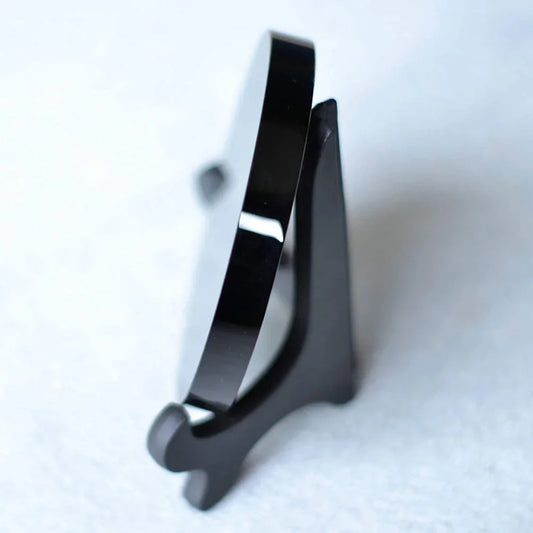
Black Obsidian Mirror — Polished Scrying Mirror with Stand
Regular price From $19.95Regular priceUnit price / perSale price From $19.95 -
Spiritual Bodyguard — Snowflake Obsidian Point for Steady Ground
Regular price $19.95Regular priceUnit price / perSale price $19.95 -
Triple Protection Trio — Obsidian, Tiger's Eye & Hematite Stone Set
Regular price $8.99Regular priceUnit price / per$20.00Sale price $8.99Sale -
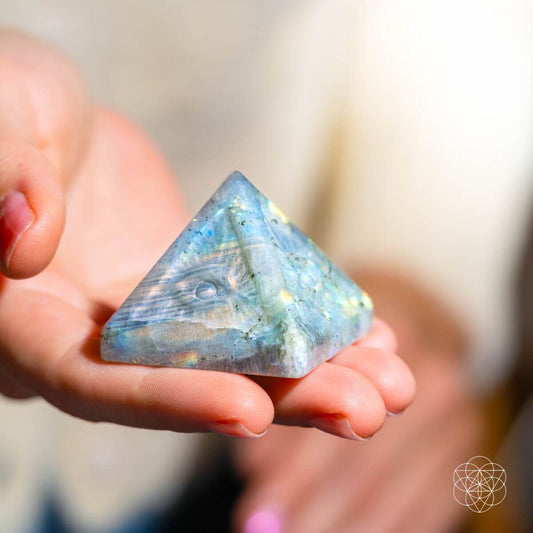
All Seeing Eye Pyramid — Labradorite & Obsidian for Intuition and Protection
Regular price $29.95Regular priceUnit price / perSale price $29.95 -
The Energy Protection Bracelet — Black Tourmaline & Golden Obsidian
Regular price $29.95Regular priceUnit price / perSale price $29.95 -
Black Obsidian Body Oil — Grounding Shimmer Oil with Amber & Vanilla
Regular price From $9.95Regular priceUnit price / perSale price From $9.95 -
Snowflake Obsidian Comfort Stone — Grounding Shadow-Work Worry Stone
Regular price $6.95Regular priceUnit price / perSale price $6.95Sold out -
Black Obsidian Tumbled Pocket Stone — Truth, Protection & Shadow Work
Regular price $4.95Regular priceUnit price / perSale price $4.95 -
Black Obsidian Comfort Stone — Protection & Shadow Work Talisman
Regular price $6.95Regular priceUnit price / perSale price $6.95
The full guide to obsidian
Nine pieces, $4.95 to $98.95: pocket and comfort stones, a hand-cut snowflake point, a raw three-stone set, a carved pyramid, a bracelet, a body oil and a scrying mirror in five sizes. Almost everything about them comes back to one fact of geology: obsidian is not a mineral at all.
It is glass. Lava cooled so fast that no crystal lattice ever had time to form. That single fact explains most of this page. It takes a mirror polish that nothing else here takes, which is why obsidian became the material of the world’s first mirrors roughly eight thousand years ago. It has no crystal faces, so every point, pyramid and carving on this page was cut by hand rather than grown in the ground. And it fractures conchoidally, in curved shell-like flakes, which is why a chipped edge can be genuinely sharp.
Four obsidians, four jobs — and the color tells you which. Black is the uncompromising one, traditionally associated with truth, protection and shadow work; the product texts say plainly that it is not a gentle stone. Snowflake obsidian is the same character softened: black volcanic glass scattered with white cristobalite, traditionally used for staying grounded through a change rather than confronting it. Gold sheen is associated with personal power and with noticing where you have been playing small. Silver sheen is associated with patience and clear communication. If you want steadiness, take snowflake. If you want to be told something, take black.
The one stone in this shop sold as a working tool rather than a talisman. Everything else here is worn, held, burned or placed. The black obsidian mirror is used. Polished flat, it gives back an outline rather than a face, and that ambiguity is exactly what scrying works with. Five diameters, stand included: 40 mm and 60 mm for travel or a small altar tray, 80 mm at $32.95 as the usual working size, 100 mm and 120 mm as a fixed altar piece with real presence.
It shields and it reveals — and the second half is the caveat. Most protective stones in this shop are restful. Obsidian is described as an energetic barrier that simultaneously brings buried patterns to the surface, which is useful during journaling, difficult decisions and shadow work, and a poor choice for a bedside stone if what you want is sleep. Buy it for the work, not for the calm. For calm the shop points to howlite, amethyst or selenite instead.
Care. Obsidian sits around 5 to 5.5 on the Mohs scale — softer than quartz, and considerably softer than a steel key. Polished faces and mirrors scratch, so keep a piece out of a pocket with keys and coins, and wipe rather than scrub. It is unaffected by water. If a piece is dropped and chips, handle the flake carefully: volcanic glass breaks to an edge.
Honestly named. As a solid stone you can currently buy two of the four obsidians here — black and snowflake. Gold sheen appears only as the golden obsidian in the Energy Protection Bracelet, and silver sheen is not currently sold as a piece of its own. The All-Seeing Eye Pyramid is cut in Egyptian obsidian; its labradorite twin sells out often. There is also no obsidian sphere, no rainbow obsidian, and no obsidian lamp — the stone is opaque, so a lamp would have nothing to light.
From the magazine: Obsidian meaning, properties and types · How to make and use a black scrying mirror · Shadow work: what Jung meant · Crystals for protection · Root chakra and grounding. For every stone, candle and oil sold for the same purpose, see Protection.
Frequently asked questions
Is obsidian a crystal?
No, and that is the most useful thing to know about it. Obsidian is volcanic glass: lava that cooled too fast for a crystal structure to form. That is why it has no natural faces or terminations, why every point and carving here was shaped by hand, and why it polishes to a true mirror when quartz only polishes to a shine.
What is the difference between black and snowflake obsidian?
Same glass, different temperament. Black obsidian is the direct one — traditionally associated with truth, protection and shadow work, and described in these product texts as honest rather than comfortable. Snowflake obsidian is black glass with white cristobalite inclusions, and the same themes arrive gentler; it is the one usually chosen for grounding through a breakup, a move or a long stretch of change.
Which size scrying mirror should I choose?
The 80 mm at $32.95 is the standard working size and the one to pick if you are unsure — large enough to hold a gaze, small enough to hold in the hand or stand on a tray. The 40 mm and 60 mm are travel and pocket sizes. The 100 mm and 120 mm are fixed altar pieces at 240 g and 340 g; they are for a surface they will stay on. A stand is included with every size.
Is obsidian a good stone to keep by the bed?
Usually not, and that is worth saying plainly. Obsidian is traditionally used to surface what has been avoided, which makes it well suited to journaling, decisions and shadow work and badly suited to winding down. If you want a stone for the bedside, howlite, amethyst and selenite are the ones this shop points to for rest.
How do I look after obsidian?
It is water-safe and needs no special treatment, but it scratches more easily than quartz at Mohs 5 to 5.5 — keep polished pieces and mirrors away from keys, coins and grit, and wipe them with a soft dry cloth rather than scrubbing. Chipped obsidian can have a sharp edge, so handle breakages with care.
Which obsidian should I buy first?
If you want to carry something, the $4.95 black tumbled pocket stone or the $6.95 comfort stone — the comfort stone is the flatter oval shaped for a thumb, the tumbled one is irregular. If you would rather have the gentler version, take the snowflake comfort stone at $6.95 when it is in stock, or the hand-cut snowflake point at $19.95. If you want obsidian as a tool rather than a talisman, the 80 mm scrying mirror at $32.95 is the piece that does something nothing else in the shop does.