Collection: Crystal Points & Towers
Upright pieces cut flat at the base so they stand on their own: single-terminated points, polished obelisks, selenite towers and amethyst scepters — from a $17.95 fluorite point to a 25-inch Brazilian quartz cluster.
In short: a point is a crystal tapered to a tip and stood upright; the shape is about display and visible focus, not established science.
-
Citrine Tower Obelisk — Natural Crystal Point for Altar & Home
Regular price $17.95Regular priceUnit price / perSale price $17.95 -
Crystal Obelisk Towers — Faceted Gemstone Points for Altar & Desk
Regular price From $17.95Regular priceUnit price / perSale price From $17.95 -
Golden Healer Hematoid Quartz Obelisk Tower — Polished Brazilian Crystal
Regular price From $24.95Regular priceUnit price / perSale price From $24.95 -
Natural Citrine Polished Point 4.53 kg — Statement Brazilian Crystal
Regular price $2,697.95Regular priceUnit price / perSale price $2,697.95 -
Clear Quartz Obelisk — 20.5-Inch Polished Crystal Tower
Regular price $1,225.95Regular priceUnit price / perSale price $1,225.95 -
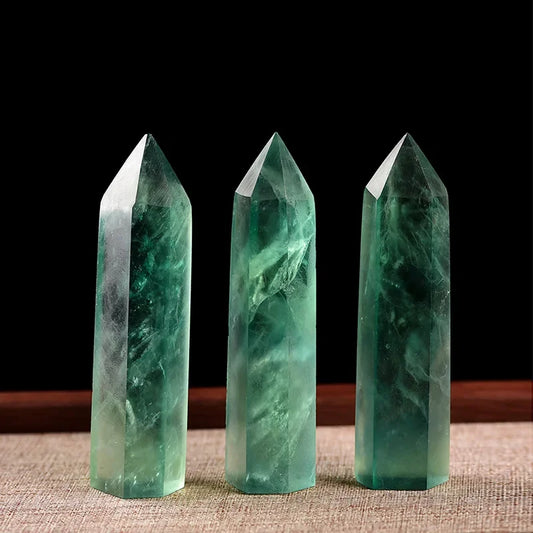
Rainbow Fluorite Point — Multi-Color Crystal Point for Clarity
Regular price $14.95Regular priceUnit price / perSale price $14.95 -
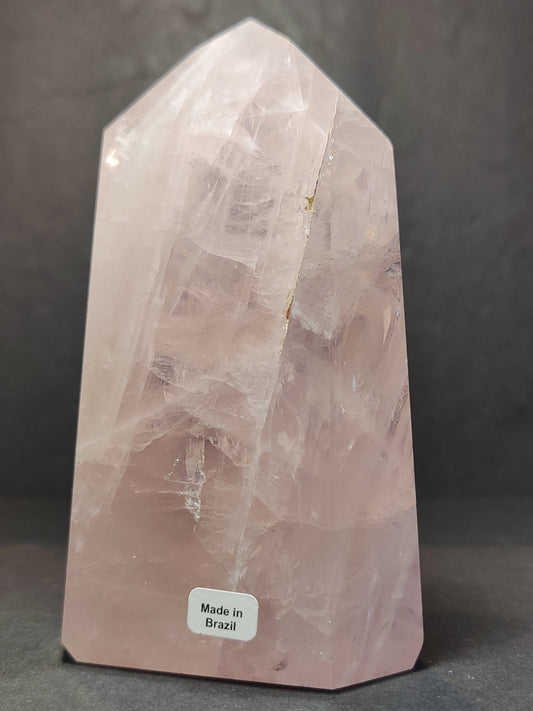
Rose Quartz Obelisk — Polished Crystal Tower for Love & Heart Work
Regular price From $110.95Regular priceUnit price / perSale price From $110.95 -
Flower Agate Tower — Polished Crystal Tower for Growth & Calm
Regular price $24.95Regular priceUnit price / perSale price $24.95 -
Small Selenite Obelisk Tower — Cleansing Crystal Point for Your Altar
Regular price $6.95Regular priceUnit price / perSale price $6.95 -
Quartz Cluster with XL Point — 25 in Brazilian Specimen & Stand
Regular price $7,355.95Regular priceUnit price / perSale price $7,355.95 -
Bolivian Amethyst Point — Large Anahi Mine Crystal, 3.25 lb
Regular price $367.95Regular priceUnit price / perSale price $367.95 -
Amethyst Scepter Wand — Polished Brazilian Point on Metal Stand
Regular price From $122.95Regular priceUnit price / perSale price From $122.95 -
Clear Quartz Obelisk — Polished 17.5 in Brazilian Tower, 5.35 kg
Regular price $1,471.95Regular priceUnit price / perSale price $1,471.95 -
This Changes Everything — Malachite Phoenix Point for Reinvention
Regular price $22.95Regular priceUnit price / perSale price $22.95 -
Cycle Breaker — Chevron Amethyst Point for Course Correction
Regular price $19.95Regular priceUnit price / perSale price $19.95 -
The Upper Hand — Gold & Silver Sheen Obsidian Points for Clear Decisions
Regular price $19.95Regular priceUnit price / perSale price $19.95Sold out -
Spiritual Bodyguard — Snowflake Obsidian Point for Steady Ground
Regular price $19.95Regular priceUnit price / perSale price $19.95 -
Limitless Manifestation — Ice Quartz Point, the Eureka Stone
Regular price $19.95Regular priceUnit price / perSale price $19.95 -
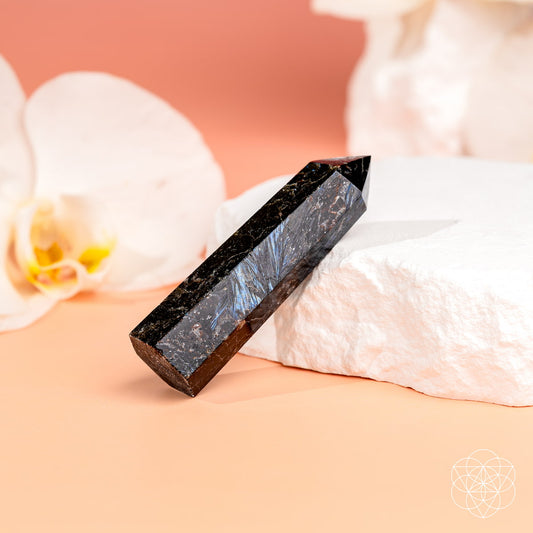
This Is Your Breakthrough — Rare Arfvedsonite Point, the Compass Stone
Regular price $19.95Regular priceUnit price / perSale price $19.95 -
Selenite Tower — Master Cleanser for Crystals, Rooms & Mind
Regular price From $20.99Regular priceUnit price / per$29.95Sale price From $20.99Sold out -
The Cleansing Stone — Natural Fluorite for Clarity & Clear Energy
Regular price $17.95Regular priceUnit price / perSale price $17.95
The guide to crystal points & towers
A point is the one crystal shape with a direction built into it. Cut flat at the base and tapered to a tip, it stands on its own and it aims at something — which is why it became the standard form for anything meant to be seen rather than carried. Everything in this collection shares that geometry, from a $17.95 fluorite point that fits in a hand to a 25-inch quartz cluster that is effectively a piece of furniture.
The vocabulary, briefly
The trade uses three words loosely. A point is a single-terminated crystal ending in a tip, natural or cut. A tower is a polished piece with a flat base and a tapered top, taller than it is wide. An obelisk is a tower with four flat faces and a pyramidal cap — the most worked, and usually the most expensive per pound because of how much material comes off. A scepter is a point that has grown a second crystal around its shaft, which is uncommon and priced accordingly. Function does not change between them; shape and finish do.
What to look for when you buy
Start with the polish. Run a fingernail down a face — good lapidary work has flat faces meeting in crisp edges, without the soft rounding that comes from rushing the final grit. Look into the stone rather than at it: internal fractures and rainbow flashes are normal and often beautiful, but a network of chips near the tip means the piece was dropped. Check that it stands square on a flat surface without a wobble, since a base cut off-square is the most common fault in inexpensive towers.
Then test the material. Colour that pools in cracks and along the surface, rather than running through the stone, is dye — electric blue and neon green are the usual offenders. Real stone feels cool and takes a moment to warm in the hand; glass and resin warm almost instantly. Bubbles inside or a faint moulding seam settle it.
Placing one
Points are traditionally used as a focal marker: at the centre of a crystal grid, on a desk where you will see it while working, or on an altar as a standing reminder of something you have decided. Selenite towers are the piece traditionally used to cleanse other stones — rest tumbled stones at the base overnight. There is no correct direction to aim a tip; the convention is simply that whichever way it points is the thing you meant.
Care
Keep coloured quartz out of direct sun — amethyst, fluorite, rose quartz and smoky quartz fade permanently, sometimes within weeks on a bright sill. Selenite dissolves in water and should only ever be dusted dry. Tall pieces are top-heavy by design, so choose a stable surface away from traffic, and lift a large tower by the body rather than the tip.
Who this collection is for
Anyone furnishing a space rather than filling a pocket — a desk, a shelf, an altar, a room that needs one deliberate object in it. If you want something to carry and hold instead, the tumbled and pocket stones are the better starting point.
Frequently asked questions
What is a crystal point used for?
A point is cut flat at the base and tapered to a tip so it stands upright and has a direction. Practitioners use that direction as a marker — aiming the tip at the centre of a crystal grid, or standing one on a desk or altar as a visible anchor for an intention. Practically, it is also the shape that displays best, which is why towers and obelisks end up in rooms while tumbled stones end up in pockets.
What is the difference between a point, a tower and an obelisk?
The words overlap in the trade. A point usually means a single-terminated crystal that ends in a natural or cut tip. A tower is a polished piece with a flat base and a tapered top, generally taller than it is wide. An obelisk is a tower with four distinct flat faces and a pyramidal cap. Function is identical; the distinction is shape and how much material had to be cut away.
Are polished points natural crystal?
The material is, the shape often is not. Most towers and obelisks are cut and polished from rough stone — that is normal and not a defect, and it is what allows a piece to stand. Naturally terminated points exist and command a premium. What you want to avoid is dyed or reconstituted material: dye pools in cracks rather than running through the stone, and glass or resin warms in the hand almost immediately while real stone stays cool for a moment.
Does a bigger tower work better?
No, and it is worth saying plainly because size is what price is built on here. A large specimen is a piece of interior design and a piece of geology at once. Buy the tall one because you want to look at it every day, not because you expect it to work harder than a small one.
How do I care for a crystal point?
Keep it out of prolonged direct sun — amethyst, fluorite, rose quartz and smoky quartz fade permanently on a bright windowsill. Never soak selenite, and avoid water on soft or fibrous material generally; dust it with a dry brush instead. Points are top-heavy by design, so give tall pieces a stable base and a spot where they will not be knocked.
Which crystal point should I start with?
Clear quartz if you want something neutral you can move between rooms, amethyst if you want colour and want it somewhere you sit in the evening, selenite if you want the one traditionally used to cleanse other stones. Under $25 buys a well-cut small tower in any of the three, which is a better first purchase than one large piece you are afraid to move.