


Collection: Wall Art & Tapestries
Everything that goes on a wall: a printed moon-phase tapestry from $17.95, up with pins, two framed vintage prints, carved pine panels from Honduras, a handwoven sun disc from Malawi, handwoven cotton from Mexico, and one nineteenth-century Tibetan dragon panel.
In short: two decisions — one you can undo with pins, one that needs a hook in a stud.
-
Dream Big by Emily Starck — Framed Canvas Art Print
Regular price From $1,238.95Regular priceUnit price / perSale price From $1,238.95Sold out -
Butterfly and Flower Print — Vintage Art in Beaded Pewter Frame
Regular price $137.95Regular priceUnit price / perSale price $137.95 -
Andre Wall Art — Handcrafted Pine Wood Wall Panel
Regular price $464.95Regular priceUnit price / perSale price $464.95 -
Planos I Wooden Wall Art — Handcrafted Pine, Walnut Finish
Regular price $698.95Regular priceUnit price / perSale price $698.95 -
Butterfly Print Wall Art — Vintage Print in Beaded Black Frame
Regular price $184.95Regular priceUnit price / perSale price $184.95 -
Sun Circle — Handwoven Wall Disc from Malawi, Natural
Regular price $150.95Regular priceUnit price / perSale price $150.95 -
Campo de Arroz Tapestry — Handwoven Rice Field Wall Piece
Regular price $3,027.95Regular priceUnit price / perSale price $3,027.95 -
Calendario Azteca Tapestry — Handwoven Cotton Wall Piece
Regular price $2,677.95Regular priceUnit price / perSale price $2,677.95 -
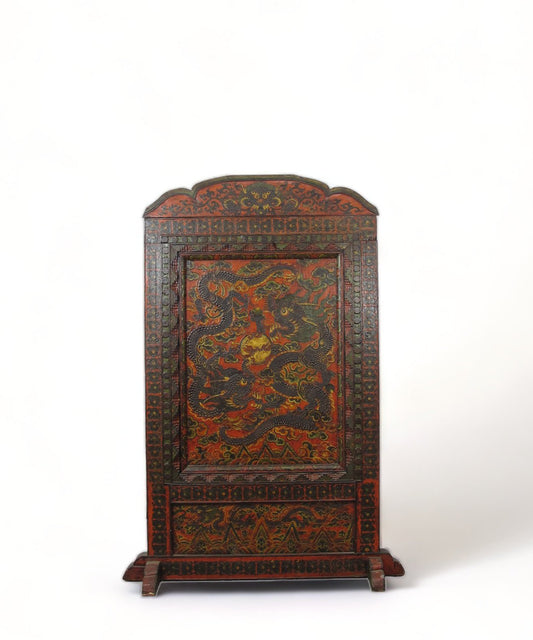
Antique Tibetan Dragon Wall Panel — Hand-Embossed Pine, 19th Century
Regular price $7,705.95Regular priceUnit price / perSale price $7,705.95Sold out -
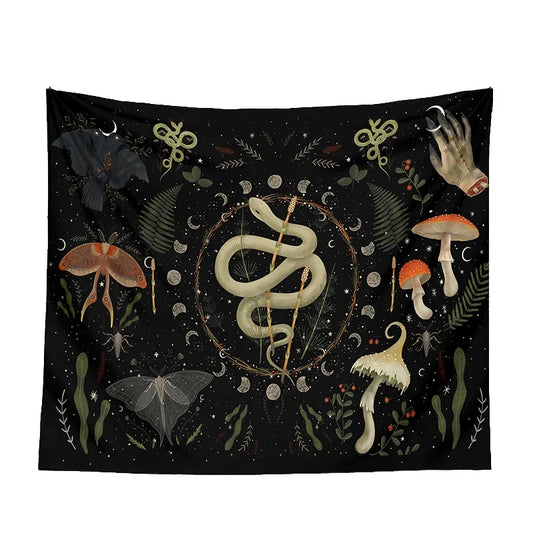
Moon Phase Black Tapestries — Lunar Wall Hanging in Five Sizes
Regular price From $17.95Regular priceUnit price / perSale price From $17.95 -
Evil Eye Tapestry — Protective Wall Hanging for Home & Altar
Regular price $55.95Regular priceUnit price / perSale price $55.95
Choosing a piece for the wall
Eleven pieces, $17.95 to $7,705.95, and forty-seven buyable variants between them. That spread is not a muddle; it is two genuinely different purchases sharing a page. The first is reversible: printed fabric that goes up with pins in about ten minutes, leaves nothing behind and moves to another room on a whim. The second is a commitment — framed prints, carved pine, woven fiber and handwoven cotton, weight that needs a hook set into a stud and a wall you have already decided about. Work out which one you are making before you compare anything else.
The moon phase tapestry: six designs, five sizes, from $17.95
The Moon Phase tapestry is the cheapest way here to change a large wall, and it carries more choice than it first appears to. There are six designs and five sizes, thirty combinations in all, printed on 100% polyester and machine washable. The ladder runs $17.95 for 85 × 75 cm (about 33 × 29 in), $19.95 for 100 × 75 cm (39 × 29 in), $32.95 for 150 × 100 cm (59 × 39 in), $39.95 for 200 × 150 cm (79 × 59 in), and $72.95 for 230 × 150 cm (91 × 59 in).
The two smallest are desk-and-alcove sizes. The 200 × 150 is the one most people actually want above a bed. Note the jump from $39.95 to $72.95 for the largest — it is the only steep step in the ladder, and worth checking your wall against before you take it. If you are running a lunar practice around it, the full moon ritual, the new moon ritual and the full moon calendar are the pieces to read. The Evil Eye tapestry at $55.95 is the other fabric option, and it is a different intention rather than a different price point — the symbol and its long history are covered in evil eye protection.
Hanging it without putting a hole in the wall
This is the question renters ask first, and for the two fabric pieces the answer is easy. Small pins or tacks through the hem are the traditional method and leave pinholes you can rub out. Adhesive strip hooks are the tidier option; the heaviest consumer lines are rated to around twenty pounds, which is far more than any tapestry here needs, but they only hold if you press each strip for a full thirty seconds and then wait an hour before loading it. Hook-and-loop tape sewn or glued along the top edge, in strips every twelve to eighteen inches, gives the flattest top edge of any method. A slim rod through a sewn sleeve or held by clip rings reads the most deliberate, and a tension rod in an alcove touches the wall not at all.
The other nine pieces are a different problem. Framed glass, a stretched canvas at forty by sixty inches, solid pine relief and a woven disc all have real weight, and the shop sells no hanging hardware of any kind — no hooks, nails, rails or anchors. Plan for a hook fixed into a stud or a wall anchor rated well above the piece, and buy that before the art. If the wall belongs to a landlord and the piece is heavy, the honest answer is that you want the fabric one. For making a wall work as an altar in a room you share or do not own, an altar in a shared room is the practical guide.
Getting the fold creases out before you hang it
Printed fabric ships folded, so fold lines are normal rather than a fault, and they are the first thing anyone notices on a hung tapestry. Polyester releases them quickly but will not survive high heat, so the rule is low and indirect. A garment steamer is easiest: hang the piece and steam the back in slow, even passes. With an iron, lay it print-side down, set low, keep the iron moving, and put a thin cotton cloth between the iron and the fabric for stubborn lines. Never press the printed face directly and never use a cotton setting — polyester distorts before it looks scorched, and the damage does not come out. Fix the two top corners first, then the center, then work outward, so the tension stays even and the hem hangs straight.
What you are actually paying for
The two butterfly prints are the clearest lesson on the page. Same vintage-illustration format, sixteen by twenty inches, roughly seventeen by twenty-one framed. One is $137.95 in beaded pewter, the other $184.95 in beaded black. The forty-seven dollars between them is the frame, not the art. Pewter sits back into a wall and lets the color carry; black beading holds a room on its own and wants a pale wall behind it, not a dark one.
Above that, price tracks scarcity rather than size. The two Caralarga pieces — Calendario Azteca at $2,677.95 and Campo de Arroz at $3,027.95 — are handwoven in Mexico from recovered cotton thread remnants, sorted and rewoven rather than discarded, so the density and tone of each differs and none can be reproduced exactly. The antique Tibetan dragon panel at $7,705.95 is a single late nineteenth-century architectural fragment, forty-three inches wide and seventy-six tall, its red, green and yellow paint muted by well over a century of light; the eight-inch top fragment lifts off, and a previous owner adapted it as a headboard. It is currently the one piece here that is sold out. Five of the eleven — both Caralarga tapestries, the Tibetan panel, the Planos relief and the Dream Big canvas — also sit in Exceptional Pieces.
Choosing a size, and the wall to put it on
The two framed prints are sixteen by twenty inches: good in a pair or a group of three, thin on their own across a wide wall. The Sun Circle, a handwoven Malawi fiber disc at $150.95, does the opposite. It is currently offered in the thirty-six inch diameter, and a large round object on a flat wall gives the eye a center and takes the edge off a boxy room. The pine relief panels from Sabana Grande in Honduras — Andre at $464.95 and Planos I at $698.95 — come from the same workshop tradition and hang well as a pair. They are geometry rather than image, so light them from one side; a relief lit flat from the front loses the whole point of itself. Dream Big is the loudest thing on the page, a framed canvas in four frame colors and two sizes, $1,255.95 at thirty-two by forty-eight inches and $1,653.95 at forty by sixty; give it a wall to itself.
What this page does not carry, and two things to check first
No mirrors, no shelves, and no hanging hardware at all. Nothing framed below $137.95, so a gallery wall of small inexpensive prints is not something you can build here. The rest of the wall-and-surface range lives in Altar & Home.
Two conditions rule out almost everything on this page. Sustained humidity moves solid wood, loosens frame joints and is bad for undyed cotton, so no bathroom. Direct sun fades textile dye and paper pigment unevenly and will yellow raw cotton over years — the vintage prints, the Caralarga weaves and the antique panel most of all. And if you buy the Tibetan panel, or anything else with a history, how to cleanse a secondhand or thrifted object is the piece to read before it goes on the wall.
Frequently asked questions
How do I hang these without putting holes in the wall?
For the two fabric tapestries, easily. Small pins through the hem leave marks you can rub out; adhesive strip hooks in the heavier consumer ratings hold far more than a tapestry weighs, provided you press each strip for thirty seconds and wait an hour before loading it; hook-and-loop tape every twelve to eighteen inches along the top edge gives the flattest hang; a tension rod in an alcove touches the wall not at all. The framed, canvas and wooden pieces are too heavy for any of that and need a hook in a stud or a rated anchor. The shop sells no hanging hardware, so buy it separately and before the piece arrives.
How many sizes does the moon phase tapestry come in, and what do they cost?
Five sizes and six designs, thirty combinations. The prices are $17.95 for 85 x 75 cm, $19.95 for 100 x 75 cm, $32.95 for 150 x 100 cm, $39.95 for 200 x 150 cm and $72.95 for 230 x 150 cm, which is about 33 x 29 inches up to 91 x 59 inches. The 200 x 150 is the usual choice above a bed. The only steep step in the ladder is the last one.
How do I get the fold creases out of a tapestry?
Printed fabric ships folded, so creases are normal. Steam it from the back with a garment steamer, or iron it print-side down on a low setting with the iron kept moving, using a thin cotton cloth over stubborn lines. Never press the printed face and never use a cotton setting — polyester distorts under high heat and does not recover. Hang the top corners first, then the center, then work outward.
Why do the two butterfly prints cost different amounts?
The frame, not the art. Both are the same vintage-illustration format, sixteen by twenty inches and about seventeen by twenty-one framed. The beaded pewter frame is $137.95 and the beaded black is $184.95. Pewter recedes into a wall; black beading is the stronger statement and wants a pale wall behind it.
Which pieces here are one of a kind?
The antique Tibetan dragon panel is a single late nineteenth-century architectural fragment, and it is currently sold out. The two Caralarga tapestries are woven from recovered cotton thread remnants, so density and tone differ from piece to piece and none can be reproduced exactly. The Malawi sun disc and the two Honduran pine panels are handmade, so they vary between pieces without being unique.
Can I hang any of these in a bathroom or in direct sunlight?
Neither is advisable for anything on this page. Steam warps frames, loosens joints in solid wood and is bad for undyed cotton. Direct sun fades textile dye and paper pigment unevenly and will yellow raw cotton over a few years — the vintage prints, the Caralarga weaves and the antique panel are the most vulnerable.
What is the cheapest way to cover a large wall here?
The moon phase tapestry. At $39.95 the 200 x 150 cm size covers about 79 by 59 inches, which is most of a bedroom wall, and it needs nothing but pins. Nothing else on the page comes close on cost per square foot, and nothing else comes down again without a trace.