

Collection: Runes, Pendulums & Scrying Tools
Six hands-on divination tools, kept separate from the books and the card decks: three twenty-five piece gemstone rune sets in round and rectangular form, two dowsing pendulums, and a polished black obsidian scrying mirror in five diameters, stand included.
In short: Round runes roll, flat tiles stay put. Pick the form before you pick the stone.
-
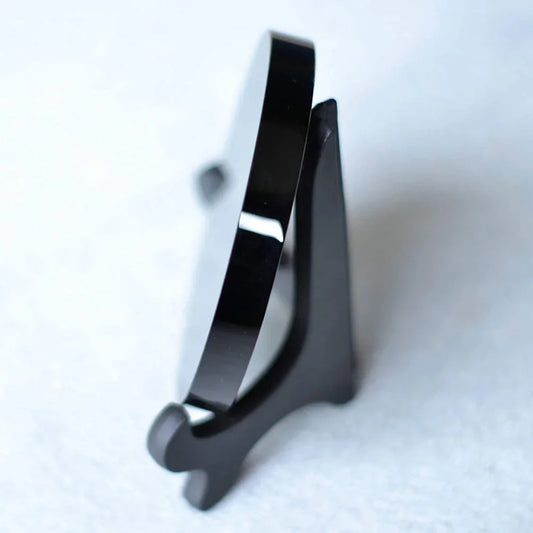
Black Obsidian Mirror — Polished Scrying Mirror with Stand
Regular price From $19.95Regular priceUnit price / perSale price From $19.95 -
Crystal Rectangle Runes — 25-Piece Gemstone Rune Set for Casting
Regular price $63.95Regular priceUnit price / perSale price $63.95 -
Round Crystal Runes — 25-Stone Divination Set with Casting Guide
Regular price $39.95Regular priceUnit price / perSale price $39.95 -
Triple Moon Pentacle Chakra Pendulum — 7-Chakra Dowsing Pendulum
Regular price $23.95Regular priceUnit price / perSale price $23.95 -
Crystal Rune Set — 25 Carved Stone Runes with Velvet Bag
Regular price $45.99Regular priceUnit price / perSale price $45.99 -
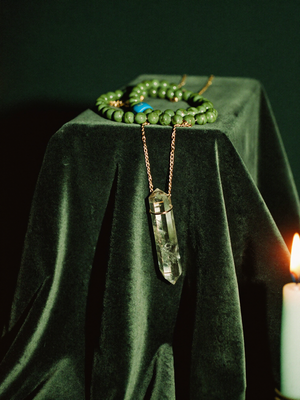
Stone Pendulum with Chain — Divination Tool for Intuitive Yes & No Work
Regular price $12.95Regular priceUnit price / perSale price $12.95
How to choose runes, a pendulum or a scrying mirror
These are the tools you handle rather than read. What they have in common is that none of them supplies an answer from outside — they give a practice something to happen against, which is a more useful thing than it sounds and a more honest description than most shops will give you. The choices worth making are practical ones: form, weight, size and whether a guide comes in the box.
Runes: the form decides how they behave
Stone variety is the part everyone looks at first and the part that matters least. What changes the practice is the shape. Round polished discs roll and settle after they land, which suits drawing one at a time from a pouch or scattering a handful. Flat rectangular tiles stay exactly where they fall, which is what you want if you lay a fixed spread and intend to read positions. All three sets here are twenty-five pieces cut from natural gemstone rather than resin.
| Set | Form | Size | Comes with | Best for |
|---|---|---|---|---|
| Round Crystal Runes | Polished discs | 16–19 mm, 6–7 mm thick, 3–5 g each | Casting guide | Beginners — drawing and scattering |
| Crystal Rune Set | Carved stones | Nine stone varieties, one per set | Velvet drawstring bag | Drawing blind from the bag |
| Crystal Rectangle Runes | Flat tiles | Seven stone varieties, one per set | — | Laid spreads that must not move |
Two practical notes. Cast on cloth rather than a bare table — polished stone chips more easily than people expect, and obsidian and opalite are glass in all but name. And if you are starting from nothing, the set that ships with a casting guide will save you buying a book in week two.
Pendulums: weight and chain length
A heavier point on a shorter chain keeps swinging once it starts and gives a steadier, slower reading; a lighter point on a longer chain reacts sooner and moves more. The faceted stone pendulum is about 30 g on a 7 inch chain, the triple moon pentacle version about 15 g on an 8.86 inch chain with a copper-under-silver-plate cap — worth knowing if plated metal against your skin is something you react to, and worth expecting a little tarnish over time. Either way, brace your elbow on a table. An unsupported arm produces movement, not answers.
Scrying mirrors: pick the diameter for where it will live
Polished flat, obsidian gives back an outline rather than a face, and that ambiguity is the working material. Five diameters are offered with a stand included. Forty to sixty millimeters travels and suits a small altar tray; eighty is the usual working size, held or stood; a hundred to a hundred and twenty is a fixed altar piece. Scrying rewards a dim room, one candle set to the side rather than reflecting into the glass, the mirror angled so you are not staring at yourself, and considerably more patience than a first session usually allows.
Care is simple across all of it: keep runes in their pouch so they stay together and unscratched, wipe the mirror with a soft dry cloth and nothing abrasive, and keep amethyst and other purple stones out of long direct sunlight, which fades them. These are tools for personal practice and reflection, traditionally used for divination; any insight belongs to the person holding them, and nothing here is a substitute for medical, legal or financial advice.
Frequently asked questions
Round runes or rectangular tiles — which should I start with?
It depends less on taste than on how you intend to work. Round discs roll and settle after they land, which is ideal if you draw one stone at a time from a pouch or scatter a small handful and read what comes up. Flat rectangular tiles stay exactly where they fall, so a laid spread holds its shape and you can read each position without a stone having quietly rolled into the wrong one. If you have no idea yet which you prefer, start with the round set: it is the middle price, it ships with a casting guide, and drawing blind is the simplest method to learn.
Do these sets come with a guide to the symbols?
Only one of them says so. The Round Crystal Runes are supplied with a casting guide, which is why they are the easiest starting point. The Crystal Rune Set includes a velvet drawstring bag but no guide is stated, and the Crystal Rectangle Runes make no mention of one either — the product notes assume you will use a rune guide alongside them. All three are twenty-five piece sets; whatever leaflet or booklet arrives with your set is the authority for the characters on your particular stones.
How heavy should a pendulum be?
Heavier is steadier and lighter is livelier, and neither is more correct. The faceted stone pendulum weighs around 30 g on a 7 inch chain: it takes a moment to get going and then keeps a slow, definite swing, which many people find easier to read. The triple moon pentacle pendulum is around 15 g on an 8.86 inch chain, so it responds sooner and moves more freely. The longer chain also gives a wider arc. If you are choosing blind, the heavier one is more forgiving of an unsteady hand.
What size scrying mirror do I need?
Forty to sixty millimeters is a traveling size and sits comfortably on a small altar tray. Eighty millimeters is the usual working size — large enough to lose your focus in, small enough to hold. A hundred to a hundred and twenty millimeters is a fixed piece with real presence, meant to stay where you put it. A stand is included at every diameter. Since obsidian is natural volcanic glass, the surface pattern varies slightly from piece to piece.
How do I look after stone runes and an obsidian mirror?
Keep runes in their pouch between readings so they stay together and do not scratch each other, and cast onto cloth rather than a hard table — polished stone chips more easily than you would guess, and obsidian and opalite are glass in behavior if not in name. Wipe an obsidian mirror with a soft dry cloth and never an abrasive or a solvent, since the whole point of it is an unbroken polish. Keep amethyst, rose quartz and other colored stones out of long direct sunlight, which fades them over months.
Do these tools actually work?
Not in the sense of knowing something you do not. A pendulum makes the smallest involuntary movements of your own hand visible, which is a direct and sometimes uncomfortable way of finding out what you already think underneath what you have decided to think. Runes and a scrying mirror work similarly: they give attention somewhere to settle and force a question to be stated clearly before it is asked. That is a real use, and it is the one we will claim. These are tools for personal practice and reflection, and nothing here replaces medical, legal or financial advice.