Collection: Tea — Loose Leaf & Tea Bags
Every tea in the shop, all of it from one small American tea company. Four blends in bags, two of the same teas sold loose, and a three-tin sampler of single-estate leaf. The Essentials teas cost $14.95 whichever way you buy them — bags or loose is a question of control, not price.
-
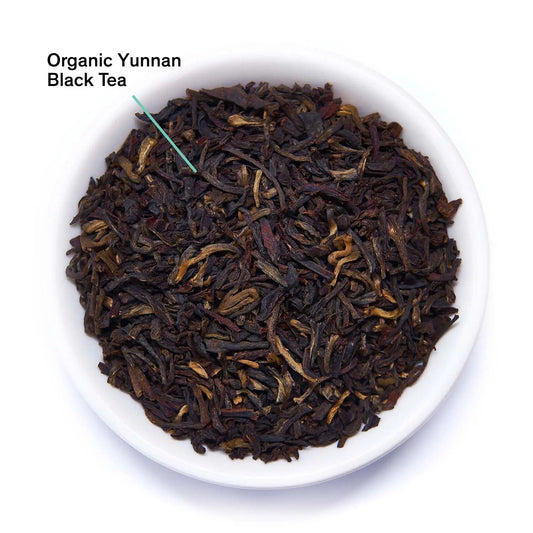
Black Gold Yunnan — Malty Loose Leaf Black Tea
Regular price From $13.99Regular priceUnit price / perSale price From $13.99 -
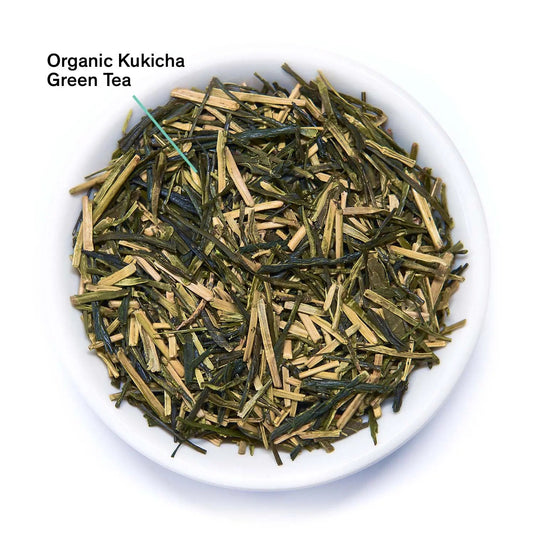
Bright Green Kukicha — Mild Japanese Loose Leaf Green Tea
Regular price From $13.99Regular priceUnit price / perSale price From $13.99 -
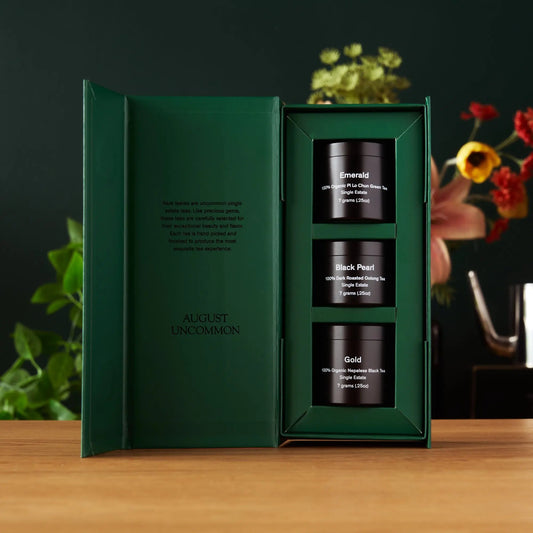
Rare Leaves Tea Sampler — Three Single-Origin Mini Tins
Regular price $37.99Regular priceUnit price / perSale price $37.99 -
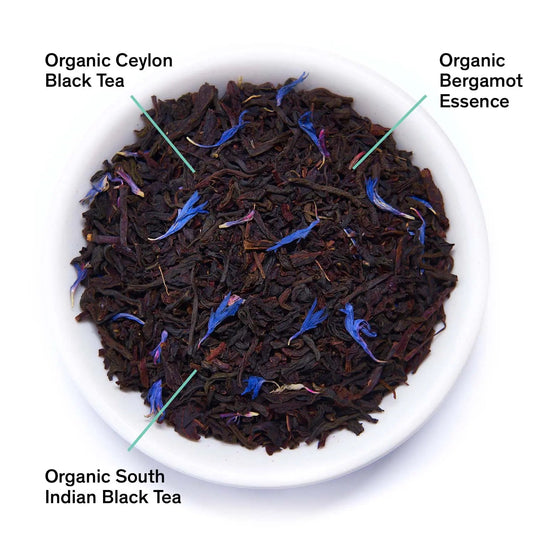
Earl Grey Tea Bags — Silky Bergamot Black Tea
Regular price $13.99Regular priceUnit price / perSale price $13.99 -
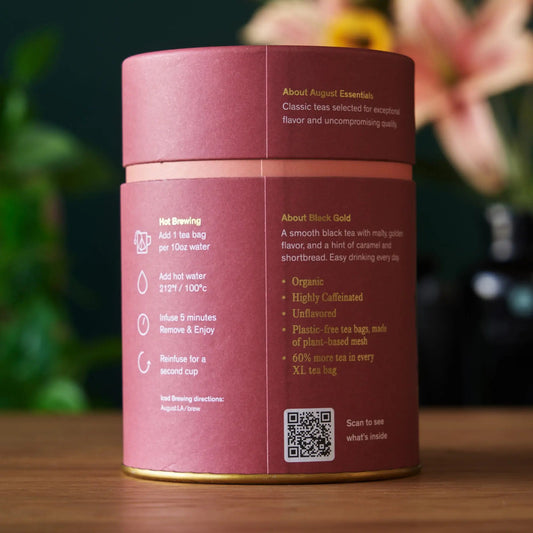
Black Gold Tea Bags — Malty Yunnan Black Tea
Regular price $13.99Regular priceUnit price / perSale price $13.99 -
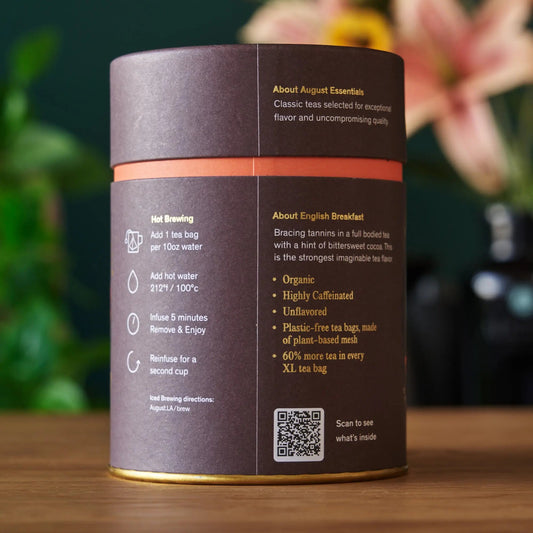
English Breakfast Tea Bags — Bold, Full-Bodied Black Tea
Regular price $13.99Regular priceUnit price / perSale price $13.99 -
Bright Green Kukicha Tea Bags — Mild Japanese Green Tea
Regular price $13.99Regular priceUnit price / perSale price $13.99
Bags or loose leaf, and what actually changes
Six of the seven teas on this page come from one range, the Essentials line, and they are sold in two formats at the same price: fifteen tea bags for $14.95, or a 15-cup bag of the same loose leaf for $14.95. The format is therefore a free choice, and it is a choice about control rather than quality. A bag is pre-measured and disposable. Loose leaf lets you add more leaf when a cup tastes thin, which is the single most useful adjustment in home brewing. The money only enters one step later: the 70-cup loose bag costs $45.95, about 66 cents a cup against roughly a dollar from either fifteen-cup format.
How to tell whether a tea is worth its price
Look for a named place, not a region. Every tea here states one: kukicha from Kagoshima, a Yunnan black from Cangyuan Wa Autonomous County, a decaf grown at 7,000 feet in Biketti, Tamil Nadu. “Ceylon blend” on a supermarket box tells you nothing comparable.
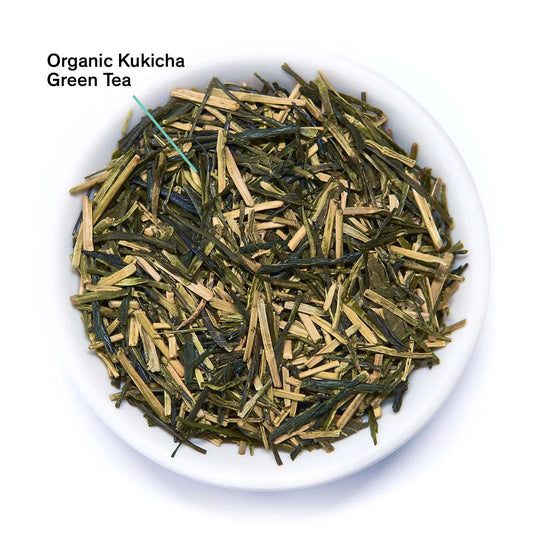
Read what is in the leaf. Kukicha includes stems and stalks as well as leaf, which is why it is rounder and naturally lower in caffeine than a standard sencha. That is a specification, not a marketing line.
Check the flavoring. A cheap Earl Grey sits on top of the tea and turns soapy. This one folds organic bergamot through the base with cornflower petals in the blend, so it reads as one thing rather than two.
Ask whether it reinfuses. Leaf worth buying gives two or three steeps, and the second is often the better one. All of these do.
The decision that matters more than the blend
Water temperature. The blacks and the Earl Grey want near-boiling water, around 205°F / 96°C, for three minutes. The green kukicha wants around 175°F / 80°C and a short first steep of 60 to 90 seconds. Boil the kettle, take the lid off, wait two or three minutes, then pour. Most disappointing green tea is simply scorched. And if a cup tastes weak, add leaf rather than time — a longer steep gives you bitterness, not strength.
Choosing from the seven
Ranked by how much they demand of you: English Breakfast is the bracing one that takes milk. Black Gold Yunnan is the forgiving everyday cup, malty and golden, the one to hand a skeptic. Earl Grey is the afternoon tea, silky rather than perfumed. Bright Green Kukicha is the mildest and the most afternoon-and-evening friendly. The Rare Leaves Sampler, at $39.95 for three seven-gram tins, is a different exercise altogether — single-estate green, oolong and black meant to be tasted side by side in one sitting.
Honestly named
There is no herbal or fruit tisane in the shop, so nothing here is caffeine-free; the decaf black is the only low-caffeine option and is currently unavailable. There is no kettle, no strainer and no infuser. The glass teapot is sold as the pot alone and takes an infuser the shop does not stock — worth knowing before it arrives.
Where this sits
This page is the leaf and nothing else. The two vessels named above sit on Tea & Teaware — the $31.95 Two-Cup Glass Teapot and the $20.95 Double-Walled Tasting Glass — and that page is otherwise these same seven teas, so there is no tea on it you cannot buy here. For a cup that is not tea at all, matcha and latte blends are whisked rather than steeped, and on ceremonial cacao the paste and blocks are 100% cacao, drunk thick and unsweetened. Ritual Kitchen is the shelf above all of them: sixty-nine pieces, sixty-five buyable today.
Frequently asked questions
Is there a difference between the tea bags and the loose leaf?
Not in the leaf, and not in the price. Two of the Essentials teas — Bright Green Kukicha and Black Gold Yunnan — are sold both ways at $14.95 for about fifteen cups. A bag is fifteen pre-measured servings with nothing to clean; loose leaf lets you set the dose, which is how you fix a cup that tastes thin. The saving only appears at the larger size: the 70-cup loose bag is $45.95, roughly 66 cents a cup against about a dollar from either fifteen-cup format.
Which of these teas is the strongest?
English Breakfast, and not by a small margin. It is a single organic South Indian black built to cut through milk, bracing and tannic with a bittersweet cocoa note. Black Gold Yunnan is the softer everyday black — malty and forgiving if you over-steep it. Earl Grey sits in the middle with bergamot over a Ceylon and South Indian base, and Bright Green Kukicha is the mildest cup on the page.
What temperature should I brew them at?
This is the decision that makes or breaks the cup. The black teas and Earl Grey want near-boiling water, around 205°F / 96°C, for three minutes. The green kukicha wants around 175°F / 80°C and only 60 to 90 seconds — boil the kettle, take the lid off, wait two or three minutes, then pour. Most people who say they dislike green tea have only ever had it brewed too hot.
Do I need a teapot or an infuser for the loose leaf?
You need something that holds the leaf and lets it open. Worth knowing before you order: the Two-Cup Glass Teapot in this shop is sold as the pot only, it takes the August One Cup Infuser, and that infuser is not stocked here. The loose teas are easy to brew in any basket or pot you already own; the Double-Walled Tasting Glass is for drinking rather than steeping.
Is there a caffeine-free tea here?
No. There is no herbal or fruit tisane in the range at all — everything on this page is true tea from the Camellia sinensis plant. The closest option is the Decaf Black, which has about 97% of its caffeine removed by a CO₂ process, and it is not currently available. Bright Green Kukicha is the lowest-caffeine tea in stock, because kukicha is made from stems as well as leaf.
Which one should I start with?
If you drink coffee and are unconvinced by tea, start with Black Gold Yunnan — malt and caramel read as familiar, and it survives a distracted brew. If you want a morning cup with milk, English Breakfast. If you already know you like tea but could not say why, the Rare Leaves Sampler puts a Pi Lo Chun green, a roasted Taiwanese oolong and a Nepalese black side by side; it is the only oolong the shop carries and the most expensive tea here per cup.