Collection: Essential Oils
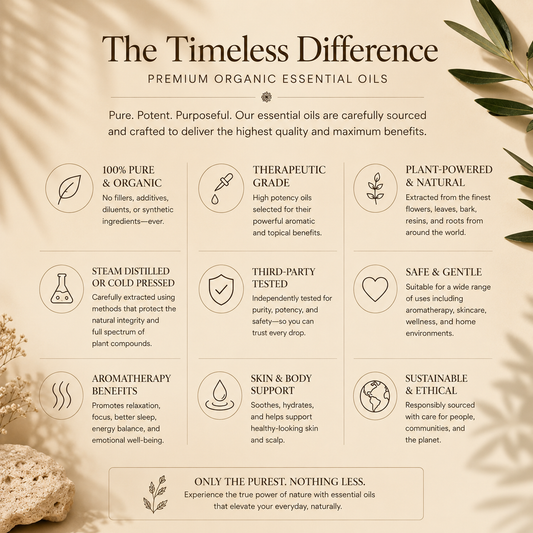
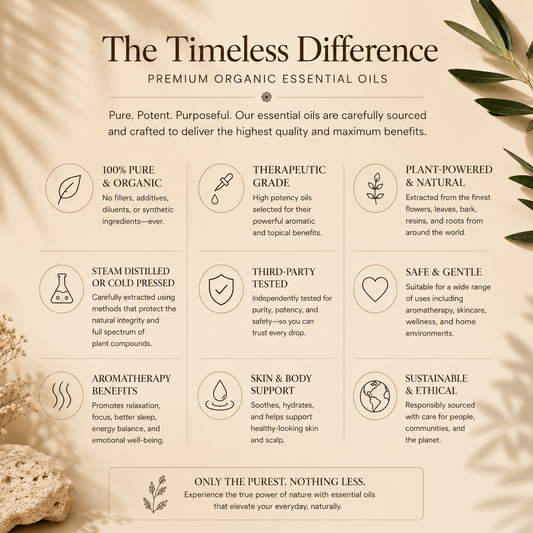
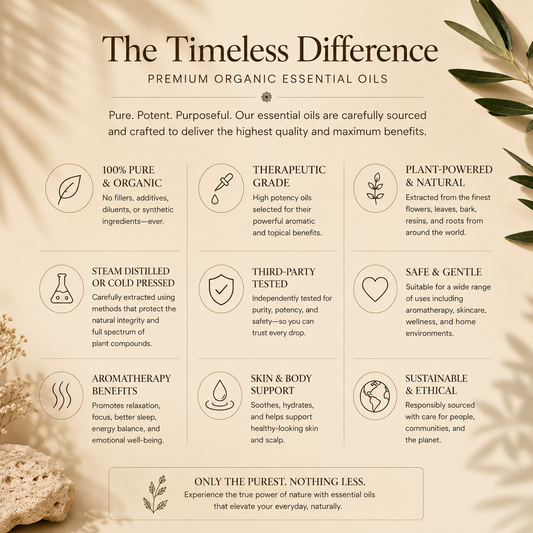
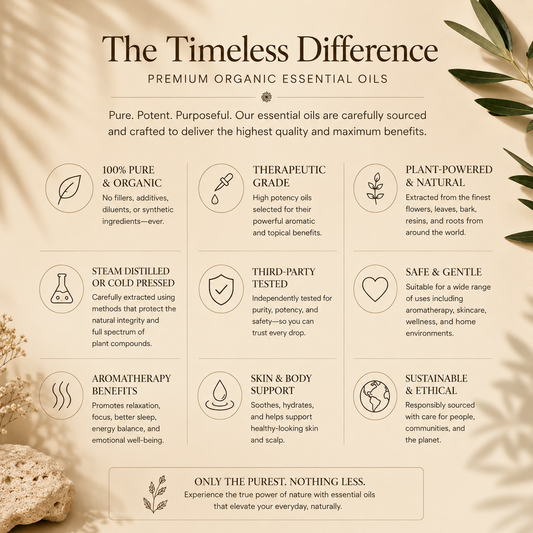
Ten single-note organic oils in 10 mL bottles at $20 each — Bulgarian lavender, AAA Australian tea tree, Spanish rosemary, peppermint, eucalyptus, cedarwood, lemongrass and three citrus. All 100% pure and undiluted.
In short: Single oils, not blends. Check purity, bottle size and phototoxicity before anything touches skin.
-
Eucalyptus Essential Oil — Certified Organic Fresh Camphor Aroma
Regular price $20.00Regular priceUnit price / perSale price $20.00 -
Cedarwood Essential Oil — Certified Organic Woody Aroma Oil
Regular price $20.00Regular priceUnit price / perSale price $20.00 -
Lemon Essential Oil — Certified Organic, Crisp Bright Citrus
Regular price $20.00Regular priceUnit price / perSale price $20.00 -
Lime Essential Oil — Certified Organic, Sweet Tropical Citrus
Regular price $20.00Regular priceUnit price / perSale price $20.00 -
Rosemary Essential Oil — Certified Organic Spanish Rosemary
Regular price $20.00Regular priceUnit price / perSale price $20.00 -
Lemongrass Essential Oil — Certified Organic, Bright Green Citrus
Regular price $20.00Regular priceUnit price / perSale price $20.00 -
Peppermint Essential Oil — Certified Organic, Cool Minty Aroma
Regular price $20.00Regular priceUnit price / perSale price $20.00 -
Sweet Orange Essential Oil — Certified Organic Citrus Aroma
Regular price $20.00Regular priceUnit price / perSale price $20.00 -
Lavender Essential Oil — Certified Organic Bulgarian Lavender
Regular price $20.00Regular priceUnit price / perSale price $20.00 -
Tea Tree Essential Oil — Certified Organic AAA Australian
Regular price $20.00Regular priceUnit price / perSale price $20.00
How to choose an essential oil
Every bottle in this collection is a single plant, not a blend: one species, one extraction, named on the label. That matters more than it sounds. A blend hides its proportions and you cannot adjust it; ten single oils let you build the mix a room actually needs and learn what each one contributes on its own. The trade is that you have to do the blending, which is why most people start with three and grow the shelf slowly.
What separates a good oil from a cheap one is traceability. Look for the plant named precisely, the country of origin, and the words pure and undiluted. Origin is not marketing: Bulgarian lavender, AAA-grade Australian tea tree and Spanish rosemary are benchmarks because climate and altitude change a plant's chemistry, and the difference stops being subtle once you smell two side by side. Dark glass is not decoration either — essential oils degrade in light, which is why every reputable oil ships in amber or cobalt.
What the price tells you
These are all $20 for 10 mL, which is plausible precisely because they are all common oils. Lavender, rosemary, peppermint, eucalyptus, cedarwood and the citruses come from plants that yield generously. Flat pricing becomes a warning sign elsewhere: if rose, sandalwood, melissa or jasmine costs the same as sweet orange, it is diluted or synthetic, because those plants need a hundred times the material for the same millilitre. Use the price of the expensive oils in a range as your honesty test.
Dilution, at a glance
| Use | Strength | In practice |
|---|---|---|
| Water diffuser | — | 3–6 drops per fill, 30–60 minutes, ventilated room |
| Body blend, adults | 1–2% | 1–2 drops per teaspoon of carrier oil |
| Face or sensitive skin | 0.5–1% | 1 drop per two teaspoons of carrier |
| Candle dressing | — | 1 drop rubbed along an unlit candle |
| Altar or linen | — | 1 drop on a cotton pad, refreshed weekly |
Oils traditionally used for cleansing, focus or rest work through scent, association and your own attention; any effect beyond that is not scientifically established, and nothing here is sold as a treatment for any condition. Keep every bottle capped, upright, out of sunlight and out of reach of children and animals, and remember that essential oils are solvents — a spilled drop will mark polished wood and some painted finishes.
Questions we get asked
What does “100% pure” mean, and how is it different from fragrance oil?
A pure essential oil is the volatile aromatic fraction of an actual plant, extracted by steam distillation or, for citrus, by cold-pressing the peel — nothing added, nothing stretched with a cheaper carrier. A fragrance oil is a synthetic perfume compound designed to smell like the plant. Fragrance oils are not dishonest in themselves and they hold their scent longer, but they are a different product. The tell is the label: a pure oil names the plant, ideally the Latin binomial and the country of origin. “Fragrance,” “perfume oil” or “identical to nature” means synthetic.
Can I put essential oil straight onto my skin?
No — dilute first. These are undiluted, and applied neat they can cause irritation or sensitisation, which is permanent once it develops. The usual guidance is one to two drops of essential oil per teaspoon of a carrier such as jojoba, sweet almond or fractionated coconut, which lands around 1–2%. Patch-test the blend on the inside of your forearm and wait twenty-four hours before wider use. Keep all of them away from eyes and out of reach of children. Anyone pregnant, nursing, on medication or managing a health condition should check with a doctor, as several common oils are not recommended in pregnancy.
How many drops go in a diffuser?
Three to six drops in a standard water diffuser is enough for an average room, and less than you think for the assertive oils. Peppermint, tea tree and eucalyptus will flatten anything gentler standing beside them, so add them last and a drop at a time. Run a diffuser for thirty to sixty minutes rather than all day, and in a ventilated room — continuous diffusion mostly dulls your own sense of smell and empties the bottle. Citrus fades first in a blend, so it is the one to top up mid-evening.
Which of these oils are a problem around pets?
Birds first: their respiratory systems are extremely sensitive to airborne aerosols and strong volatile compounds, and a diffusing room is a room a bird should not be in at all. Cats lack an enzyme pathway that processes several constituents of essential oils, so tea tree, peppermint, eucalyptus, citrus and pine deserve particular caution in a house with a cat — and undiluted tea tree on cat skin is a documented poisoning risk. Dogs are more tolerant but still object to strong diffusion. Diffuse in an empty, ventilated room, let it settle, and ask your vet about a specific oil if you are unsure.
How long does a 10 mL bottle last, and when does it go off?
Ten millilitres is roughly 200 to 250 drops, so at four drops a day a bottle runs a couple of months of daily diffusing and considerably longer for candle dressing or altar work, where one drop is the whole dose. Shelf life is the tighter constraint. Citrus oils oxidise fastest and are best used within a year of opening; lavender, rosemary, peppermint, tea tree and eucalyptus keep two to three years; cedarwood improves with age. Store them upright, capped, out of sunlight and away from radiators. An oxidised citrus oil smells sharp and faintly of turpentine, and is more likely to irritate skin.
Why are citrus oils singled out for sun exposure?
Cold-pressed citrus oils contain furocoumarins, which make skin far more reactive to ultraviolet light. Applied to skin that then sees sunlight, they can produce a burn-like reaction and lasting dark patches, sometimes for up to twelve hours after application. Lime, lemon and bergamot are the strongest offenders; sweet orange is much lower risk. Diffusing them is not the concern — skin contact followed by daylight is. If you want citrus in a body blend, keep it low, use it in the evening, or choose a steam-distilled version.