

Collection: Crystals & Stones
Stones meant to be handled, not just displayed: tumbled pocket stones from $1.95, palm-sized worry stones, selenite, points and towers, spheres, geodes and lamps — each one chosen by hand.
In short: Choose a crystal by the intention you want to be reminded of and the shape you will actually hold; any effect beyond focus, beauty and personal meaning is not established science.
-
12" Crystal Singing Bowl in G3 — Throat Chakra Sound Bath Bowl
Regular price $385.95Regular priceUnit price / per$408.00Sale price $385.95Sale -
Crystal Infused Water Bottle 16oz — Glass & Steel with Insulation Sleeve
Regular price $49.95Regular priceUnit price / perSale price $49.95 -
16" Crystal Singing Bowl 128 Hz — Flower of Life Quartz Bowl
Regular price $847.95Regular priceUnit price / per$896.00Sale price $847.95Sale -
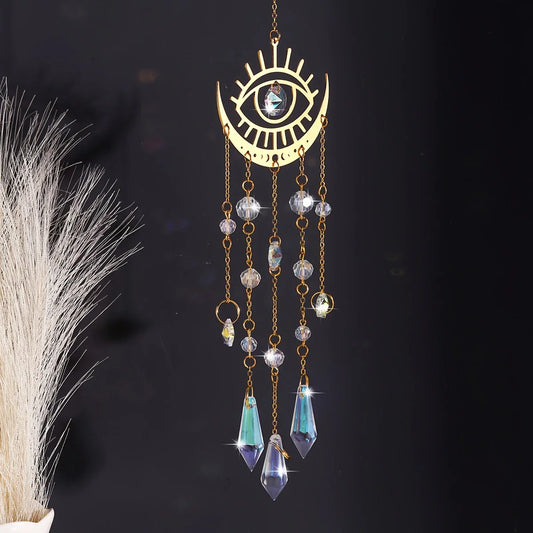
Moon Phase Crystal Suncatcher — Hanging Rainbow Maker for Window & Altar
Regular price $26.95Regular priceUnit price / perSale price $26.95 -
6.75" Solfeggio Crystal Singing Bowl 285 Hz — Turquoise Green Quartz
Regular price $1,232.95Regular priceUnit price / per$1,310.00Sale price $1,232.95Sale -
Crystal Rectangle Runes — 25-Piece Gemstone Rune Set for Casting
Regular price $63.95Regular priceUnit price / perSale price $63.95 -
Round Crystal Runes — 25-Stone Divination Set with Casting Guide
Regular price $39.95Regular priceUnit price / perSale price $39.95 -
Crystal Rune Set — 25 Carved Stone Runes with Velvet Bag
Regular price $45.99Regular priceUnit price / perSale price $45.99 -
Lithium Quartz Cluster — 7.55 kg Brazilian Specimen for Calm
Regular price $1,225.95Regular priceUnit price / perSale price $1,225.95 -
Cavansite with Stilbite — Fine Mineral Specimen from Pune, India
Regular price $6,129.95Regular priceUnit price / perSale price $6,129.95 -
Elmwood Fluorite Cluster — 20.4 kg Purple Cubes with Sphalerite
Regular price $4,290.95Regular priceUnit price / perSale price $4,290.95 -
Bolivian Amethyst Cluster — 79.7 lb Collector Specimen
Regular price $7,968.95Regular priceUnit price / perSale price $7,968.95 -
Blue Indicolite Tourmaline on Matrix — Nuristan, Afghanistan Specimen
Regular price $919.95Regular priceUnit price / perSale price $919.95 -
Botryoidal Pink Opal from Peru — Soft-Pink Collector Mineral Specimen
Regular price $73.95Regular priceUnit price / perSale price $73.95 -
Indicolite Tourmaline Specimen — Rare Blue Collector Crystal from Africa
Regular price $91.95Regular priceUnit price / per$135.00Sale price $91.95Sold out -
Quartz Cluster with XL Point — 25 in Brazilian Specimen & Stand
Regular price $7,355.95Regular priceUnit price / perSale price $7,355.95 -
Bolivian Amethyst Point — Large Anahi Mine Crystal, 3.25 lb
Regular price $367.95Regular priceUnit price / perSale price $367.95 -
Brazilian Amethyst Druze — Medium Raw Geode Piece, 5–8 in
Regular price $36.95Regular priceUnit price / perSale price $36.95 -
Pyrite Success Stones — Confidence, Wealth & Career Momentum
Regular price $12.99Regular priceUnit price / per$24.95Sale price $12.99Sold out -
Labradorite Mind-Expanding Stone — Intuition & New Perspective
Regular price From $19.95Regular priceUnit price / perSale price From $19.95Sold out -
Cocada Pyrite Raw Stone — Peruvian Fool's Gold for Abundance & Willpower
Regular price $8.95Regular priceUnit price / perSale price $8.95 -
Clear Quartz Large Tumbled Stone — Master Healer for Clarity & Amplified Intention
Regular price $8.95Regular priceUnit price / perSale price $8.95 -
Amethyst A+ Tumbled Pocket Stone (Small) — Spiritual Protection Crystal
Regular price $2.95Regular priceUnit price / perSale price $2.95 -
Amethyst Tumbled Pocket Stone — Calm Mind & Intuition Crystal
Regular price $4.95Regular priceUnit price / perSale price $4.95
Browse by type
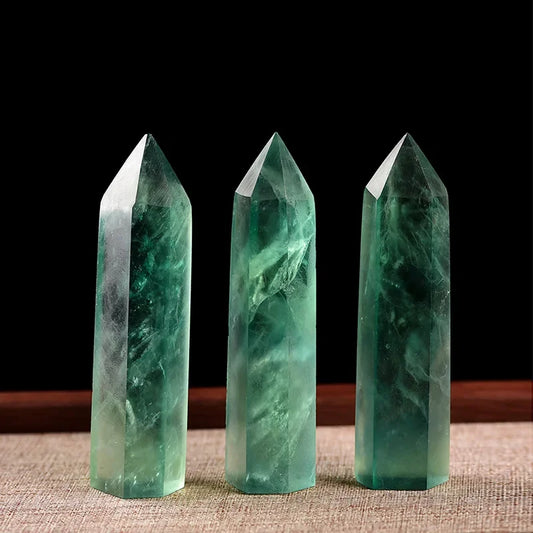
- Crystal Points & Towers — Upright points, polished towers and obelisks that stand on their own
- Crystal Spheres & Pyramids — Polished crystal balls and stone pyramids, from pocket size to display weight
- Crystal Carvings & Skulls — Carved skulls, serpents, eggs and stone bowls in quartz, fluorite and obsidian
- Crystal Lamps — Selenite, amethyst and quartz on warm LED bases
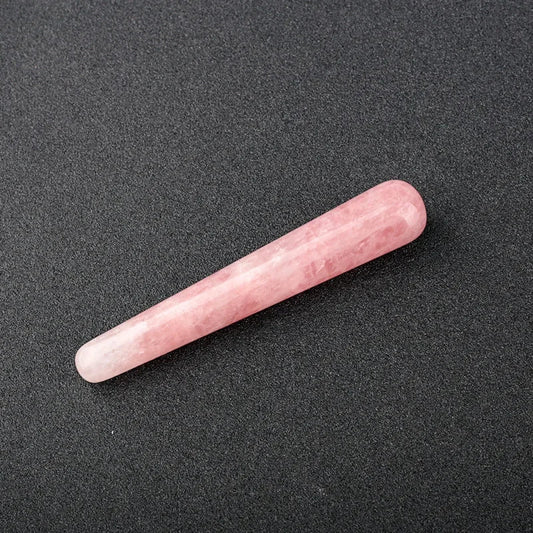
- Tumbled & Pocket Stones — Polished pebbles, palm stones and thumb-grooved comfort stones
- Crystal Sets & Kits — Curated stone trios and room kits, in a satin pouch with a guidance card
- Fine & Collector Minerals — Named-locality specimens with crystal faces intact and matrix attached
The full guide to crystals & stones
People have carried stones for as long as they have carried anything. Amber beads in Baltic graves, carnelian in Egyptian burial jewellery, jade in Mesoamerica, lapis ground for pigment and worn as an amulet. What the stone was thought to do changed from culture to culture; what stayed constant was the impulse to keep one small thing on your person that means something. That is still the honest reason to own a crystal. It is beautiful, it is older than anything else you will hold today, and it reminds you of something you decided. Any effect beyond that — beyond focus, beauty and personal meaning — is not scientifically established, and nothing here is sold as a treatment for any condition.
The shapes, and what each one is for
Tumbled stones are polished pebbles, the cheapest and friendliest entry point — pocket-sized, hard to damage, and the only sensible way to try six minerals without spending much. Comfort stones (worry stones) are larger and flatter with a thumb dip; they are made to be rubbed, and people who fidget tend to find them more useful than anything else in this collection. Palm stones and pocket spheres sit heavier in the hand and suit meditation, where the weight is the point. Points, towers and obelisks stand up and face a direction, which makes them the form for altars, desks and grid work. Pyramids and spheres are display and layout pieces. Geodes and raw clusters are unpolished and show the crystal as it grew — the most geological and, at the top end, genuinely collectible. Runes are a set for casting rather than carrying, and the crystal lamps are the version you leave on in a room.
What to look for when you buy
Three things. Honest material: dyed howlite sold as turquoise and glass sold as obsidian are the two most common substitutions — dye pools in the cracks, glass warms too fast in the hand, and bubbles inside a stone settle the question. Finish: a good tumble has no flat grinding facets and no chipped edges; a good point stands square without a wobble. Proportion to purpose: a stone you intend to carry has to survive a pocket, so selenite, malachite, fluorite and celestite — all soft or cleavable — belong on a shelf rather than a keyring. Quartz, agate, jasper, obsidian and tiger's eye take daily handling without complaint.
Cleansing, charging and care
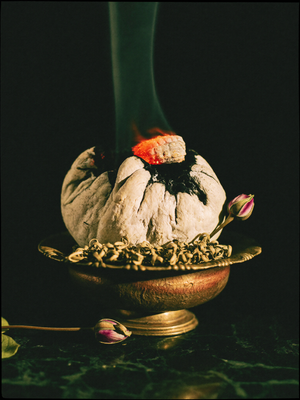
The two rules worth remembering are about water and light. Water ruins more stones than anything else: selenite and satin spar dissolve, pyrite rusts, and anything porous or fibrous will dull. Light is the other one — amethyst, rose quartz, citrine, fluorite and celestite fade in direct sun, permanently. So the default care routine is dry: a selenite plate overnight, a night on a windowsill in moonlight, a pass through cleansing smoke, or simply a soft cloth. A 3-inch selenite stick is the tool most people end up using for this, because it needs no cleansing itself.
Who this collection is for
If you are starting, buy small and buy three: a tumbled amethyst, a clear quartz comfort stone and a black obsidian pocket stone cover calm, clarity and grounding for under $20 together. If you already keep a practice, this is where the selenite, the points for grid work and the crystal lamps live. And if you are shopping for a room rather than a pocket — a geode for a hallway, an obelisk for a desk, a specimen for a shelf that deserves one — the large end of this collection runs into genuine mineralogy, priced accordingly.
From the Desire Diaries
- How to Cleanse Crystals (Without Ruining Them)Which stones must never touch water
- How to Charge Crystals: Moonlight, Selenite, SunThe four methods, and what to say
- Real vs. Treated Crystals: What You're Actually BuyingDye, glass and heat treatment, spotted
- Which Crystals Fade in Sunlight (and Why)Before you use that windowsill
- Crystals for Protection: What Each Stone Is Used ForAnd how to carry one
- Amethyst Meaning: History, Symbolism and PracticeThe most-bought stone, in context
Read more on crystals and stones in the magazine
Frequently asked questions
What crystals should a beginner start with?
Three stones cover most of what people come looking for: clear quartz for general clarity, amethyst for calm, and a dark grounding stone such as black obsidian or smoky quartz for protection. Buy them as tumbled pocket stones first — at $3 to $7 each you can learn what you actually reach for before spending on a large specimen. A $5 tumbled amethyst and a $300 amethyst geode are the same mineral.
What is the difference between a tumbled stone, a palm stone and a worry stone?
Size, and what your hand does with it. A tumbled stone is a small polished pebble, pocket-sized and the cheapest way to collect several minerals. A palm stone is a larger, flatter oval that fills the hand and gives weight during meditation. A worry stone — we call ours comfort stones — is a palm stone with a thumb-sized dip, made to be rubbed; the repetitive motion is what people find settling.
What are crystal points and towers used for?
A point or tower is a crystal cut flat at the base and tapered to a tip so it stands upright. Practitioners use the direction of the tip to mark focus — pointing it at the centre of a crystal grid, or placing one on a desk or altar as a visual anchor for an intention. Practically, they are also the form that displays best, which is why obelisks and towers are the usual choice for a room rather than a pocket.
How do I cleanse and charge my crystals?
The safe methods first: leave them on a selenite plate overnight, set them out under moonlight, smoke-cleanse them, or rest them on the earth. Avoid water on soft and fibrous stones — selenite dissolves, pyrite rusts, malachite reacts badly — and avoid salt on anything porous. There is no rule about how often; most people cleanse after buying a stone, after someone else handles it, or when it stops feeling like theirs.
Which crystals fade in sunlight?
Amethyst, rose quartz, citrine, fluorite, celestite, smoky quartz and most purple and pink stones lose colour with prolonged direct sun — sometimes within weeks on a bright windowsill, and the fading is permanent. Charge those in moonlight or indirect daylight instead, and keep sun charging for clear quartz, agate, jasper, obsidian and tiger's eye.
How can I tell if a crystal is real or dyed?
Look at the colour first: dye pools in cracks and along the surface rather than running through the stone, and it is usually louder than nature manages — electric blue howlite, neon green quartz. Real stone feels cool in the hand and takes a moment to warm; glass and resin warm up almost immediately. Bubbles inside, a moulding seam, or a price that seems impossible for the size are the other three tells.
Do bigger crystals work better?
No — and it is worth saying plainly, because size is what price is built on. A large specimen is a piece of interior design and a piece of geology; a pocket stone is a reminder you carry. Buy the big one because you want to look at it every day, not because you think it works harder.