Collection: Matcha & Latte Blends
Five ceremonial-grade Uji matcha blends from Morning Made — unsweetened, vanilla, strawberry and mango — alongside caffeine-free turmeric golden milk and café-quality chai, plus the measuring scoop and electric frother that make a good cup repeatable.
In short: Grade and origin decide the cup. Water under 80 °C, paste first, milk second.
-
Original Matcha Latte — Sweetened Organic Uji Matcha Blend
Regular price $44.95Regular priceUnit price / perSale price $44.95 -
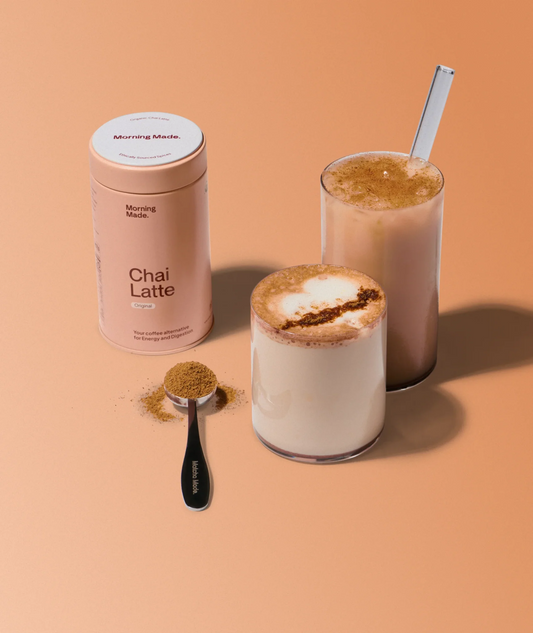
Original Chai Latte — Café-Quality Organic Spiced Blend
Regular price $44.95Regular priceUnit price / perSale price $44.95 -
Strawberry Matcha Latte — Naturally Sweetened Ceremonial Grade Matcha
Regular price $44.95Regular priceUnit price / perSale price $44.95 -
Mango Matcha Latte — Ceremonial Grade Matcha With Tropical Mango
Regular price $44.95Regular priceUnit price / perSale price $44.95 -
Vanilla Matcha Latte — Naturally Sweetened Ceremonial Grade Matcha
Regular price $44.95Regular priceUnit price / perSale price $44.95 -
Unsweetened Matcha Latte — Ceremonial Grade Organic Uji Matcha
Regular price $44.95Regular priceUnit price / perSale price $44.95 -
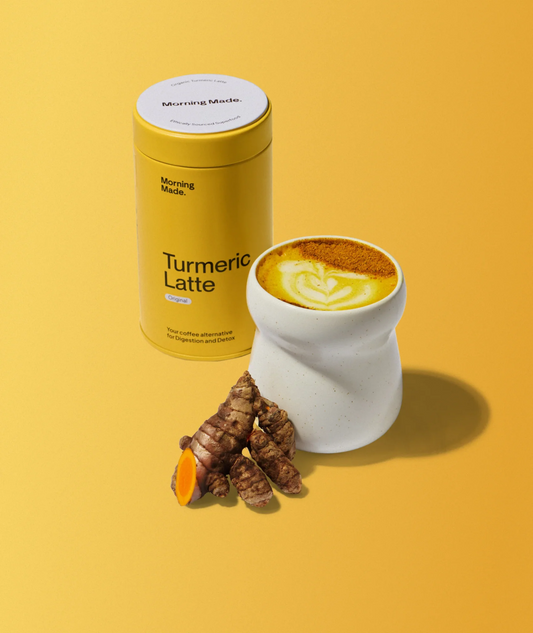
Original Turmeric Latte — Organic Caffeine-Free Golden Milk Blend
Regular price $44.95Regular priceUnit price / perSale price $44.95 -
Matcha Measuring Spoon — Reusable Stainless Steel Scoop
Regular price $14.95Regular priceUnit price / perSale price $14.95 -
Modern Matcha Whisk — Electric Frother With Countertop Stand
Regular price $30.95Regular priceUnit price / perSale price $30.95
How to choose a matcha or latte blend
Two things decide what ends up in the cup: grade and origin. Every matcha here is ceremonial grade from Uji, the region south of Kyoto that has been the reference point for Japanese matcha for several hundred years — shade-grown leaf, certified organic and pesticide free, from a family-owned farm. Culinary grade is not a cheaper version of the same thing; it is a different leaf, picked later and ground coarser, and it is the reason a lot of people decide they dislike matcha. The quick test is colour: good matcha is a vivid jade green. Olive, khaki or yellow-green means later harvest, lower grade, or a tin that has been open too long.
Sweetened, unsweetened, or not matcha at all
The unsweetened blend is the honest one — nothing to hide behind, so the quality of the leaf is the whole drink. Vanilla, strawberry and mango are naturally sweetened, made for people who find straight matcha too grassy, and the base leaf is the same ceremonial grade rather than the downgrade that usually pays for flavouring elsewhere. Two blends in this collection contain no matcha at all: the turmeric golden milk is naturally caffeine-free and belongs at the end of the day rather than the start, and the chai is built to be drunk as a latte rather than used as a base for one.
Which blend, and how much
| Blend | Sweetness | Best served | Starting amount |
|---|---|---|---|
| Unsweetened matcha | None | Hot or iced | ½ tsp |
| Original matcha | Sweetened | Hot or iced | 1–1½ tsp |
| Vanilla matcha | Naturally sweetened | Hot or iced | 1½ tsp |
| Strawberry & mango matcha | Naturally sweetened | Iced — the fruit has more room | To taste |
| Turmeric golden milk | Lightly sweet, caffeine-free | Hot, evening | To taste |
| Chai | Sweetened | Hot or iced | To taste |
The three mistakes worth avoiding
The first is water that is too hot. Matcha turns bitter above roughly 80 °C, so boil the kettle and then let it stand two or three minutes — almost every complaint about matcha tasting harsh traces back to this. The second is skipping the paste stage: whisk the powder with a small amount of warm water into a smooth, glossy paste before any milk goes in, or you will spend the rest of the cup chasing clumps. The third is dose, which is what the measuring scoop is for — half a teaspoon too much and matcha turns chalky and bitter, half a teaspoon too little and it disappears under the milk.
Store every pouch sealed, cool and away from light, and never return a wet spoon to one. Matcha oxidises quickly once opened, which is why a pouch drunk within a couple of months tastes noticeably better than one left standing on a shelf. These are food and drink, valued here for taste, warmth and the few minutes that making them takes; any benefit beyond that is a matter of tradition and personal experience and is not scientifically established. Nothing here is intended to diagnose, treat, cure or prevent any condition.
Questions we get asked
What is the difference between ceremonial and culinary grade matcha?
They are not the same leaf at a different price. Ceremonial grade is made from the youngest, shade-grown leaves of the first harvest, stone-ground very fine, and meant to be drunk with water or milk alone. Culinary grade comes from later harvests and coarser grinding, and it is designed to survive being baked into something sweet. Drunk straight it tends to be bitter, dull and slightly gritty, which is where most people's dislike of matcha actually comes from. Everything in this collection is ceremonial grade.
How hot should the water be?
Under about 80 °C. Boiling water scalds the leaf and pulls out the bitterness, and it is by far the most common reason a cup tastes harsh. The simplest method without a thermometer is to boil the kettle and let it stand for two to three minutes before you whisk. If you are making an iced matcha, whisk the paste with a little warm water first anyway — cold water alone will not dissolve the powder.
Do I need a bamboo whisk, or will the electric frother do?
The electric frother in this collection will do, and for everyday lattes it is the easier tool: ten to fifteen seconds, no technique, and it works in cold milk where a bamboo chasen struggles. A traditional chasen gives a finer, denser foam and is the right choice if the preparation itself is the point, but it needs practice and careful drying. Whichever you use, submerge the head fully before switching on and froth the matcha into a paste before the milk goes in.
Which of these are caffeine-free?
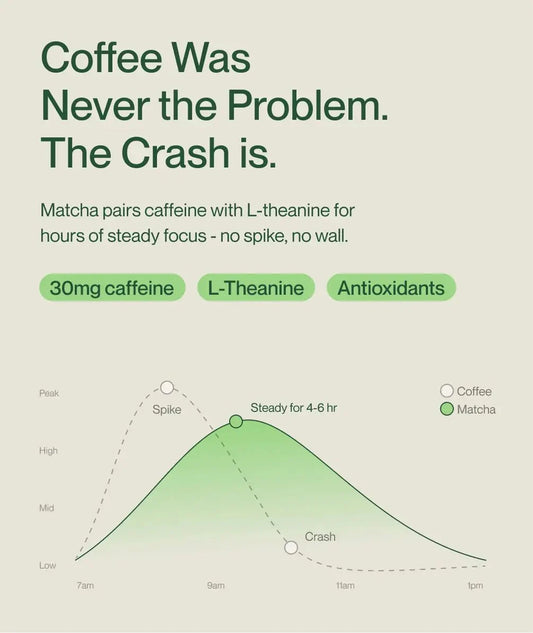
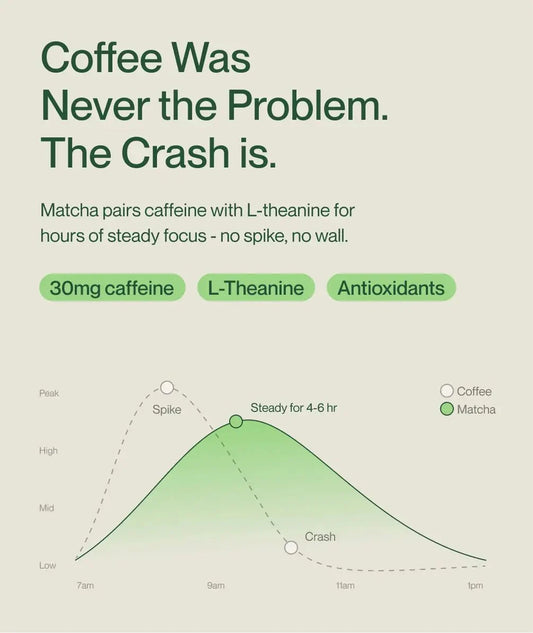
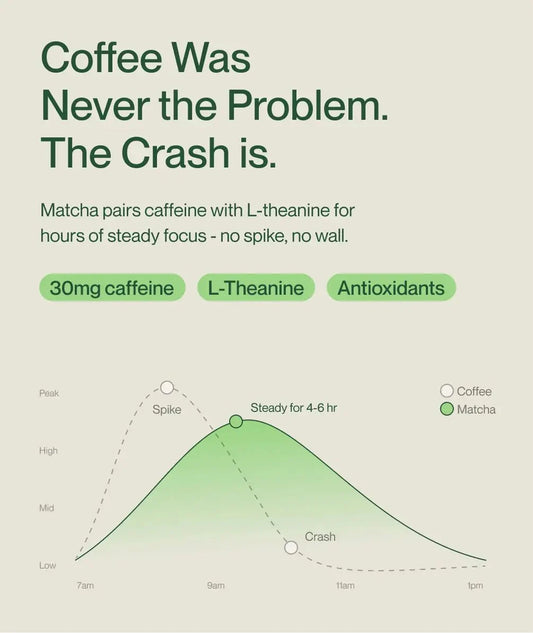
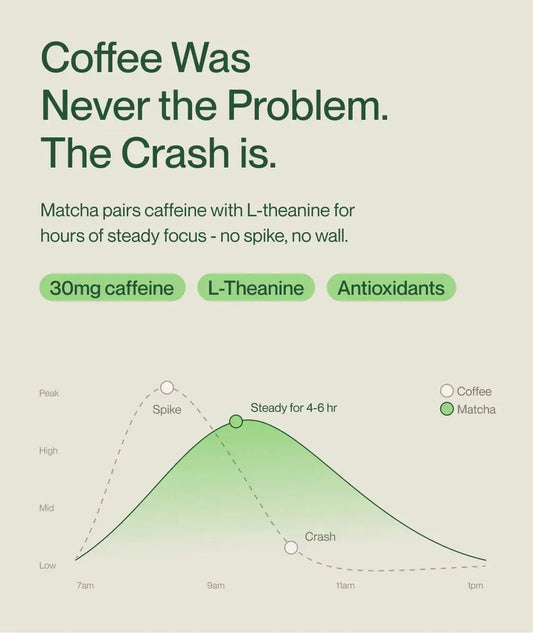
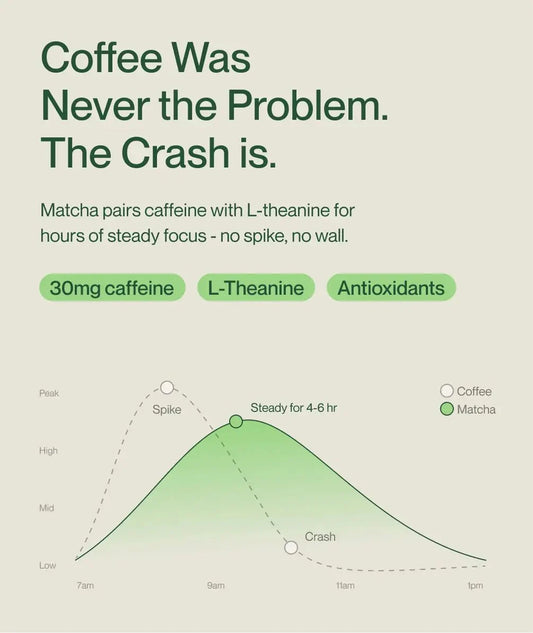
The turmeric golden milk blend is naturally caffeine-free, which is why it works as an evening drink. All the matcha blends contain caffeine naturally, since matcha is green tea leaf in whole form — Morning Made do not publish a milligram figure for these blends, so we will not quote one. The chai blend's caffeine content is not stated either. If it matters to you, the pouch carries the full declaration on arrival.
Can I make these with oat or almond milk?
Yes. Nothing in these blends depends on dairy — they are vegan-friendly, gluten-free and dairy-free. Oat milk steams particularly well and suits both the matcha and the spiced blends. The only thing worth knowing is order of operations: dissolve the powder in a little warm water first, then add the milk. Adding cold milk to dry powder is what produces the lumps people blame on the matcha.
How long does an opened pouch keep?
Matcha is at its best within a couple of months of opening. It oxidises quickly once air reaches it, and the first thing to go is the bright green colour, followed by the sweetness. Keep it sealed, cool, dry and out of sunlight, keep it away from the spice shelf because it takes on other smells, and never put a damp spoon back in the pouch. The spiced and turmeric blends are more forgiving but keep better under the same conditions.