Collection: Crystal Spheres & Pyramids
Thirteen polished spheres and pyramids — selenite, chevron amethyst, clear quartz, lapis lazuli and tiger’s eye — from a $5.95 pocket ball to an 80 mm lapis sphere at $153.95.
In short: A sphere sends attention outward; a pyramid sends it up. Buy by weight and stand, not by stone alone.
-
Chevron Amethyst Sphere — Polished Crystal Ball for Calm & Focus
Regular price From $49.95Regular priceUnit price / perSale price From $49.95 -
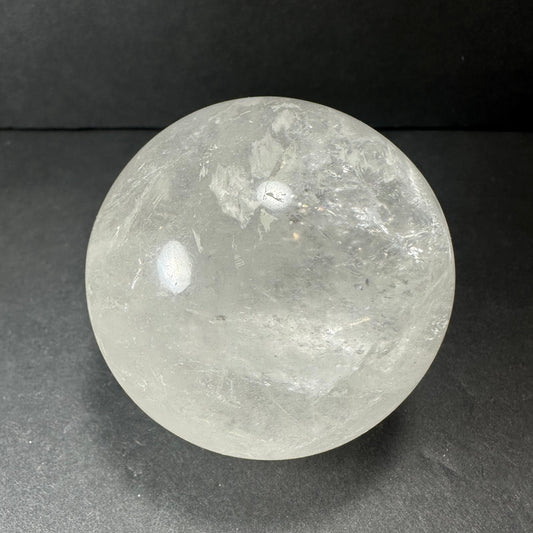
Clear Quartz Sphere — Extra-Quality Polished Crystal Ball
Regular price From $122.95Regular priceUnit price / perSale price From $122.95 -
Lapis Lazuli Sphere — Polished 80 mm Stone for Insight & Calm
Regular price $153.95Regular priceUnit price / perSale price $153.95 -
Polished Crystal Pyramid — Assorted Stones for Altar & Meditation
Regular price From $30.95Regular priceUnit price / perSale price From $30.95 -
Selenite Sphere 8 cm — Large Polished Moroccan Gypsum Ball
Regular price $36.95Regular priceUnit price / perSale price $36.95 -
Quartz Sphere 60 mm — Polished Clear Quartz Crystal Ball
Regular price $55.95Regular priceUnit price / perSale price $55.95 -
Selenite Sphere 6 cm — Polished Moroccan Crystal Ball
Regular price $9.95Regular priceUnit price / perSale price $9.95 -
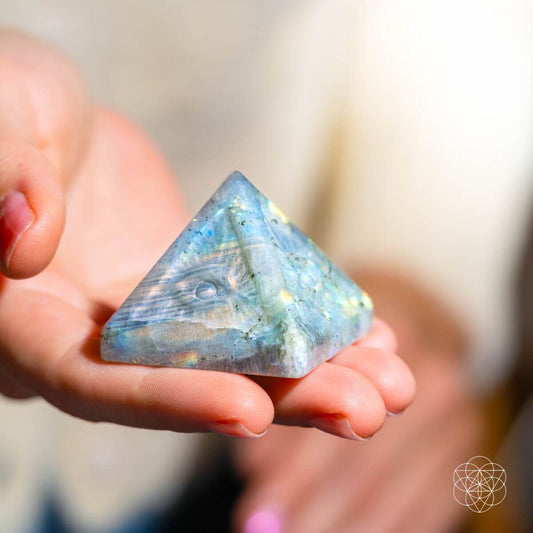
All Seeing Eye Pyramid — Labradorite & Obsidian for Intuition and Protection
Regular price $29.95Regular priceUnit price / perSale price $29.95 -
Rose Quartz Pyramid of Fertility — Crystal Pyramid for Loving Energy
Regular price $29.95Regular priceUnit price / perSale price $29.95Sold out -
Tiger’s Eye Pyramid of Focus — Concentration & Willpower
Regular price From $20.99Regular priceUnit price / perSale price From $20.99Sold out -
Amethyst Pyramid of Devotion — Lasting Love & Commitment
Regular price From $21.99Regular priceUnit price / perSale price From $21.99Sold out -
Agate Geode Pocket Sphere — Grounding Balance With a Druzy Heart
Regular price $6.95Regular priceUnit price / perSale price $6.95 -
Peach Selenite Pocket Sphere — Comfort & Emotional Renewal
Regular price $5.95Regular priceUnit price / perSale price $5.95
How to choose a crystal sphere or pyramid
These are the two shapes people buy when they want a stone to hold a room rather than a pocket. A sphere has no front and no edge, which is exactly the point: it sends attention outward in every direction and gives the eye nowhere to stop. It is also the hardest form to cut: every part of the surface has to be ground to the same radius. A pyramid does the opposite. Four faces meeting at a point pull the eye upward whether you meant it to or not, which is why the shape keeps turning up at the centre of altars and crystal grids.
Both forms are old: polished stone balls were used for scrying long before the fairground crystal ball, and John Dee kept a smoky quartz shewstone at the Elizabethan court. Traditionally these shapes are used as focal objects for meditation, intention-setting and display. Any effect beyond focus, beauty and personal meaning is not scientifically established.
What separates a good sphere from a cheap one
A well-cut sphere rests wherever you put it; a poorly cut one has a flat spot and always finds the same resting position. Next, look into the stone rather than at it. A curved surface magnifies everything underneath, so internal veils and healed fractures read as depth and are usually a good sign — but a crack that reaches the surface is where the piece will eventually split, and it is worth finding before you buy. Finally, check the polish under a moving light for flat facets and dull patches, which is what machine-roughed work leaves behind.
On a pyramid, symmetry is the whole test. Sight down the apex: the four edges should meet at one point, not a short ridge, and the base should sit flat without rocking. Assorted-stone pyramid listings are cut in several different materials, so check which stone you are actually choosing before you decide where it will live.
Hardness decides where it can live
This matters more for spheres than for almost any other form, because a sphere invites handling.
| Stone | Mohs | Water | Sunlight | Notes |
|---|---|---|---|---|
| Selenite (gypsum) | 2 | Never — it dissolves | Stable | A fingernail marks it. Dry cloth only, and keep it off a damp windowsill |
| Lapis lazuli | 5–5.5 | Brief rinse, dry at once | Stable | Often waxed; hot water can lift the wax and dull the surface |
| Quartz family — clear, amethyst, chevron amethyst, rose, smoky, tiger's eye, agate | 7 | Short rinse is fine | Amethyst and rose quartz fade | The safe choice for a sphere that gets picked up daily |
Size, weight and the stand question
Weight is the specification that surprises people. A 6 cm selenite ball is 250–300 g and sits in one palm. Take it to 8 cm and it roughly doubles to 500–560 g — a two-handed object that needs a proper stand rather than a shelf. A 60 mm quartz sphere is 342 g, an 80 mm lapis runs 675–712 g, and larger chevron amethyst spheres reach close to two kilograms.
Assume every sphere needs a stand. A brass or wooden ring keeps it from rolling off a surface, and a fall onto a hard floor is how most spheres end their lives — quartz is hard, but hardness is resistance to scratching, not to impact. Pyramids stand on their own base and need nothing. Where a listing is offered in assorted sizes or assorted stones, the photographs are representative of the type rather than of the exact piece you will receive.
What is a crystal sphere actually used for?
As a focal object. Most people keep one on an altar, a desk or a shelf and use it the way others use a candle — something specific to look at while thinking, setting an intention, or closing a practice. Spheres have a long association with scrying, the practice of gazing into a reflective surface until the mind loosens, which is where the fairground crystal ball comes from. Beyond focus, atmosphere and personal meaning, no further effect is scientifically established.
Do I need a stand for a sphere?
Yes, for anything above pocket size. A sphere will roll, and a fall onto tile or hardwood usually chips or splits it. A simple brass or wooden ring is enough. Pocket spheres under about 4 cm are the exception — they are made to be carried loose in a hand or a pocket. Pyramids never need a stand; they rest on their own base.
What size should I buy?
Match it to what you want to do with it. Under 4 cm is a pocket piece you carry and turn in one hand. Around 6 cm and 250–300 g is the classic palm size that still works as a shelf object. From 8 cm and 500 g upward you are buying a display piece: it needs two hands, a stand and a surface that is not going to get knocked. Bigger is not better unless it has somewhere to live.
Can I put a selenite sphere in water?
No. Selenite is gypsum, Mohs 2, and it is soluble — water etches the polish and will eventually dissolve the stone. Clean it with a dry soft cloth and nothing else, and keep it away from bathrooms and damp windowsills. Quartz-family spheres, including amethyst, chevron amethyst, agate and clear quartz, tolerate a short rinse in lukewarm water. Never use an ultrasonic cleaner on any sphere; it finds every internal fracture and opens it.
Will my sphere or pyramid fade in sunlight?
Amethyst, chevron amethyst and rose quartz all fade with prolonged direct sun, going grey or losing depth of colour over months. Keep them out of a south-facing window. Clear quartz, smoky quartz, tiger's eye, lapis lazuli, obsidian and agate are stable and can sit in daylight without changing. A sunlit window is the most common place people put a sphere and the worst place for half of them.
Why do two spheres of the same size cost very different amounts?
Cutting loss and clarity. A sphere is ground down from a much larger block, and most of that block becomes waste — so the price reflects the rough it was cut from, not the ball you end up holding. Material that is clear enough, evenly coloured enough or well banded enough to survive being made round is far scarcer than material that is only good enough to tumble. Grade, origin and how much of the pattern the cutter managed to keep on the surface do the rest.