Collection: 7-Day Vigil Candles
Glass-encased candles that burn for roughly seven days — the format for petition work that runs over time. Most arrive dressed with herbs, oil and a stone, with a blank field for your petition. $11–$24.
In short: A 7-day vigil candle is a tall glass candle built to burn continuously for about a week, so one intention stays lit.
-
Return to Sender Candle — 7-Day Fixed Reversal & Protection Vigil
Regular price $24.00Regular priceUnit price / perSale price $24.00 -
New Moon 7-Day Candle — Intention & New Beginnings
Regular price $11.95Regular priceUnit price / perSale price $11.95 -
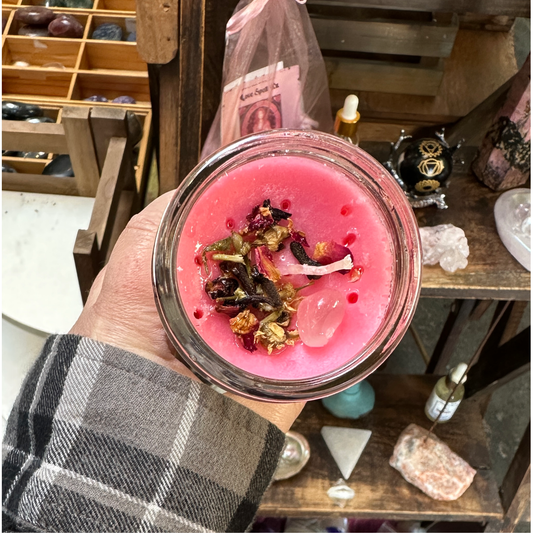
Love Drawing 7-Day Candle — Attraction & Heart Work
Regular price $11.95Regular priceUnit price / perSale price $11.95 -
Crown of Success 7-Day Candle — Recognition & Momentum
Regular price $11.95Regular priceUnit price / perSale price $11.95Sold out -
Money Drawing 7-Day Candle — Prosperity & Opportunity
Regular price $11.95Regular priceUnit price / perSale price $11.95 -
Uncrossing 7-Day Candle — Clearing & Fresh Start
Regular price $13.95Regular priceUnit price / perSale price $13.95 -
Banishing 7-Day Candle — Release & Endings
Regular price $13.95Regular priceUnit price / perSale price $13.95 -
Spiritual Clarity 7-Day Candle — Focus & Divination
Regular price $13.95Regular priceUnit price / perSale price $13.95 -
Fiery Wall of Protection 7-Day Candle — Strong Warding
Regular price $11.95Regular priceUnit price / perSale price $11.95 -
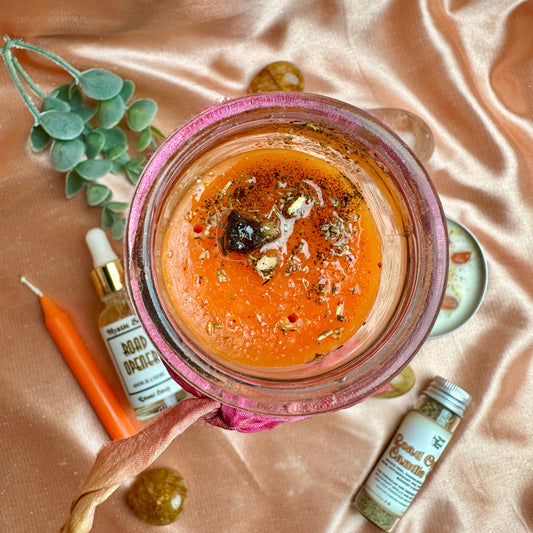
Road Opener 7-Day Candle — Abre Camino & New Doors
Regular price $11.95Regular priceUnit price / perSale price $11.95
7-day vigil candles: how they work and how to choose one
A seven-day candle — also called a vigil candle, a novena candle or simply a seven-day glass — is a tall wax column poured directly into a narrow glass jar around eight inches high. Lit and left to run, it burns continuously for roughly six to eight days. The format comes out of Catholic devotional practice, where a candle kept burning stood in for a prayer kept up, and it was absorbed into hoodoo, botanica and folk magic traditions for the same reason: an unbroken flame represents sustained attention on a single petition in a way that a candle burned for twenty minutes cannot.
Which candle for which situation
Vigil candles carry traditional names that map to traditional purposes, and the vocabulary is worth knowing before you buy. The useful order is to name the obstacle first and the goal second — clearing work before drawing work, almost always.
| Candle | Traditional purpose | Reach for it when |
|---|---|---|
| Road Opener | Abre Camino — clearing obstacles, opening a way | Everything is stuck and you cannot name why |
| Uncrossing | Undoing interference and crossed conditions | Things went wrong in a run, after a specific falling-out |
| Fiery Wall of Protection | Strong warding | You want a boundary held while you deal with something |
| Return to Sender | Reversal — sending back what was sent | You believe something was aimed at you deliberately |
| Banishing | Endings and release | Something needs to leave, and you are sure it should |
| Money Drawing | Prosperity, income, opportunity | The road is clear and you want flow toward you |
| Crown of Success | Recognition, momentum, being seen | The work is good but nobody is noticing it |
| Love Drawing | Attraction and heart work | You are open and want to draw, not target |
| Spiritual Clarity | Focus and divination | Before a reading, or when you cannot think straight |
| New Moon | Intention and new beginnings | You have already decided and want to hold it |
Most carry a blank field on the label for a name, a birthdate and a petition. Filling it in before the first lighting is part of the practice, not packaging.
Dressed versus plain
A plain vigil candle is wax and glass and nothing else. You dress it yourself — boring holes in the top, working in oil, adding herbs. A dressed or “fixed” candle arrives with that work already done: anointed with a ritual oil matched to the purpose, dusted with herbs, frequently topped with a small stone. Fixed candles are the practical choice if you do not keep a shelf of loose botanicals, and the honest tradeoff is that you are trusting somebody else's formula. Look for makers who tell you what actually went in — named herbs, a named oil, a named stone — rather than “charged with intention” and nothing more. Because herbs and stones are placed by hand, no two candles from the same batch look identical, and the botanicals on the surface will darken as the flame reaches them.
Burning one, and reading it afterwards
Set the jar on a non-flammable surface with nothing above it, out of draughts, and let it run. If the flame climbs tall and starts sooting, snuff it, let the glass cool, trim the wick and relight. Practitioners then read the burn: a steady flame and clean glass are taken as a working that ran unobstructed, while heavy soot, a guttering flame or thick leftover wax are read as resistance. Check the physical causes first — a draught, an untrimmed wick, a cold room, a wick set off-center — because the great majority of dramatic burns have an ordinary explanation, and reading a manufacturing quirk as an omen helps nobody. When it is finished, the glass can be washed and reused; what to do with the wax is its own small tradition.
Safety, and what these are not
Seven-day candles are designed to burn unattended, which makes placement the entire safety question: clear of curtains, clear of anything that can fall, never lifted by the glass while lit, never relit in a cracked jar. Keep them away from children and animals. These are devotional and ritual objects, traditionally used for focus and intention-setting. They make no medical claim, they do not treat or prevent any condition, and they are not a substitute for medical, legal or financial advice.
From the Desire Diaries
- Road Opener or Money Candle? The One Question That DecidesThe choice most people get backwards
- Uncrossing, Banishing, or Protection: Which Comes FirstWhy the order matters more than the candle
- Candle Flame Meanings in a RitualWhat a flickering, dancing or drowning flame tells you
- Why Is My Candle Burning Black?Soot, smoke, and the physical causes to rule out first
- What to Do With Leftover Candle Wax After a RitualReading it, keeping it, disposing of it
For shorter workings, the wider ritual candle shelf holds tapers, jars and figure candles; the oils used to dress a plain glass are on the ritual oils and sprays page.
Frequently asked questions
How long does a 7-day candle really burn?
Six to eight days of continuous burning is the normal range. Wick thickness, wax formula, room temperature and draughts all move the number, so treat seven days as the design target rather than a guarantee. A candle that finishes in four days was almost certainly standing in moving air.
Can I put it out and relight it later?
Yes, and many practitioners deliberately burn a vigil in sittings rather than straight through — seven days of burning, not seven calendar days. Snuff it rather than blowing it out, let the jar cool before moving it, trim the wick if it has mushroomed, and relight it in the same spot. This is also the safer way to run one if you cannot be home.
How do you read a 7-day candle after it burns?
Traditional practice reads three things: the flame while it burns, the soot on the glass, and what is left at the bottom. A tall steady flame and clean glass are read as a working that ran without obstruction; heavy black soot, a flame that gutters or drowns, or a thick wax residue are read as resistance. Rule out the physical causes first — draughts, a long wick, a cold room — because most dramatic burns have an ordinary explanation.
What does a dressed or fixed candle mean?
It means the preparation is already done: the wax has been anointed with a matching ritual oil, dusted or topped with herbs, and often finished with a small stone. A plain vigil candle is wax and glass only, and you dress it yourself through holes bored in the top. Fixed candles are the practical choice if you do not keep a shelf of loose botanicals — the tradeoff is that you are trusting somebody else's formula, so buy from makers who name what went in.
Which 7-day candle should I choose?
Name the obstacle before you name the goal. If something is in the way, Road Opener or Uncrossing comes before anything else; if something is coming at you, Fiery Wall of Protection or Return to Sender; if the road is already clear and you want to draw, Money Drawing, Love Drawing or Crown of Success. Working a drawing candle on top of an unresolved blockage is the single most common misorder in candle work.
Is it safe to leave one burning unattended?
That is what the format assumes, and it makes placement the whole safety question. Use a non-flammable surface — stone, tile, a metal tray — keep the candle clear of curtains and shelving overhead, and keep it out of draughts, since uneven heating is what cracks glass jars. Never lift a lit jar by the glass. If a jar cracks, extinguish it and do not relight it in the broken glass.
How is this different from an 8 oz jar candle?
Format and duration. A seven-day vigil is a tall narrow column in glass, meant to run continuously for a week of sustained work. An 8 oz jar candle is a wider, shorter pour burned in sittings of a few hours, which suits a single evening's ritual rather than a week-long petition.