Collection: Mugs, Cups & Drinkware
Every vessel in the shop you actually drink from: handmade stoneware mugs, sets of small glass and stoneware cups, a wooden cacao cup, a double-walled tasting glass, cold-drink tumblers and a crystal-chamber water bottle. Sizes run 4.5 oz to 16 oz — and the size is what decides the drink.
-
Kira Small Glass Cups — Set of 4 for Tea Ceremony
Regular price $86.95Regular priceUnit price / perSale price $86.95 -
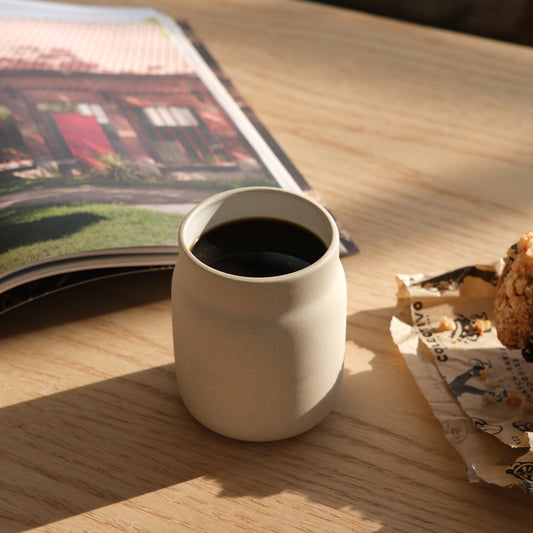
Epa Stoneware Coffee Cups — Set of 4, Matte Handmade Stoneware
Regular price $126.99Regular priceUnit price / perSale price $126.99 -
Ora Cacao Cups — Laser-Engraved Wooden Cups for Cacao Ceremony
Regular price From $7.95Regular priceUnit price / perSale price From $7.95 -
Crystal Infused Water Bottle 16oz — Glass & Steel with Insulation Sleeve
Regular price $49.95Regular priceUnit price / perSale price $49.95 -
Insulated Tumbler — Lightweight Travel Cup for Cold Drinks
Regular price $30.95Regular priceUnit price / perSale price $30.95 -
Reusable Glass Straw Set — 3 BPA-Free Straws & Cleaning Brush
Regular price $17.95Regular priceUnit price / perSale price $17.95 -
Can Cup — 16 oz Glass Tumbler for Iced Matcha Lattes
Regular price $25.95Regular priceUnit price / perSale price $25.95 -
Coffee Tumbler Mug — Handmade 10 oz Stoneware, Made in Milwaukee
Regular price $39.95Regular priceUnit price / perSale price $39.95 -
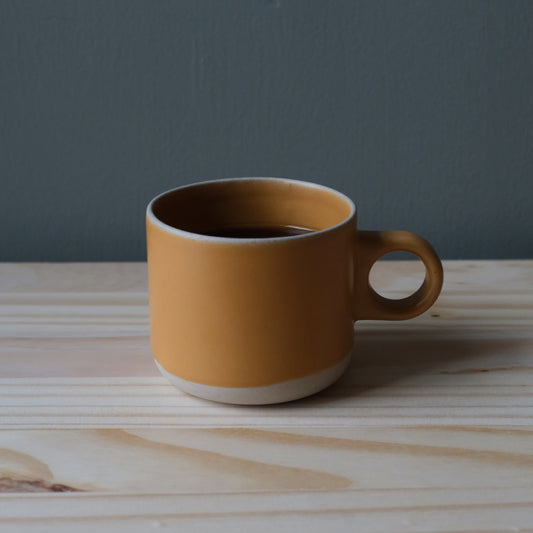
Scotty Dipped Mug — Handmade 12 oz Stoneware for Slow Mornings
Regular price $50.95Regular priceUnit price / perSale price $50.95 -
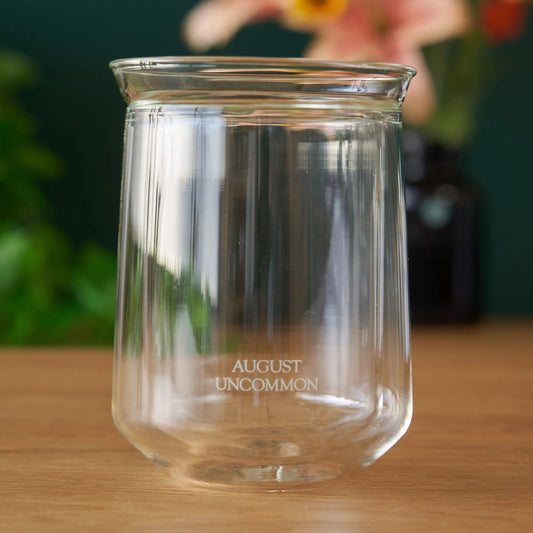
Double-Walled Tasting Glass — Hand-Blown Borosilicate, 12 oz
Regular price $18.99Regular priceUnit price / perSale price $18.99
Choosing a vessel: size first, then shape, then material
A cup is not a neutral container. Three of its properties change the drink measurably before you have tasted anything — how much it holds, how the rim and walls are shaped, and what the wall is made of. Decide in that order and the choice gets easy. There are ten pieces on this page from six makers, running from a $7.95 single wooden cacao cup to a $126.99 set of four handmade stoneware cups, and this is the whole of the shop's drinkware: everything else in the ritual kitchen is something you put into these.
Size is the drink
The stated capacities here run from 4.5 oz to 16 oz — a three-and-a-half-fold spread, and that number alone tells you what each one is for. The small Ora cacao cup is made for a 4.5 oz serving, closer to an espresso than a hot chocolate: ceremonial cacao is concentrated and meant to be sipped, and a small cup enforces that where a large mug quietly encourages you to drink it like cocoa. The Kira glass cups — 1.75 inches high and 2.5 wide, no capacity printed, deliberately small — are the same discipline for tea, sake or a short pour after dinner. At the other end, the 16 oz can cup is built for an iced drink you will work through slowly, and the 16 oz crystal water bottle is the one that leaves the house. Between them sit the 10 and 12 oz pieces — the everyday range, the cup that ends up in your hand without a decision: the 10 oz Misewell coffee tumbler mug, the 12 oz Scotty dipped mug from the same studio, the 10 oz Epa stoneware cups and the 12 oz double-walled tasting glass.
Shape decides aroma and, for iced drinks, appearance
Most of what we call flavor is smell, and a straight-sided mug throws a good deal of it past your face on the way up. The tasting glass has a thin lip and a flare at the rim that collects aroma and delivers it — the reason tea, whisky and wine all converge on that silhouette. Fill it to just below the flare rather than to the rim; the empty inch is where the aroma gathers, and the maker's own advice is to smell before you sip and again halfway down. The magazine's case for glass teaware and tea as a sitting practice are both, in effect, arguments for that glass. The reverse case is the can shape: straight sides and a tall, narrow profile keep an iced matcha in layers instead of letting it collapse into one flat green — ice first, whisked matcha over it, cold milk last. One shape is for what you smell, the other for what you see. The Kira cups take a third route, a bud form with a wave at the rim so the lip meets your mouth rather than an edge.
Hot or cold is not interchangeable
Worth checking before you buy, because it is the mistake that ruins a piece. The 16 oz can glass is built for cold drinks only — it is not heat resistant, and pouring hot water into it is how a glass like that breaks. The Morning Made insulated tumbler (currently out of stock) is likewise a cold-drink cup by the maker's own description, built for iced matcha and cold brew on the commute. The double-walled tasting glass is the opposite: two walls with air between them insulate, so hot stays hot, cold stays cold, and the outside stays comfortable to hold either way. Stoneware handles both, with a wall thick enough to keep coffee hot and a rim cool enough to drink from straight away — both Misewell mugs are described as equally happy with hot and cold, and the Epa cups the same, with one caveat from the maker: avoid thermal shock, so do not take them from cold water straight to boiling. The Kira glass likes a warm-up with hot water before anything hot goes in. The crystal bottle should never be filled with boiling water. If you want one vessel for the whole day, hot-and-cold is the property to buy on, and the tasting glass or either stoneware mug is the answer.
Material, and what handmade actually means here
Stoneware is fired dense and hot, which is why it is an everyday object rather than a careful one — dishwasher-safe, chip-resistant, and it holds heat. Both Misewell mugs are thrown by hand in the maker's own studio in Milwaukee and go straight in the dishwasher; the Epa cups are made by Gharyan Stoneware with local artisans from a toxin-free clay body, dishwasher-safe too, though hand washing keeps the matte surface even. Glass shows the drink and adds nothing to the taste; the same reasoning applies to the glass straw set (three straws and a cleaning brush), which, unlike metal, does not put a flavor of its own into something as delicate and slightly savory as matcha. Wood is warm to hold and light — the Ora cups were drop-tested from six feet and are meant to travel — and it is the one material here to keep away from a dishwasher. The tasting glass and the Kira cups are hand wash only as well: double-walled glass can trap water between the layers in a dishwasher, and the Kira rim is the thinnest part of the piece.
Handmade means the pieces will not match. The Milwaukee mugs and the Epa set carry small differences in glaze, weight and line from one piece to the next, and the tasting glass is hand-blown, so its size and shape vary a little too. That is the nature of the object, not a defect — worth knowing if you are buying a set of four and expect them identical. The Epa cups and the Kira glasses are sold only as sets of four; the Ora cups come singly or in sets of two, four or six in either the small or the large size, which is the sensible way to buy if the point is serving other people rather than a cup of your own.
Which piece for which drink
For ceremonial cacao, the small Ora cup is the purpose-built answer and the cheapest thing on the page; prepare the cacao in a jug and pour into the wood rather than whisking in it, and keep one cup for cacao and nothing else, as the maker suggests. What ceremonial cacao is and how to hold a ceremony at home cover the drink itself. For matcha and latte blends, the can cup and the glass straws are the iced pairing; hot, any of the stoneware works, and warming the cup for ten seconds first matters more for matcha than for anything else because it tastes flat landing in cold stoneware — matcha grades explained is the guide to what goes in. For loose-leaf tea, the tasting glass is the drinking vessel and the shop's two-cup glass teapot is the brewing one; the steel infuser that appears in some of the tasting glass photographs is not included and we do not stock it separately. Green tea water temperature and how to read a tea label are the two tea articles worth reading first; and if you read the leaves afterward, the guides to tea leaves and coffee grounds both want a plain, pale-bottomed cup, which is a point for the white Epa or the white Misewell. For coffee, the two Milwaukee mugs are the everyday cups and the Epa set is the one for guests. For water, the crystal bottle: 16 oz, steel and glass with an insulating sleeve, a sealed crystal chamber in the base, and a choice of five stones of which Clear Quartz, Obsidian and Tiger Eye are in stock and Amethyst and Rose Quartz are currently sold out.
The crystal water bottle deserves one honest note: the stones sit sealed in a chamber in the base and never touch the water. That is the safe design — the magazine's guides to gem water and which crystals cannot go in water explain why direct contact is a bad idea for several popular stones. Crystals are traditionally used for focus and intention, and that use is not scientifically established — the bottle does not change what you are drinking, and nothing here is a health claim; what Emoto's water photographs actually show is the fair-minded read on the wider idea. The rest of the crystal shelf is under crystals and stones.
Most of this page also lives on the room-and-moment shelves: the two Misewell mugs, the Epa set and the tumbler on morning ritual; the crystal bottle and the tumbler on desk and workspace and, with the Ora cups, on travel and pocket; the Kira set and the Epa set on altar and home; the Epa set under $100 to $500. The Scotty mug, the Epa set and the tasting glass are also filed under one of a kind, which on this page means hand-thrown or hand-blown rather than a single existing piece. If the drink is part of a morning practice rather than just breakfast, what the research on gratitude practice supports and kitchen witchery are the two magazine pieces that meet the kitchen end of a ritual.
Questions we get asked
Can I pour hot drinks into any of these?
No. The 16 oz can-shaped glass tumbler is built for cold drinks only, and the insulated tumbler is described by its maker as a chilled-drink cup. The double-walled tasting glass, the two Misewell stoneware mugs and the Epa stoneware set take hot and cold alike; the Kira glass cups take hot drinks if you warm the glass first. If you want one vessel that does both, the double-walled glass or a stoneware mug is the safe choice.
Why is the cacao cup so small?
Because ceremonial cacao is a concentrated drink, closer to an espresso than a mug of hot chocolate. At 4.5 oz the small Ora cup sets the portion for you. A large mug invites you to fill it, which is a different drink and a lot more cacao than the ceremony calls for. Ora also makes a large cup for a longer, fuller pour at home.
What does double-walled actually do?
It puts a layer of air between two walls of glass. Hot drinks stay hot longer, cold ones stay cold, and the outer surface stays comfortable in your hand — so you can hold a freshly poured tea without a handle. It also keeps condensation off the outside of a cold drink. The trade-off is care: double-walled glass is hand wash only, because a dishwasher can force water between the layers and it cannot be got out again.
Is handmade stoneware dishwasher safe?
The stoneware here is. Both Misewell mugs and the Epa cups are fired dense at high temperature, which is what makes them everyday pieces rather than careful ones. Expect small variations in glaze and shape between pieces — that comes with handmade and is not a fault. The wooden cacao cup, the Kira glasses and the tasting glass should be washed by hand, and the crystal bottle's glass body too.
Do glass straws really taste different from metal ones?
They taste of nothing, which is the point. Metal carries a faint flavor of its own that is easy to miss in water or juice but noticeable in matcha, where the taste is delicate and slightly savory. Glass stays neutral. The set is three straws with one cleaning brush, and they take hot chai as readily as an iced matcha.
Which cups are sold as sets?
The Kira glass cups and the Epa stoneware cups come only as sets of four, intended for serving rather than for a single cup of your own. The Ora cacao cups are the flexible one: one, two, four or six cups, in either the small or the large size. The glass straws are a set of three. The two Misewell mugs, the tasting glass, the can cup, the insulated tumbler and the crystal bottle are sold individually.