Collection: Home Fragrance & Diffusers
Seven ways to scent a room without smoke: four reed diffusers that run 120 days unattended at $10, a $30 ultrasonic mist diffuser with a six-hour tank, a hanging ceramic wax burner and a hand-carved soapstone oil burner. In short: passive, electric or tealight-warmed are three different machines — pick the mechanism first, the fragrance second.
-
Carved Soapstone Oil Burner — Hand-Carved Tealight Aromatherapy Diffuser
Regular price $42.95Regular priceUnit price / perSale price $42.95 -
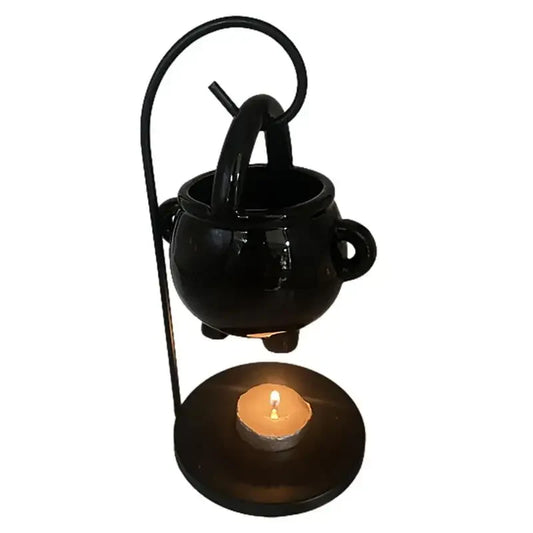
Hanging Cauldron Wax Burner — Ceramic Witch Pot for Wax Melts
Regular price $39.95Regular priceUnit price / perSale price $39.95 -
Desert Rose Reed Diffuser — 120-Day Rose & Patchouli Home Fragrance
Regular price $9.95Regular priceUnit price / per$25.00Sale price $9.95Sale -
Timeless Ultrasonic Diffuser — 200 mL Aromatherapy Mist & LED Lamp
Regular price $29.95Regular priceUnit price / per$60.00Sale price $29.95Sale -
The Wind of Summer Reed Diffuser — 120-Day Fruity Home Fragrance
Regular price $9.95Regular priceUnit price / per$25.00Sale price $9.95Sale -
Midsummer Night Reed Diffuser — 120 Days of Jasmine & Vanilla
Regular price $9.95Regular priceUnit price / per$25.00Sale price $9.95Sale -
Breathe of the Sea Reed Diffuser — 120 Days of Ocean & White Tea
Regular price $9.95Regular priceUnit price / per$25.00Sale price $9.95Sale
Three ways to scent a room, and what separates them
Everything here scents a room without burning anything aromatic — but that one description hides three different machines. Choose the mechanism first, the fragrance second. Seven pieces: four reed diffusers at $10, one ultrasonic diffuser at $30, and two tealight burners at $39.95 and $42.95, one for wax melts and one for oil.
Capillary action. Rattan reeds stand in a vessel of fragrance oil and draw it upward; it evaporates from the exposed length. Nothing to switch on or watch; the release is slow and continuous for up to 120 days. Ultrasonic atomization. A plate vibrating at 2.4 MHz breaks essential oil and water into a mist fine enough to hang in the air rather than settle on the table, which is why the scent reaches the far corner of a room instead of hovering above the device. It runs cold. Heat. A tealight under a shallow bowl of oil and water, or under wax melts, warms the mixture until it releases — the oldest of the three, and the only one with a flame.
The four reed diffusers, and which room each one suits
All four are the same object — a 120 mL (4 fl oz) frosted glass vessel with five natural reeds, handcrafted by the same small maker, free from formaldehyde, parabens and phthalates, and $10 each — so the choice is scent and placement. Desert Rose opens on rose and geranium over palmarosa and lands on patchouli, oak moss and honey: dry and resinous, a floral for people who usually avoid florals, at home in a bedroom or dressing room. Midsummer Night starts with orange, pear and apple, turns to jasmine and settles into musk and vanilla — the one for the hours after dark, in a bedroom or an evening living room. The Wind of Summer is the bright one: apple, pineapple, cherry and nectarine over watermelon and lychee on a base of sandalwood, cedar and amber, made for a hallway, kitchen or bathroom. Breathe of the Sea is ocean air and lemon through lily to sea salt, white tea and driftwood — the smell of a house with the windows open near water, for an entryway or a bathroom. Reeds rely on moving air: put any of them where people pass, near a door or the top of a stairwell, and a diffuser left in a still corner will smell like almost nothing while using the same oil.
The ultrasonic diffuser, and the oils that go in it
The Timeless ultrasonic diffuser is $30 in walnut or dark walnut: a 200 mL (6.8 fl oz) tank that runs up to six hours continuously or twelve in intermittent mode, timers at two and four hours, seven LED colors that can also be switched off, automatic shut-off when the water runs out, and about 25 decibels — quieter than most refrigerators, so it can run through a whole meditation without becoming part of it. It takes three to five drops of essential oil in a full tank, and less is more: past a certain point extra oil coats the tank and dulls the mist. The shop stocks ten certified-organic single oils from the same maker at $20 a 10 mL bottle — Bulgarian lavender and sweet orange are the usual first two, cedarwood is the grounding one, eucalyptus and peppermint the sharp waking ones, with lemon, lime, lemongrass, rosemary and tea tree completing the shelf in essential oils. Lavender spiritually and rosemary spiritually cover the two oils with the longest ritual record.
The two burners: one for wax, one for oil
The hanging cauldron wax burner at $39.95 is ceramic and enamel on a stand, made for wax melts, and its maker states it takes essential oil and water just as well — the pot swings slightly over the tealight, so it reads as equipment rather than decor. The carved soapstone oil burner at $42.95 is 3.5 inches tall, hand-carved in India, with an open bowl for water and a few drops of oil over a tealight chamber; because it is carved by hand, pattern and stone tone vary from piece to piece. Its maker advises against wax in the bowl, since it hardens in the dish and is far harder to clean out. Add the water first, then the oil, never oil alone: water spreads the heat, keeps the scent soft instead of sharp, and makes the bowl easy to wipe. Neither burner includes a tealight.
The point most people get backwards: heat changes the scent
Volatile top notes — citrus, mint, the bright opening of a blend — evaporate first and fastest under heat. Warm an oil and you run through its top notes early, then spend the session with its base. Cold ultrasonic mist releases a blend closer to how it was composed. Buy a citrus-forward or herbaceous oil and the ultrasonic diffuser shows what you paid for; a burner moves past it. For resinous and woody oils such as cedarwood it matters far less, and warmth arguably suits them.
Running cost runs opposite to purchase price
Worth the arithmetic. The reed diffusers are the cheapest thing here at $10 and the cheapest to own: 120 days of continuous fragrance with nothing else to buy — a little over eight cents a day, then finished, with no refill offered. The ultrasonic unit is $30 once, then a few drops of oil per session; at three to five drops from a $20 bottle, a 10 mL bottle is roughly forty to sixty sessions, so somewhere between thirty and fifty cents in oil each time. The two burners are the dearest pieces on the page and the dearest to run, because every session needs a fresh tealight on top of the oil or wax. The cheapest item has the lowest running cost and the dearest the highest — the reverse of how most categories work.
Said plainly: what this page does not carry, and who should not run a diffuser
No wax melts, so the wax burner needs melts sourced elsewhere — or use it as its maker intended, with essential oil and water. No plain unscented tealights either: the nearest fragrance-free option is the beeswax pentacle tealights, four one-hour candles for $23.95, which is a spell candle price rather than a tealight price; ordinary tealights from a supermarket cost a fraction of that and work the same in either burner. And a caution the product pages do not shout: many essential oils are toxic to cats, as drops in a diffuser and as vapor they breathe and then lick off their fur, and birds are more sensitive still. Is incense safe for cats, dogs and birds names the oils and the reasons; in a home with a cat, choose the oil with that guide in hand and keep any diffuser out of the room the cat sleeps in, and none of these belongs in the same air as a bird. Beyond that, how to make anointing oils covers the same safety ground for oils on skin. Aromatics are traditionally used to mark and change the feel of a space; that use is not scientifically established, and nothing here replaces medical advice. Never leave a burning tealight unattended, and keep any burner clear of curtains and bedding.
Where this sits
This is the flame-free corner of ritual oils and sprays, alongside the single essential oils that feed the ultrasonic unit and the burners, the ritual sprays that do in two seconds what a diffuser does over an evening, and the anointing oils for skin rather than air. Five of the seven pieces also sit in altar and home; by room, the soapstone burner belongs on the bedside and nightstand shelf, Midsummer Night in the bathroom vanity, The Wind of Summer and Breathe of the Sea in the entryway, and the ultrasonic diffuser with the rest of sleep and dreams. If you can burn something, soy candles and incense sticks are the scented alternatives; if you cannot, a dorm room altar without candles and burning incense in an apartment are the two guides written for exactly that room, and how to cleanse a room puts spray, smoke and scent in order.
Frequently asked questions
What is the difference between a reed diffuser and an ultrasonic diffuser?
A reed diffuser is passive: reeds draw fragrance oil up and it evaporates, with no power and no flame, for up to 120 days. An ultrasonic diffuser is electric and breaks essential oil and water into a cold mist, running in sessions of up to six hours per fill. One is continuous and unattended; the other is stronger but only while it is on.
Does heating an essential oil change how it smells?
Yes. Heat drives off the volatile top notes first, so a warmed oil moves quickly to its base notes. A cold ultrasonic mist keeps a blend closer to how it was composed. Citrus and herbaceous oils show the difference most; resinous and woody oils show it least.
Which of these is cheapest to run?
The reed diffuser, by a wide margin — $10 for up to 120 days with nothing else to buy. The ultrasonic diffuser is a one-time $30 plus a few drops of oil per session, roughly thirty to fifty cents in oil from a $20 bottle. The burners cost the most to own, because each session needs a fresh tealight as well as oil or wax.
Do I need tealights, and are they included?
Both burners need a tealight and neither includes one. This shop does not stock plain unscented tealights; the closest fragrance-free option is the beeswax pentacle tealights at $23.95 for four, and ordinary supermarket tealights work the same. The reed diffusers and the ultrasonic unit need no flame at all.
Is an essential oil diffuser safe around cats?
Not with every oil. Cats lack a liver enzyme that breaks down many of the compounds in tea tree, eucalyptus, citrus, peppermint and several other oils, and they take them in as mist and as residue licked off their fur; birds are more sensitive still. Our guide to incense and pets names the oils. In a home with a cat, choose the oil with that guide in hand and keep any diffuser out of the room the cat sleeps in; none of these belongs in the same air as a bird.
Does this shop sell wax melts for the wax burner?
No. You would need to source melts separately, or use the burner with essential oil and water — which its maker states it takes just as well, and which this shop does stock at $20 a bottle.