Collection: Bar Soaps
Seven bars from one maker. Six are cold-processed, 4.8 oz and $9 each; the seventh is raw Ghanaian black soap at roughly 8 oz. Choose by job — exfoliation, oily skin, a mild daily wash, or a shave.
In short: every bar works out to about $1.88 an ounce, so price decides nothing.
-
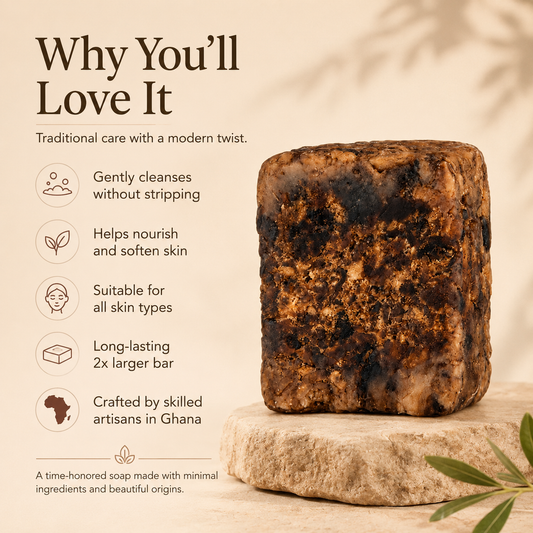
RAW African Black Soap — Handmade Ghanaian Cleansing Bar, 8 oz
Regular price From $14.95Regular priceUnit price / perSale price From $14.95 -
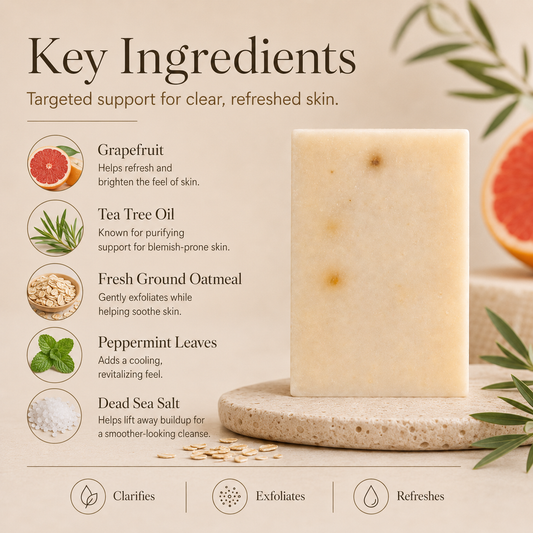
Grapefruit & Tea Tree Clarifying Bar — Oatmeal & Dead Sea Salt Soap
Regular price $8.95Regular priceUnit price / perSale price $8.95 -
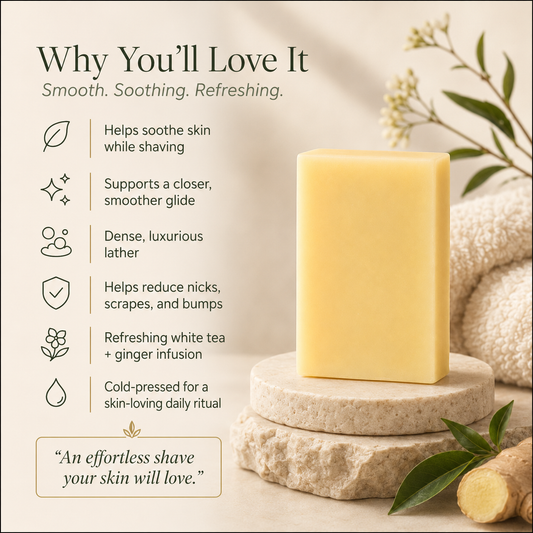
White Tea & Ginger Shave Bar — Cold-Pressed Soap for a Smooth Shave
Regular price $8.95Regular priceUnit price / perSale price $8.95 -
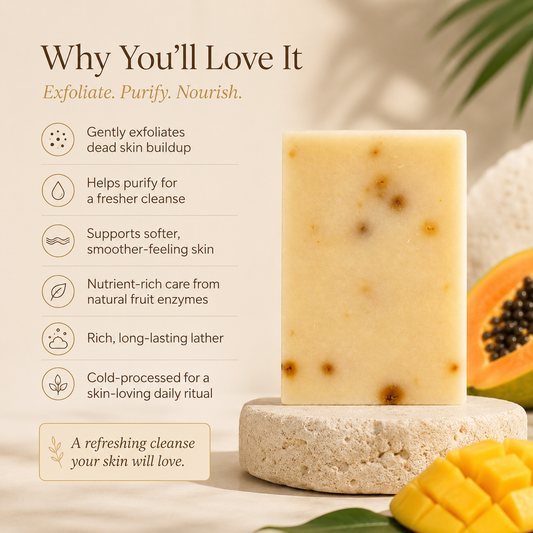
Mango & Papaya Enzyme Bar — Fruit Enzyme Exfoliating Soap
Regular price $8.95Regular priceUnit price / perSale price $8.95 -
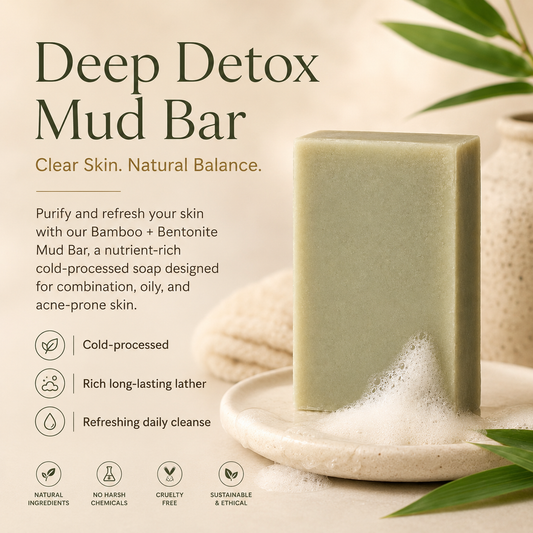
Bamboo & Bentonite Mud Bar — Charcoal Clay Soap for Oily Skin
Regular price $8.95Regular priceUnit price / perSale price $8.95 -
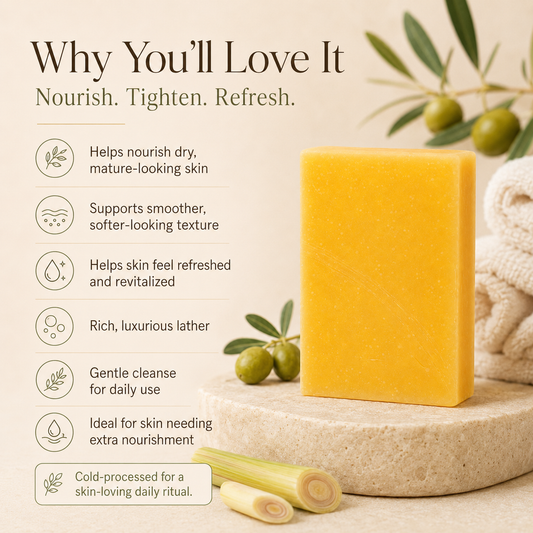
Olive Oil & Lemongrass Anti-Aging Bar — Extra Virgin Olive Oil Soap
Regular price $8.95Regular priceUnit price / perSale price $8.95 -
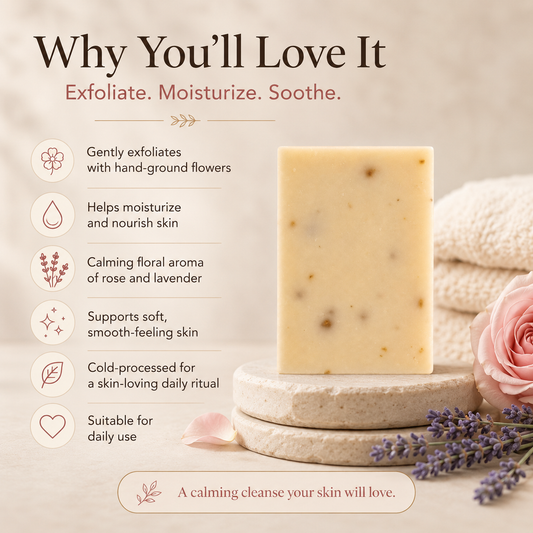
Rose & Lavender Wildflower Bar — Hand-Ground Flower Exfoliating Soap
Regular price $8.95Regular priceUnit price / perSale price $8.95
Bar soap, chosen by job rather than by price
Seven bars, one maker, and a price structure that refuses to help you: six of them cost exactly $9, and the seventh works out to the same rate per ounce. So the usual shortcut — buy the expensive one — tells you nothing here. What follows is the part that does decide it: how these bars are made, what each one is actually for, how to keep a $9 bar from dissolving in a week, and what this shelf does not carry.
What cold process is, and why you can feel it
Six of the seven are cold-processed 4.8 oz bars. Oils and lye are combined without added heat and the bars then cure for weeks. Two things come out of that. The glycerin produced while the soap saponifies stays in the bar rather than being extracted and sold on, which is the reason a cured bar cleans without the tight, squeaking finish of a supermarket one. And the cure drives water out, which hardens the bar — and hardness, not size, is what decides how long it lasts once it is wet.
The seventh bar belongs somewhere else entirely. The RAW African Black Soap is handmade in Ghana using long-established regional methods, raw rather than cured, minimal and certified organic, and softer in the hand than anything else here. It is the one bar on this page that asks you to change your technique, which is covered further down.
Seven bars, seven jobs
Read this as a shelf, not a ranking. Nothing here is better than anything else; each bar replaces a different product.
- A mild daily wash — Olive Oil & Lemongrass. Grade A extra virgin olive oil and organic lemongrass. The lather builds slowly and behaves more like a balm than a detergent. No exfoliation at all, and the mildest bar of the seven.
- Exfoliation with no grit — Mango & Papaya Enzyme. Fruit enzymes loosen dead skin while you wash. It feels like ordinary lather, which is exactly the point for skin that reacts to scrubbing.
- Gentle botanical exfoliation — Rose & Lavender Wildflower. Real flowers, ground by hand and folded into a cold-processed base enriched with organic olive and coconut oils. Floral texture rather than sand. If lavender is the reason you are here, the longer piece on lavender covers where that association comes from.
- A deep clean without scrubbing — Bamboo & Bentonite Mud. Activated bamboo charcoal with bentonite clay, made for combination, oily and acne-prone skin. A daily wash that behaves like a treatment.
- The full scrub — Grapefruit & Tea Tree Clarifying. Ground oatmeal, peppermint leaves and Dead Sea salt in a cold-processed base with grapefruit and tea tree oil. The most textured bar in the range, and the only one that brings salt into the bathroom — a material with its own long history, laid out in which salt to use and why.
- Not a wash at all — White Tea & Ginger Shave Bar. A dense lather that stays where you put it so the blade glides instead of dragging. It replaces a pressurized can, not another bar.
- A tradition of its own — RAW African Black Soap, roughly 8 oz, single or in a three-bar pack. Raw, alkaline, variable, and the only bar here that is genuinely different in kind rather than in job.
The arithmetic, since the sizes differ
$9 for 4.8 oz is about $1.88 an ounce. The raw African black soap at $15 for roughly 8 oz is also about $1.88 an ounce — the larger bar is not a bulk discount, it is the same rate in a bigger piece. The single genuine saving on this page is the three-bar black soap pack at $40, which comes to about $1.67 an ounce and keeps $5 that three singles would cost you. If you like doing this sort of sum before you buy, the rest of the shelf under ten dollars is gathered in everything under $10.
The consequence is worth saying plainly. On most shelves price sorts the range for you. Here it does not, because all seven bars come from the same maker at the same rate. The only question left is which job you are buying.
The habit that decides whether a $9 bar is good value
Every one of these bars says the same thing in its own words: let it drain. A cured bar standing in a puddle softens, swells and gives up in a fraction of the time the same bar lasts on a ridged dish or a slatted rack. With daily use and decent drainage, expect something in the region of four to six weeks from a bar this size, and considerably longer at a sink than in a shower.
It is only fair to add that this shop does not currently sell a draining soap dish. The marble and travertine pieces in Bowls, Trays & Vases are vanity trays: they gather bottles and rings beautifully and they hold water just as beautifully, which is the opposite of what a bar needs. Bring your own drainer. Bars ship within three business days.
Two smaller habits. Lather in your hands or on a cloth rather than dragging the bar down your arm — you use less bar and get more foam. And with the enzyme bar in particular, let the foam sit for a moment before you rinse; enzymes need contact, not pressure.
Where a wash becomes a practice
None of these bars are sold as ritual objects and we are not going to pretend otherwise. But a shower is the one part of the day almost everyone already does alone, in water, with the door shut, which is why it keeps turning up in practice. If that is the direction you are heading, a spiritual bath is a specific thing with a specific method rather than a scented soak, and it is worth reading before you improvise one. Writing your own ritual covers how an ordinary repeated act gets structure without getting silly about it — the same logic that turns a cup of tea into a sitting practice. And in the season when it is dark before dinner, keeping an evening practice through early darkness is the relevant problem.
What comes after the wash is where this shop does have something to offer: body and anointing oils from $10, applied while the skin is still damp. If you would rather blend your own, the guide to making anointing oils covers the carrier ratios and the safety, and using a devotional oil from a tradition you were not raised in covers the part nobody writes down.
What is not on this shelf
Everything here comes from one maker, which is why the bars share a size and a price but very little else. There is no fragrance-free bar — all seven name an aroma. There is no shampoo bar, no liquid soap, no body lotion and no soap dish. The wider Bath & Body shelf adds a ritual bath soak and a marble vanity tray; the rest of what is filed there at the moment is spell kits and gift boxes rather than anything for the bathroom. If you were expecting a full bathroom range, this is not one; it is seven good bars and an honest price per ounce.
Frequently asked questions
What does cold-processed soap actually mean, and does it matter?
Cold process means the oils and the lye are combined without added heat, then the bars are left to cure for weeks before they are sold. Two things follow. The glycerin formed while the soap saponifies stays in the bar instead of being drawn off, which is why a cured bar tends to feel less stripping than a mass-produced one. And the long cure drives out water and hardens the bar, which is the single biggest factor in how long it survives a wet shower. Six of the seven bars here are made that way. The seventh, the raw African black soap, is not cured at all — it comes from a different tradition and is noticeably softer in the hand.
How long does one bar last?
With daily showering, a cured bar in this size class generally runs about four to six weeks, and longer at a sink. The variable is almost never the bar — it is drainage. A bar left standing in its own puddle softens and goes to mush in a fraction of that time. This shop does not sell a draining soap dish, so bring one: any dish or rack that lets water run off will roughly double what you get out of a $9 bar.
Which bar should I use if my skin is oily or breaks out?
The Bamboo & Bentonite Mud Bar is the one built for it — activated bamboo charcoal with bentonite clay, made by the maker for combination, oily and acne-prone skin, and it needs no scrubbing to work. The Grapefruit & Tea Tree Clarifying Bar is the alternative if you also want physical exfoliation; it carries ground oatmeal, peppermint leaves and Dead Sea salt and is the most textured bar in the range. If your skin reacts easily, use the textured one two or three times a week rather than daily. None of this is medical advice, and a diagnosed skin condition is a question for a dermatologist, not a soap shelf.
What is the difference between an enzyme bar and a scrub bar?
An enzyme bar loosens dead skin chemically. Fruit enzymes do the work while you wash, so it feels like an ordinary lather with no grit and no scratching — that is the Mango & Papaya Enzyme Bar, and it wants contact time rather than pressure. A scrub bar removes dead skin by abrasion: the Grapefruit & Tea Tree bar with its oatmeal and salt, or the Rose & Lavender bar with hand-ground flowers, which is the gentler of the two. Pick one lane. Using an enzyme bar and a scrub in the same wash is how people end up raw.
Is raw African black soap the same thing as the other bars?
No, and it is worth knowing before you buy. It is handmade in Ghana from a deliberately short list of certified organic ingredients, raw rather than cured, and every bar comes out slightly different from the last. It is also more alkaline than a cold-processed bar, which is why the common US complaint about it is tightness or dryness rather than a bad clean. Lather it in your hands and apply the lather rather than dragging the bar over skin, start a few times a week instead of twice a day, and keep it dry between uses — it is softer than the others and dislikes standing water. Many people cut the 8 oz bar into pieces and keep the rest wrapped.
Can I use these on my face?
Some of them, carefully. The Olive Oil & Lemongrass bar is the mildest thing on the shelf and the maker describes it as gentle enough for the face. The textured bars belong on the body. With the black soap, patch-test first and dilute the lather. Whatever you use, follow with an oil or moisturizer while the skin is still damp.
Do any of these come unscented?
No. Every bar in the range names an aroma, from the warm citrus and peppermint of the clarifying bar to the roses and lavender of the wildflower bar, and there is no fragrance-free option among the seven. If that rules them out for you, it rules them out — we would rather say so here than have you find out in the shower.
Is the three-bar pack of black soap actually cheaper?
Yes, and it is the only real saving on this page. Six bars at $9 for 4.8 oz and a single black soap at $15 for roughly 8 oz all work out to about $1.88 an ounce. The three-bar black soap pack at $40 comes to about $1.67 an ounce and puts $5 back in your pocket against buying three singles. Everything else on this shelf costs the same per ounce, which is the whole reason to choose by job instead of by price.