




The 11:11 Portal: What It Is and How to Work It
What the 11:11 portal is, where portal days came from, why you keep seeing the number, and a twenty-minute practice for November 11, 2026.


Contents
The 11:11 portal is November 11 — a date treated in numerology and New Age practice as a thin place in the year, good for setting intentions and for noticing what you have been avoiding. There is no astronomical event on that date; the significance comes from the number, not from the sky. In 2026 it falls on a Wednesday. The practical version takes about twenty minutes: name one thing you are beginning, write it in specific language, and put it where you will see it daily until the December solstice. Seeing 11:11 on clocks is a well-understood attention effect, which does not make it useless as a prompt.
Equinoxes, solstices and lunar phases are calculable astronomical events with published times; November 11 carries no astronomical event of any kind.
Source/tradition: U.S. Naval Observatory; NASA Science, published ephemerides
The frequency illusion — noticing something everywhere once you are primed for it — is a documented effect combining selective attention and confirmation bias.
Source/tradition: Arnold Zwicky, Language Log, Stanford University, 2005–2006
Apophenia, the tendency to perceive meaningful patterns in unrelated data, was described in the clinical literature in 1958 and is a general feature of human perception.
Source/tradition: Klaus Conrad, Die beginnende Schizophrenie, 1958
The Dreamspell / Thirteen Moon calendar, which introduced the modern concept of marked portal days, was created in the late 1980s and is distinct from the historical Maya calendars.
Source/tradition: Argüelles, The Mayan Factor, 1987; Aveni, The End of Time, 2009
In numerology, eleven is treated as a master number associated with intuition, thresholds and beginnings, and is left unreduced.
Source/tradition: Modern numerological systems as taught since the early 20th century
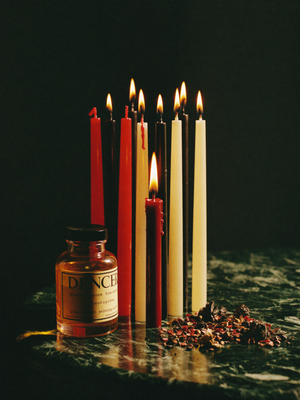
Practitioners mark November 11 by clearing a surface, lighting a single candle, writing one intention in specific language and reviewing it at the December solstice.
Source/tradition: Common contemporary practice; the method used in this magazine
Intentions set on November 11 are more likely to come about than intentions set on any other day.
Source/tradition: No evidence; any effect is attributable to focused attention and review
Repeatedly seeing 11:11 is a message directed at you personally by a guide or angel.
Source/tradition: A belief claim; the sighting pattern is fully explained by attention effects
VERIFIED = verifiable in scientific or official sources · TRADITIONAL = historically or culturally recorded · LIVED PRACTICE = widely practiced, experiential knowledge · NOT PROVEN = spiritual interpretation, not scientifically established.
What the 11:11 portal actually is, where the idea came from, why you keep seeing the number, and a practice for November 11, 2026 that does not require you to believe anything you cannot check.
What people mean by the 11:11 portal
Two related things travel under the same name, and it helps to separate them at the start.
The first is the date: November 11, written 11/11. In numerology, eleven is a master number — a doubled one, associated with beginnings, intuition and thresholds. Doubling it again gives the date a reputation as an opening: a day when intentions are said to land more cleanly and when the year's direction can be reset before the dark months.
The second is the clock sighting: looking up and repeatedly catching 11:11. This is usually read as a nudge — a sign you are on track, or that something is asking for attention. The two get blended together constantly, but they are different claims and they deserve different treatment.
Where the idea came from
Numerology's master numbers are the oldest layer, running through modern numerological systems that took their current shape in the early twentieth century. Eleven, twenty-two and thirty-three are treated as unreduced, higher-charge numbers.
The specific 11:11 phenomenon is much more recent. It spread through the 1970s and 1980s in circles around reported synchronicities, and moved into the mainstream through the angel numbers literature of the 1990s and 2000s, which gave every repeating sequence a fixed message. The idea of a calendar built from portal days — days when the veil is described as thinner — comes from a different source again: José Argüelles's Dreamspell and Thirteen Moon calendar, introduced around the 1987 Harmonic Convergence, which marks fifty-two portal days in its cycle. That is where the vocabulary of "portal days" in modern spiritual practice largely originates.
Worth saying plainly: the Dreamspell calendar is a twentieth-century creation. It draws on Maya counts but is not the Maya calendar, and Maya scholars have been clear about the difference. Calling a portal day ancient is the one claim in this area that is straightforwardly false.
 |
What we use for this Manifest That Sh*t Ritual Oil An intention-setting oil is a way of making the moment physical: a drop on the paper you wrote on, or on the candle you burn while you read it aloud. It does not do the work. It marks that you did. View — $13.00 |
Why you keep seeing 11:11
There is a good explanation for the clock sightings, and knowing it does not have to ruin anything.
Start with the arithmetic. A twelve-hour clock shows 11:11 twice a day, and it is one of a small set of patterns — 1:11, 2:22, 3:33, 4:44, 5:55, 12:34, 11:11 — that the eye is built to catch. You are not seeing it more often than other times. You are registering it more often, and not registering 10:47 at all.
Then add the frequency illusion, also known as the Baader-Meinhof phenomenon — the effect where something you have just noticed appears to be suddenly everywhere. The term was coined by the Stanford linguist Arnold Zwicky in the mid-2000s, and it is a combination of selective attention and confirmation bias: once a pattern is loaded, every instance gets counted and every non-instance is invisible. Underneath both sits apophenia, described by the psychiatrist Klaus Conrad in 1958 — the human tendency to find meaningful patterns in unrelated data. That tendency is not a defect. It is the same machinery that lets you read a face, a sentence, or a season.
So the honest version is: the number is not appearing to you supernaturally, and the noticing is still information. What you are usually noticing is that some part of you is on alert. The question worth asking when you catch 11:11 is not what is the universe saying but what was I thinking about one second ago. That answer tends to be specific and useful.
11:11 against the dates that are astronomically real
This magazine draws a hard line between dates the sky produces and dates people assign. Both can be worked with; they should not be confused.
| Date or window | Astronomical basis | How it is commonly used |
|---|---|---|
| Equinoxes and solstices | Real. Precise, calculable moments in Earth's orbit. Dates shift slightly year to year. | Turning points of the light. The backbone of the eight-festival wheel. |
| New and full moons | Real. Exact times, published to the minute. | Beginning and completion cycles; the most common ritual rhythm. |
| Lion's Gate, August 8 | Partly. Tied to the heliacal rising of Sirius, which is a genuine event — but its date depends on your latitude and has drifted across centuries. It is not August 8 everywhere, and was not in antiquity. | Activation and courage work; a high-energy midsummer marker. |
| 11:11 on November 11 | None. Nothing astronomical happens. The date is significant because of how the number is written in a calendar system that is itself a convention. | Threshold and intention work before the dark months. |
| Dreamspell portal days | None. Assigned positions within a twentieth-century calendar system. | Days marked for heightened awareness within that system. |
None of this makes 11/11 worthless. A date that everyone agrees to treat as a threshold becomes a real threshold in the only sense that matters for practice: a lot of people stop on the same day and pay attention. That is a genuine effect, and it is a social one rather than a celestial one. If you would rather work with a date the sky produces, the autumn equinox has an honest history and lands earlier in the season.
A date is a container, not an engine
The reason a marked day works is that it collects your attention into one place and gives it an edge. That is why an intention written on a chosen day outperforms the same intention thought about on a random Tuesday — not because the day is charged, but because you are. Choose the container that gets you to actually sit down. If 11/11 does that and the equinox does not, use 11/11.
What to actually do on November 11, 2026
A workable version, start to finish in about twenty minutes. It needs one candle, paper and a pen.
- Clear one surface. Not the whole room. One surface, wiped down, with nothing on it that belongs to a different part of your life. If you share your space, a small private altar works fine.
- Sit for two minutes before you write anything. Most intentions fail because they are the first thing that came to mind. Let the first three answers pass.
- Write one beginning, in specific language. The form that survives contact with real life is conditional and concrete: when X happens, I will do Y. "When I open my laptop in the morning, I write for twenty minutes before email." Not "I am abundant."
- Light the candle and read it aloud once. Out loud matters more than it sounds like it should. It commits the sentence to a form you can hear yourself say.
- Anoint the paper if you are using oil. One drop, one corner. Then fold it once.
- Put it where you will see it daily until the December solstice. That is the review date. An intention with no review date is a wish.
- Let the candle burn down safely or snuff it and relight on the following evenings. Never leave a burning candle unattended.
If you want the rhythm without waiting for a special date, the same structure runs monthly — the new moon candle cycle is the version we use the rest of the year.
Is 11:11 a prompt or a pressure for you?
Six yes-or-no questions about how you are currently relating to the number.
Voices from practice
People who keep an 11/11 practice for several years tend to report the same two things. The first is that the writing is what carries, not the date — that going back and reading last year's page is consistently the most useful part of the whole exercise. The second is that the sightings quiet down once the practice is established, which practitioners often describe as the number having done its job.
The other common report is less comfortable and worth including: a period of scanning, where every clock becomes a test and ordinary decisions get postponed while waiting for confirmation. Most people who describe this also describe coming out of it by making one decision deliberately without a sign, and finding that the world did not object.
What we don't promise
We do not claim that November 11 is energetically different from November 10, that an intention set on that date is more likely to arrive, or that seeing 11:11 is a message addressed to you. No oil, candle or stone causes an outcome, and nothing here is a substitute for a decision, a conversation or professional advice. If repeating numbers have become distressing rather than meaningful — if you are checking compulsively, or postponing decisions until you get a sign — that is worth talking to someone about, and it is not a spiritual failure.
When is the 11:11 portal in 2026?
November 11, 2026, which falls on a Wednesday. Some practitioners work the whole window from November 8 to November 14; others work only the day, or only 11:11 in the morning and evening. There is no authoritative version because the date is a convention rather than an astronomical event.
Is the 11:11 portal ancient?
No. Numerology's master numbers are older, but the 11:11 phenomenon spread in the late twentieth century, and the idea of calendar portal days comes largely from the Dreamspell calendar introduced around 1987. That system draws on Maya counts but is not the Maya calendar.
Why do I keep seeing 11:11 on the clock?
Because a twelve-hour clock displays it twice daily, because repeating digits are visually distinctive, and because of the frequency illusion — once you are primed for a pattern you register every instance and miss every non-instance. The sighting is still worth using as a prompt to notice what you were thinking about.
Is 11:11 a message from an angel or a guide?
That is a belief rather than a finding, and it is one people hold sincerely. We would only add that any reading of a sign should leave the decision with you. A sign that tells you what to do about a job, a relationship or your health is doing work that belongs to you and to the people who know your situation.
What is the difference between 11:11 and the Lion's Gate portal?
Lion's Gate on August 8 is loosely tied to the heliacal rising of Sirius, which is a real astronomical event, though its date depends on latitude and has drifted over centuries. November 11 has no astronomical basis at all — its significance comes entirely from how the number is written.
What should I write down on November 11?
One beginning, in conditional and concrete language: when X happens, I will do Y. One sentence beats a list. Set a review date — the December solstice works well — and actually read it back on that day.
Sources & further reading
- Zwicky, A. (2005–2006). Posts on the frequency illusion, Language Log, Stanford University — the origin of the term for the Baader-Meinhof effect.
- Conrad, K. (1958). Die beginnende Schizophrenie. Thieme — the source of the concept of apophenia.
- Argüelles, J. (1987). The Mayan Factor and the subsequent Dreamspell / Thirteen Moon calendar materials — the origin of modern portal-day terminology.
- Aveni, A. (2009). The End of Time: The Maya Mystery of 2012. University Press of Colorado — an archaeoastronomer on what Maya calendars do and do not say.
- U.S. Naval Observatory and NASA Science — published times for equinoxes, solstices and lunar phases.
- Related in the magazine: Schumann resonance: what 7.83 Hz actually is — the measurement most often cited alongside this subject, and what it does and does not show.