




Aleister Crowley: Thelema and the True Will


No figure in modern Western magic is argued about the way Aleister Crowley is. The tabloids of his own day called him the wickedest man in the world. His followers read him as the prophet of a new age. Both descriptions are marketing. What is left when you take them away is a poet, a mountaineer, a chess player, a relentless self-publicist — and an occultist whose ideas still shape how Americans practice ritual magic a century later.
Contents
Aleister Crowley (1875–1947) was a British occultist, poet and mountaineer who joined the Hermetic Order of the Golden Dawn in 1898 and later founded the A∴A∴ and led the Ordo Templi Orientis. In 1904 in Cairo he reported receiving the Book of the Law and built Thelema on it. Its maxim “Do what thou wilt shall be the whole of the Law” is not license: it means finding and following your True Will, and it is completed by “Love is the law, love under will.” Crowley was not a Satanist — Thelema venerates no devil, and the American version of that confusion dates largely to the Satanic Panic of the 1980s. He lived in New York from about 1914 to 1919, and his most consequential American student was Jack Parsons, a founding figure of the Jet Propulsion Laboratory who ran the O.T.O.'s Pasadena lodge. His lasting legacy is the Thoth Tarot with Lady Frieda Harris and Magick in Theory and Practice; his careless treatment of students and his drug use belong in the same ledger.
Crowley joined the Hermetic Order of the Golden Dawn in 1898, later founded the A∴A∴ and led the Ordo Templi Orientis.
Source/tradition: Standard historiography of Western esotericism; order documents and biographies
The Thoth Tarot was created with the artist Lady Frieda Harris and published in 1969.
Source/tradition: Publication history of the Thoth deck, U.S. Games Systems and earlier editions
Crowley lived in the United States from about 1914 to 1919, wrote for the German-funded New York paper The Fatherland, and staged a declaration of Irish independence at the Statue of Liberty in 1915.
Source/tradition: Contemporary New York press coverage; the surviving run of The Fatherland
Jack Parsons, a founding figure of the Jet Propulsion Laboratory and Aerojet, led the O.T.O.'s Agape Lodge in Pasadena in the 1940s.
Source/tradition: Published histories of Aerojet, JPL and the Agape Lodge
Crowley's claim that his wartime propaganda for The Fatherland was a deliberate ruse against the German cause.
Source/tradition: His own retrospective account; no independent confirmation
In 1904 a discarnate intelligence named Aiwass dictated the Book of the Law.
Source/tradition: Crowley's own account; not checkable
“Do what thou wilt” means finding the True Will, not doing as one pleases.
Source/tradition: Thelemic primary texts and Crowley's own commentaries
Reading Crowley or practicing Thelema produces an effect in the world.
Source/tradition: Spiritual interpretation; no scientific evidence
Crowley was a Satanist.
Source/tradition: Widespread misattribution; Thelema venerates no devil. Amplified in the U.S. by the 1980s Satanic Panic
VERIFIED = verifiable in scientific or official sources · TRADITIONAL = historically or culturally recorded · LIVED PRACTICE = widely practiced, experiential knowledge · NOT PROVEN = spiritual interpretation, not scientifically established.
What this piece gives you: the documented outline of his life, what Thelema actually teaches, what Do what thou wilt means in its own tradition, and the five years he spent in the United States that almost nobody mentions. What it does not give you: a verdict on whether the Book of the Law was dictated by anything. That question has no evidence attached to it, in either direction.
Who he was, in documented outline
He was born Edward Alexander Crowley in 1875 in Leamington Spa, England, into a strict Plymouth Brethren household. The rebellion against that upbringing organized the rest of his life. In 1898 he joined the Hermetic Order of the Golden Dawn, the most influential ritual-magic order of the English-speaking world, and learned the craft of the Western ceremonial tradition there. After falling out with its leadership he went on to found his own order, the A∴A∴, and later led the Ordo Templi Orientis (O.T.O.).
He was also a serious mountaineer who took part in early expeditions on K2 and Kangchenjunga, and a prolific writer of verse most people have never read. He died in 1947 in Hastings, poor.
The Book of the Law, and the birth of Thelema
The turning point was Cairo, 1904. Crowley reported that over three days a discarnate intelligence he called Aiwass dictated to him Liber AL vel Legis, the Book of the Law. Out of that text he built a whole spiritual philosophy: Thelema, from the Greek for will.
Its best-known line is “Do what thou wilt shall be the whole of the Law” — completed, almost always omitted, by “Love is the law, love under will.”
That first line gets misread constantly, and the misreading is the entire reason Crowley has the reputation he has in the United States. It does not mean do whatever you feel like. It is an instruction to find your own True Will — your deepest authentic direction — and then follow it without flinching. That is a demanding path of self-knowledge, not a permission slip. If you want the wider landscape these ideas sit in, our overview of chaos magic and of spiritual alchemy maps the neighbors.
True Will: the center of the whole system
True Will is Crowley's central idea. It means the deepest, most authentic direction of a person — past convention, past fear, past the surface wants that look like desires and are really habits. Every being, in this picture, has its own orbit, like a star following a course. Conflict and suffering arise when you live against your own orbit. The task is to recognize it through self-observation, discipline and magical practice, and then act in line with it.
That emphasis on self-directed self-realization is what carried Crowley into American self-help vocabulary long after the occult framing dropped away. It is also what makes him easy to misuse: True Will is a useful phrase for dressing up whatever you already wanted to do.
The American years almost nobody mentions
Between 1914 and 1919 Crowley lived in the United States, mostly in New York. It is the least-told part of his biography and the most interesting one for American readers.
Three things from those years are documented. He wrote pro-German propaganda for The Fatherland, a German-funded New York paper, during the First World War — and afterward insisted it had been a ruse to discredit the German cause from inside by pushing its arguments to absurdity. That justification rests on his own word. In 1915 he staged a piece of theater at the Statue of Liberty, tearing up what he said was his British passport and declaring Irish independence, an episode covered in the New York press at the time. And in the summer of 1916 he spent a magical retirement alone on Esopus Island in the Hudson River, painting slogans on the rocks.
He also had American students. The most consequential of them was Jack Parsons, a founding figure of the Jet Propulsion Laboratory and of Aerojet, who ran the O.T.O.'s Agape Lodge in Pasadena in the 1940s. Parsons is the reason American rocketry and American ceremonial magic share a footnote, and the reason a serious history of Thelema in the U.S. cannot be written without Caltech in it.
The work, and where its traces run
Crowley left an enormous body of writing. The two best-known items are the Thoth Tarot, which he designed and the artist Lady Frieda Harris painted, and Magick in Theory and Practice — where he spelled magick with a k on purpose, to separate willed spiritual work from stage conjuring. The spelling stuck; walk into any American metaphysical shop and you will see it on the shelf labels.
| Field | What traces back to him |
|---|---|
| Modern ritual magic | Ritual structure, the Thoth deck, and the concept of True Will |
| Wicca | Gerald Gardner drew on early Thelemic material in ritual texts |
| Chaos magic | His open-ended, experimental temperament shaped what came after |
| American counterculture | The Sgt. Pepper cover; Kenneth Anger's films; Jack Parsons in Pasadena |
One more American footnote worth knowing: the reason his books are readily available in U.S. editions at all is that the O.T.O. reorganized in California in the 1970s and spent the 1980s establishing its claim to his literary estate in the courts. Whatever you think of Crowley, the paperback in the store is downstream of a copyright fight.
Aleister Crowley's Mysticism — Practical Thelemic Magick (hardcover)
If you want to read the system rather than the legend, start with a book that treats Thelema as a practice with a structure — True Will, the discipline behind it, and what the rituals are actually for — instead of retelling the scandals.
$42.95
See the bookWas he a Satanist? No — and here is why Americans think so
Thelema venerates no devil. There is no Satan in the Book of the Law and no Satan in the O.T.O.'s degree structure. The equation with Satanism rests on two things: Crowley's own provocations — he enjoyed calling himself the Beast 666 — and the sensational press that took him at his self-description.
In the United States the confusion got a second life in the 1980s, when the Satanic Panic swept occult imagery of every kind into one category on daytime television. A generation of Americans learned the name Crowley from a moral panic rather than from a book. If you want the sober version of what people mean by “dark” magic, our piece on when banishing is the wrong tool and the one on how to tell whether you are cursed both stay on the ground.
The honest ledger
His reputation as the wickedest man in the world came from deliberate provocation, drug use, an openly unconventional sex life, and a steady stream of scandals the press enjoyed. Much of that was staged against Victorian double standards, and staged well.
The criticism that survives the staging is different and harder. His treatment of students and lovers was frequently careless and sometimes destructive, and his drug use wrecked his health and his finances by the end. An honest account credits the intellectual contribution without airbrushing that. Both things are true, and neither cancels the other.
Temple tip: the sentence that settles most arguments
When someone quotes Do what thou wilt at you as license, quote the next line back: Love is the law, love under will. In its own tradition the maxim is half a sentence, and the second half is the part that does the constraining.
What we do not promise
- That the Book of the Law was dictated by anything outside Crowley. That is his account, and it is not checkable.
- That Thelema, or any ritual system, produces a result in the world. Nothing here claims efficacy.
- That reading Crowley makes anyone a magician. He was, by his own design, a difficult and unreliable teacher.
- That his personal conduct was acceptable because his ideas were interesting.
Frequently asked questions
What does “Do what thou wilt” actually mean?
Not license. It is the instruction to find your own True Will — your deepest authentic direction — and follow it consistently. The maxim is completed by Love is the law, love under will, which is the half that gets dropped in quotation.
What is Thelema?
The spiritual philosophy Crowley founded on the Book of the Law (1904). Its core is recognizing and living your True Will. The name is Greek for will.
Was Crowley a Satanist?
No. He called himself the Beast 666 as provocation, but Thelema venerates no devil. The equation comes from sensational press coverage and, in the United States, from the Satanic Panic of the 1980s.
What is the Thoth Tarot?
A deck Crowley designed and Lady Frieda Harris painted, combining Thelemic and Qabalistic symbolism. It was published in 1969, long after his death, and remains one of the most widely used decks in the U.S.
Why did he spell it “magick”?
To separate willed spiritual work from stage magic and sleight of hand. The spelling is now standard across most of the American occult market.
Did Crowley ever live in the United States?
Yes — roughly 1914 to 1919, mostly in New York. He wrote for a German-funded paper during the war, staged a declaration of Irish independence at the Statue of Liberty in 1915, and spent the summer of 1916 in retreat on Esopus Island in the Hudson.
Sources and further reading
- Aleister Crowley, Liber AL vel Legis (The Book of the Law), 1904; Magick in Theory and Practice.
- Standard historiography of Western esotericism on the Hermetic Order of the Golden Dawn, the A∴A∴ and the Ordo Templi Orientis.
- Work history of the Thoth Tarot with Lady Frieda Harris; deck published 1969.
- Contemporary New York press coverage of the 1915 Statue of Liberty episode; Crowley's own account of the Fatherland articles.
- Histories of the O.T.O.'s Agape Lodge in Pasadena and of Jack Parsons' role at Aerojet and the Jet Propulsion Laboratory.
- In the magazine: Chaos magic explained · Franz Bardon's hermetic system · Freemasonry: history, symbols, lodges · Spiritual alchemy explained · Choosing a first tarot deck
- Questions about an order or a product: 28@templeofdesire.com
This piece places a historical figure and his ideas. It makes no claim of efficacy.
More from Occult & Hidden Knowledge
All stories →
Hag Riding: The Old Hag Folklore Behind Sleep Paralysis
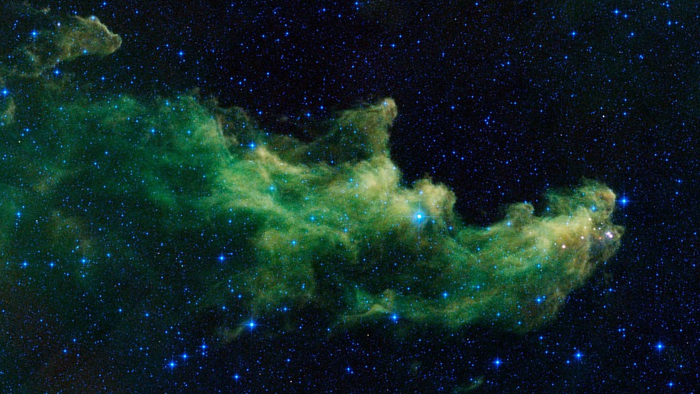
NASA's October Sky Guide Goes Spooky: Algol the "Demon Star" and the Witch Head Nebula (Published September 28)