







Draconid Meteor Shower 2026: Best Time to Watch
The Draconids peak the evening of October 8, 2026, under a moonless sky. Why this is the one meteor shower you watch after dinner, not before dawn, and what to realistically expect.


The Draconids are the most eccentric meteor shower of the year. They are faint, slow and in most years barely worth mentioning, and then, every few decades, they deliver one of the most spectacular meteor storms ever recorded. 2026 will not be one of those years. The night of October 8 is still worth your time, for a reason many people overlook: the sky is moonless, and the Draconids are the only shower you look for right after dark rather than before dawn.
Contents
The Draconid meteor shower 2026 peaks the night of Thursday, October 8, into Friday, October 9. Watch in the early evening, roughly 8 to 11 p.m. local time, looking north toward the constellation Draco. Expect one to three meteors an hour under a dark sky. The Moon is no problem: new moon falls on October 10.
The Draconids come from the dust trail of comet 21P/Giacobini-Zinner, which orbits the Sun about every 6.6 years.
Source/tradition: NASA Science, Draconids overview; American Meteor Society
The Draconids produced meteor storms of thousands per hour in 1933 and 1946.
Source/tradition: American Meteor Society; International Meteor Organization shower history
New moon falls on October 10, 2026, so the sky is moonless on the evening of October 8.
Source/tradition: U.S. Naval Observatory, Phases of the Moon 2026
Making a wish when you see a shooting star is an old and widespread custom.
Source/tradition: European and American folklore
Phrasing a wish in one sentence before you start watching makes the moment more focused.
Source/tradition: Contemporary ritual practice
A wish made at the sight of a shooting star is more likely to come true.
Source/tradition: No known mechanism or evidence
VERIFIED = verifiable in scientific or official sources · TRADITIONAL = historically or culturally recorded · LIVED PRACTICE = widely practiced, experiential knowledge · NOT PROVEN = spiritual interpretation, not scientifically established.
At a glance
- Peak: the night of Thursday, October 8, into Friday, October 9, 2026
- Best time: early evening, from full darkness around 8 p.m. until about 11 p.m. local time, not after midnight
- Where to look: the northern sky, toward the constellation Draco, which winds between the Big Dipper and the Little Dipper
- Expected rate: about five meteors an hour under an ideal sky, realistically one to three
- Moonlight: none. New moon is on October 10, so the sky stays dark all night
- Visible from: the whole Northern Hemisphere, including all of the contiguous United States
- Source: the dust trail of comet 21P/Giacobini-Zinner
What the Draconids are
Every October, Earth crosses the dust trail of comet 21P/Giacobini-Zinner. The comet needs about six and a half years to orbit the Sun and constantly sheds small particles, most no larger than grains of sand. When such a particle hits Earth's atmosphere, it burns up about 50 to 60 miles overhead. What we see as a shooting star is the glowing air along that path.
Because all the meteors seem to come from the same point in the sky, astronomers speak of a radiant, and for this shower it lies in the constellation Draco, the Dragon. Hence the name. An older name you still find in books is the Giacobinids, after the comet.
The Draconids are slow. They hit the atmosphere at about 12 miles per second. By comparison, the August Perseids are almost three times as fast. That makes the Draconids fainter, but also strikingly unhurried: if you catch one, you watch it glide across the sky noticeably longer than the fast summer meteors. For a general introduction to what shooting stars are and how people have read them, see our guide to shooting star meaning and meteor showers.
Why you watch them in the evening and not after midnight
This is the most important sentence in this article, and it contradicts almost everything you usually read about meteor showers. For nearly every shower, the later the night, the better. After midnight your side of Earth turns into the direction of our orbit, you look through the windshield rather than the rear window, so to speak, and rates rise.
The Draconids are different, because their radiant is circumpolar for most of the country and stands highest in the evening. Draco winds around the North Star between the Big Dipper and the Little Dipper. In October it reaches its highest point shortly after dark and sinks through the night. The lower the radiant, the fewer meteors reach the visible sky.
In practice, the best time is the evening of October 8 between about 8 and 11 p.m. in your own time zone, whether that is Eastern, Central, Mountain or Pacific Daylight Time. Daylight saving time is still in effect until November 1, so dusk comes around 7 p.m. in much of the country. If you go out at 2 a.m., you have missed the shower. That makes the Draconids the most family-friendly meteor shower of the year, the only one nobody has to set an alarm for.
What to realistically expect in 2026
Honesty matters more than enthusiasm here. No model predicts an outburst for 2026. The zenithal hourly rate is around five, and that number is a theoretical value that assumes a perfectly dark sky and the radiant straight overhead. Both never happen at the same time.
Realistically, that means one to three meteors an hour under a good rural sky, and fewer near a city. This is not fireworks. It is a quiet night in which you may see three shooting stars.
The trade-off is the sky itself. Because new moon falls on October 10, only a hair-thin waning crescent is left on October 8, and it rises just before sunrise. The evening and night sky is completely free of moonlight. Even the faint Draconids get a fair chance, and anyone with their head tilted back anyway gets one of the darkest starry skies of the fall. Two weeks later comes the livelier Orionid meteor shower, which peaks on October 21 and 22 and rewards the early morning hours instead.
The great years, and why they are so unpredictable
The Draconids have a history that sets them apart from every other shower. In 1933 and 1946 several thousand meteors an hour fell over Europe and North America, and observers described a rain that covered the whole sky. In 2011 there was a much smaller but well-documented outburst.
The reason lies in the comet's orbit. 21P/Giacobini-Zinner does not leave an even trail, but individual dense filaments of dust. When Earth crosses such a filament, the rate jumps; when it misses, it stays at the usual five. Predictions are correspondingly hard and usually become reliable only a few months ahead.
That is the real charm of this shower: it is the only one where surprises remain possible in principle. None is expected in 2026, but the sky owes nobody an announcement. If you do see a bright fireball, you can report it to the American Meteor Society, whose volunteer reports help scientists reconstruct meteor paths.
 |
For the night of the wish Attraction Candle Spell Booster Pack, $33.95. Four red beeswax tapers, a consecrated oil, herbs, a stone and a petition paper. It is made as an add-on to a candle spell kit, and it suits this night well on its own: one taper lit when you come back inside, and the wish you formed before the first meteor written on the petition paper. The pack is about drawing something toward you rather than chasing it. It does not make a wish come true; it gives it a place on paper and a date. |
In practice: how to use the night of October 8
A routine that fits this shower, which means an early evening, few meteors and plenty of time to look. Plan on two hours, and dress for it: October evenings in the northern states can drop into the 40s °F, and lying still makes you colder than you expect.
- Before 7:30 p.m.: choose your spot. You need a clear view to the north and as little artificial light as possible. A field edge, a clearing, a state park, a backyard without a streetlight. DarkSky International lists certified dark-sky parks across the country if you want to travel. A reclining chair or a blanket matters more than any binoculars: meteors are watched with the naked eye only.
- From 8 p.m.: twenty minutes of dark adaptation. No looking at your phone. Your eyes need this time to become sensitive, and a single glance at a bright screen resets them. If you need light, use a red flashlight or a candle in a jar.
- The wish, before you look. Put your wish into words before the first meteor appears, not afterward. That is the heart of the old custom, and it is also practical: a wish formed under time pressure turns out vague. Say it to yourself once, quietly. One sentence, present tense, without the word "not."
- Look without searching. Do not stare directly at Draco; look about 30 degrees to the side. Meteors rarely appear exactly at the radiant, and your eye picks up faint lights better at the edge of your field of view than in the middle.
- Afterward: write it down. Back inside, light a second candle and write three sentences on paper: what you saw, what went through your mind, what stays with you. Date the page. Two days later, at the 10/10 portal and new moon on October 10, read it again. Then it is the beginning of something rather than a memory. Our new moon ritual picks up exactly there.
How good are your chances? A quick check
The German original of this piece has a small interactive quiz. Here is the same honest assessment as a table.
| Your situation | What it means | What helps |
|---|---|---|
| Rural sky, Milky Way visible | best case, one to three meteors an hour | patience; stay a full two hours |
| Suburb, only bright stars visible | maybe one meteor an hour | shield yourself from porch lights; face away from the city glow |
| City center | very unlikely | drive 30 to 60 minutes out, or treat it as a quiet evening ritual |
| Northern states or Canada border | radiant high, good geometry | warm layers, a thermos, a blanket |
| Gulf Coast or south Texas | radiant lower, fewer meteors | an unobstructed northern horizon |
| Clouds on the night | no chance that night | the evening of October 7 or 9 still shows some activity |
What people usually experience
No invented quotes here, just the patterns people describe again and again after quiet meteor nights:
- The prepared wish. People who formed their wish in advance often say that when a meteor finally came, there was nothing left to think about, and that this was the difference.
- Different corners of the sky. Groups who look in different directions usually each see one, but never the same one. Many find that more beautiful than a shared sighting.
- Time, not the sky. The most common reason for seeing nothing is going back inside after twenty minutes. An hour changes the odds considerably.
What we do not promise
There is no evidence that a wish made at the sight of a shooting star is more likely to come true. There is no known mechanism by which a vaporizing grain of dust 50 miles up could influence the course of a life.
The numbers in this article are forecasts, not promises, too. Meteor showers can be modeled but not guaranteed, and the Draconids less than any other. It can be an evening on which you see nothing at all for two hours. That is not a planning error; that is the nature of the thing.
What the custom really does is something else and quite tangible: it gets people to put a wish into one sentence. Most of us do that surprisingly rarely. If you know what you want, you are more likely to recognize it when it passes by. You do not need a shooting star for that, but it is a good occasion.
Frequently asked questions
When do the Draconids peak in 2026?
The night of Thursday, October 8, into Friday, October 9, 2026. The best viewing is in the early evening of October 8, roughly from full darkness around 8 p.m. until about 11 p.m. local time.
Why should I watch the Draconids in the evening instead of after midnight?
Because the radiant in the constellation Draco stands highest in the early evening and sinks through the night. That is the exception among meteor showers; for almost all others the hours before dawn are best.
How many meteors will I see?
The zenithal hourly rate for 2026 is around five. That is a theoretical best case; under a dark rural sky one to three meteors an hour is realistic, and fewer near city lights.
Will the Moon interfere?
No. New moon falls on October 10, 2026. On the evening of October 8 only a very thin waning crescent exists, and it rises shortly before dawn. The evening sky is completely moonless.
Can I see the Draconids from the southern United States?
Yes, although fewer meteors reach the sky the lower the radiant sits. Draco stays above the horizon all night for most of the country; in south Texas and Florida it is lower, so a clear view to the north matters even more.
Where do the Draconids come from?
From the dust trail of comet 21P/Giacobini-Zinner, which circles the Sun about every six and a half years. That is why the shower is also called the Giacobinids.
Sources and further reading
- Shower data: American Meteor Society, meteor shower calendar 2026 (Draconids: peak, radiant, velocity, parent comet); International Meteor Organization.
- Moon phases: U.S. Naval Observatory, Phases of the Moon 2026 (new moon October 10, 2026); NASA Science, Moon Phase and Libration 2026.
- History: Draconid meteor storms of 1933 and 1946 and the 2011 outburst, as documented by the American Meteor Society and the International Meteor Organization.
- Dark skies: DarkSky International, directory of certified dark-sky places.
- Read more on the Desire Diaries: Orionids 2026 · shooting star meaning · 10/10 portal and new moon
Astronomical data are forecasts; the spiritual readings are tradition and lived practice, not scientific findings. Questions about an order: 28@templeofdesire.com.
More from October 2026
All stories →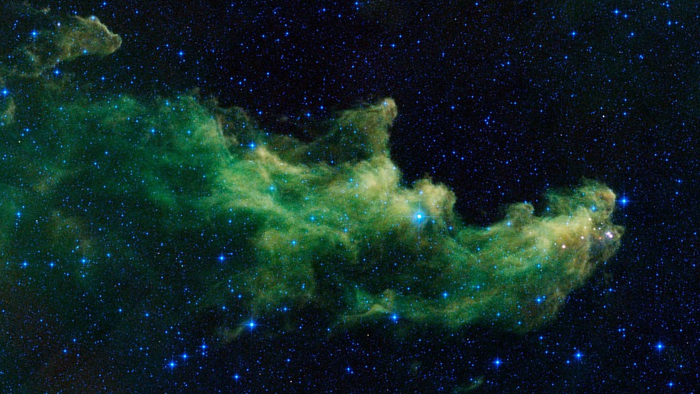
NASA's October Sky Guide Goes Spooky: Algol the "Demon Star" and the Witch Head Nebula (Published September 28)

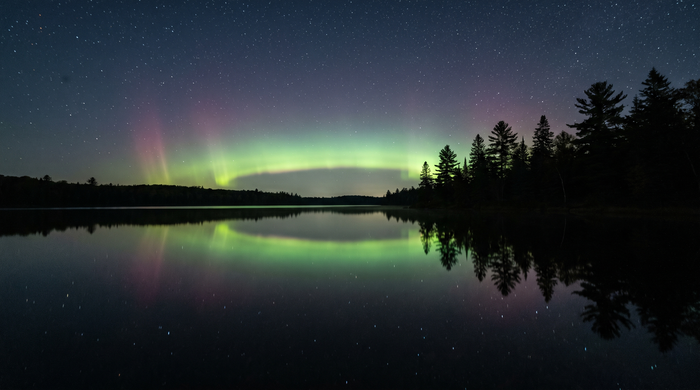
NOAA Issues G1 Geomagnetic Storm Watch for October 2: Auroras Possible Across the Northern U.S.

