





Orionid Meteor Shower 2026: Best Time to Watch
The Orionid meteor shower 2026 peaks the night of October 21 to 22. Moonset times, where to look in Orion, realistic meteor counts by sky quality, and a letter ritual for Halley's dust.


Twice a year Earth plows through the dust trail of the most famous comet in history. In May the result is the Eta Aquariids; in October it is the Orionids, fast, bright meteors that often leave a glowing trail hanging in the sky for a second after they vanish. In 2026 the peak falls on the night of October 21 into October 22, and it comes with one complication: a bright Moon that stays up until the small hours. This guide gives you the dates and times for North America, a realistic idea of how many meteors to expect, what else is in the sky that week, and a quiet ritual that fits a shower made of comet dust that is centuries old.
Contents
The Orionid meteor shower 2026 peaks on the night of October 21 into October 22. The best time is the early morning of October 22, roughly from 3 a.m. until dawn, local daylight time, after the bright waxing Moon has set. Look east to south toward Orion. Expect about 10 to 15 meteors an hour under a dark rural sky and far fewer in town. The meteors are dust from Halley's Comet.
The Orionids are produced by dust from Halley's Comet (1P/Halley); the same orbit produces the Eta Aquariids in May.
Source/tradition: International Meteor Organization; NASA Science, Comet 1P/Halley
Orionid meteoroids enter the atmosphere at about 66 km/s, roughly 41 miles per second.
Source/tradition: International Meteor Organization, Meteor Shower Calendar
In 2026 the Orionids peak on the night of October 21 to 22, with activity from October 2 to November 7.
Source/tradition: IMO Meteor Shower Calendar 2026; timeanddate.com
Wishing on a shooting star is an old and widespread folk custom.
Source/tradition: European and American folk tradition
Writing a letter to your future self after a meteor night helps you think in decades rather than weeks.
Source/tradition: Personal journaling and ritual practice
An intention made during a meteor shower is more likely to come true.
Source/tradition: No known mechanism or evidence
VERIFIED = verifiable in scientific or official sources · TRADITIONAL = historically or culturally recorded · LIVED PRACTICE = widely practiced, experiential knowledge · NOT PROVEN = spiritual interpretation, not scientifically established.
At a glance
- Peak: night of Wednesday, October 21, into Thursday, October 22, 2026
- Best time: roughly 3 a.m. until dawn on October 22, local daylight time, after moonset
- Where to look: east to south; the radiant is in Orion, above the red star Betelgeuse
- Expected rate: up to about 20 per hour in ideal skies; realistically 10 to 15 in the country, 5 in the suburbs, 1 or 2 in a city
- Moon: waxing gibbous, about 80 percent lit, setting roughly between 2 and 3:30 a.m.
- Active period: October 2 to November 7, 2026
- Source: dust from Halley's Comet, 1P/Halley
What the Orionids are
Twice a year Earth crosses the orbit of Halley's Comet: in May, when the Eta Aquariids fall, and in October, when the Orionids arrive. The comet itself is far away. Its last visit was in 1986 and the next one comes in 2061, but its trail remains. On every pass around the Sun it sheds dust, and over centuries that dust spreads out along its orbit. What hits the atmosphere in October was not lost forty years ago but many hundreds of years ago.
The particles are tiny, most of them smaller than a grain of rice. What makes them special is their speed. Orionids strike the upper atmosphere at about 66 kilometers per second, roughly 41 miles per second, which puts them among the fastest meteors of the year. That is why they are bright, why they are brief, and why many leave a persistent train, a luminous streak that lingers for a second or two. Once you have seen an Orionid you recognize the next one: a sharp white line that keeps glowing for a heartbeat after it is gone.
The name comes from the radiant, the point in the sky from which the meteors appear to stream. It lies in the constellation Orion, a little above the Hunter's raised shoulder, the reddish star Betelgeuse, near the border with Gemini. In late October Orion rises in the east around 10:30 or 11 p.m. local time and stands high in the south before dawn. From that follows the most important sentence of this guide: the Orionids are a shower for early risers, not for the evening.
2026: the Moon gets in the way, until it sets
The first half of the night is not worth much in 2026. On October 21 the Moon is about four-fifths illuminated, with the full Hunter's Moon following on October 26, and it stays up all evening. A Moon that bright washes out the fainter meteors completely; only the few bright ones remain.
That changes after moonset. Depending on where you are in the United States, the Moon sinks below the western horizon roughly between 2 and 3:30 a.m. local daylight time. After that the sky is dark, Orion stands high, and Earth is turned directly into the stream of particles. Those hours between moonset and morning twilight are the Orionid night of 2026. If you only have one hour, take the one right before dawn begins to brighten the east. Because moonset differs by location, check the exact time for your town on a site such as timeanddate.com before you set the alarm.
One more detail that is easy to miss: daylight saving time is still in effect. In the United States, clocks do not fall back until Sunday, November 1, 2026, so every time in this guide is daylight time, whether that is EDT, CDT, MDT or PDT. And because the Orionid peak is broad and flat, the nights of October 20 to 21 and October 22 to 23 are good backups if clouds block the main night.
How many meteors are realistic?
The number you will see quoted everywhere is the zenithal hourly rate, about 20 for the Orionids. It describes an ideal case: a perfectly dark sky, the radiant straight overhead, and experienced eyes. That case does not exist for most observers. Realistically, after moonset, you can expect around 10 to 15 meteors an hour under a dark rural sky, about five from the edge of a suburb, and one or two from inside a city. These are experience-based estimates, not promises.
The Orionids have a quality that the raw number does not capture: they are bright. A shower with a dozen bright meteors feels more impressive than one with twenty faint ones. Now and then they also produce fireballs, meteors brighter than Venus that briefly light up the ground. If you see one, the American Meteor Society collects fireball reports from the public, and your sighting can help reconstruct its path. Between 2006 and 2009 the Orionid rates unexpectedly climbed to 50 or 70 an hour because Earth crossed older, denser dust filaments. No model predicts anything like that for 2026, but the shower has done it before without warning.
| Where you watch | Meteors per hour, realistic | Tip |
|---|---|---|
| Dark rural site or state park | about 10 to 15 | the best trip if you can manage it |
| Suburb, backyard | about 5 | turn off porch lights, face away from the city glow |
| City center | 1 to 2 | look for the bright ones and the persistent trains |
What else is in the sky on October 21 and 22
The Orionid night falls in a crowded week. Venus has been retrograde since October 3, and on October 24, two days after the peak, Mercury stations retrograde in Scorpio as well. On October 23 the Sun enters Scorpio, the start of Scorpio season, and on October 26 the full Hunter's Moon in Taurus rises and in the following nights passes close to the Pleiades.
If you are outside in the early hours anyway, you will see more than meteors: Orion with the three stars of his belt in a row; below and to the left, Sirius, the brightest star in the night sky, climbing in the southeast; and higher up, the twins Castor and Pollux in Gemini. Jupiter, in Leo in October 2026, rises after midnight and is the brightest point in the east that does not twinkle, a useful signpost if you do not know the constellations.
 |
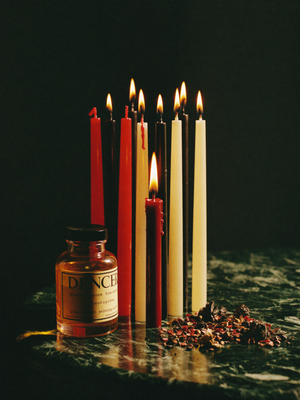
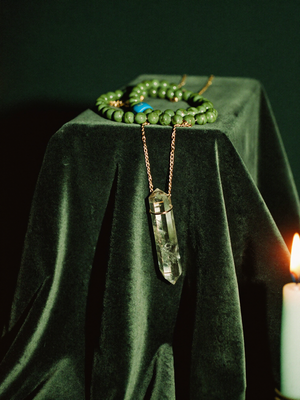
For the morning after the meteors Magic Fish Wishing Candle Spell Kit, $43.95. The letter ritual below asks for one candle on the table while you write. This kit builds that moment around a wishing symbol from the old tale of the fisherman and the golden fish: a hand-poured beeswax fish candle, three herbs and written instructions. A focus for the long view, not a guarantee that anything comes true. |
Halley's dust: a ritual for the long view
With the Draconids two weeks earlier, on the evening of October 8, the classic practice is the wish made before the first shooting star. You can read about that tradition and its history in our guide to shooting stars and meteor showers. The Orionids ask for something else, and it has to do with where they come from. The grains burning up on this night left Halley's Comet centuries ago. When they separated from the comet, none of the people you love had been born. The comet returns in 2061, a date that many of us can still reach and that is certain for everyone who comes after us.
The ritual that fits is a letter to 2061. You do not write it during the night but the morning after, once you are back inside, with a candle on the table. Three questions, three paragraphs: What should still be true in thirty-five years? What may have burned away by then? And who would you give this letter to read? The envelope gets the date of Halley's next perihelion, July 28, 2061, and goes wherever you keep old things.
Why this works is no secret. People decide differently when they think in decades instead of weeks. The tradition calls something like this a shooting-star intention. You could also simply call it perspective. Both words describe the same sheet of paper.
Practical: how to use the night of October 21 to 22
- In the evening: place and gear. A clear view to the east and south, no streetlight in your line of sight. A reclining lawn chair or a sleeping pad plus a blanket, because pre-dawn temperatures in late October often sit in the 30s or low 40s Fahrenheit across the northern states and can drop below freezing in the mountains. A thermos, a red flashlight or a candle in a jar. No binoculars; meteors are a naked-eye show.
- Alarm for about 2:45 a.m. That is around the time the Moon is setting for many locations. Check your local moonset and adjust by half an hour either way. From the moment you get up: no bright light and no glancing at your phone screen.
- The first twenty minutes: let your eyes adapt. Your retinas need about twenty minutes to reach full sensitivity. Use the time to find Orion: three belt stars in a row, and above them to the left, reddish Betelgeuse. The meteors come from up there, but they appear all over the sky, often far from the radiant.
- Until dawn: watch, do not search. Aim your gaze about 30 to 40 degrees away from Orion, toward the south or high in the east. Your eyes register movement at the edge of your vision better than in the center. Count if you like; it helps against impatience and keeps you honest afterward.
- After dawn: the letter. Inside, warm, with light. Three paragraphs for 2061, the date on the envelope, and then into the drawer with the other old things.
What watchers often report
A few experiences come up again and again among people who have watched autumn meteor showers. Almost everyone mentions how hard it was to get up, and how the first bright meteor, often within ten minutes, made it worth it at once. Many say they did not believe in the persistent trains until they saw one. Watching as a pair, each person facing a different part of the sky, is a popular way to double the count and share the night. And people who have written a letter to their future self often say that they never opened it again and still know exactly what is in it, which may be the whole point.
What we do not promise
There is no evidence that an intention formed during a meteor shower is more likely to come true. There is no known way a grain of dust from Halley's Comet could influence the course of a life. What the letter to 2061 does is something else: it forces you to think in long lines. Most of us rarely do that, and it changes decisions, no comet required.
The numbers in this guide are forecasts, not commitments. Meteor showers can be modeled but not ordered. You may get a morning with only two meteors in three hours. That is not a planning error; it is the nature of the thing. And if clouds cover the peak, the shower runs until November 7, and the nights around the maximum are only slightly weaker.
Frequently asked questions
When is the Orionid meteor shower 2026 at its best?
On the night of Wednesday, October 21, into Thursday, October 22, 2026. The best window is the early morning of October 22, roughly from 3 a.m. until the first light of dawn, local daylight time, after the Moon has set.
Does the Moon interfere with the Orionids in 2026?
Yes, in the first half of the night. The waxing gibbous Moon is about 80 percent lit and sets roughly between 2 and 3:30 a.m. local time, depending on where you live. After moonset the sky is dark, which is why the alarm clock is worth it.
How many meteors will I see?
The zenithal hourly rate is about 20 under ideal conditions. Realistically, after moonset, expect around 10 to 15 meteors an hour under a dark rural sky, about 5 in the suburbs and 1 or 2 in a city.
Which direction should I look?
Toward the east and south. The radiant is in Orion, above the red star Betelgeuse, but meteors appear all over the sky. Look about 30 to 40 degrees away from Orion rather than straight at it.
Where do the Orionids come from?
From dust left along the orbit of Halley's Comet, 1P/Halley, which Earth crosses every October. The same orbit produces the Eta Aquariids in May. The comet itself returns to the inner solar system in 2061.
Do I need a telescope or binoculars?
No. Meteors cross large parts of the sky in a second or two, which is far too fast for a telescope. Your eyes, fully dark-adapted, are the best instrument.
Is daylight saving time still in effect on October 22?
Yes. In the United States, daylight saving time ends on Sunday, November 1, 2026, so all times for the Orionid night are daylight time, such as EDT, CDT, MDT or PDT.
Sources and further reading
- International Meteor Organization: Meteor Shower Calendar 2026, radiant, activity period, velocity of 66 km/s and the elevated Orionid rates of 2006 to 2009.
- timeanddate.com: Orionid meteor shower 2026, activity from October 2 to November 7, peak October 21 to 22, up to 20 meteors per hour, parent comet 1P/Halley, moonrise and moonset tables by city, accessed September 2026.
- American Meteor Society: meteor shower calendar and public fireball reporting.
- NASA Science: Comet 1P/Halley and its meteor showers.
More from October 2026
All stories →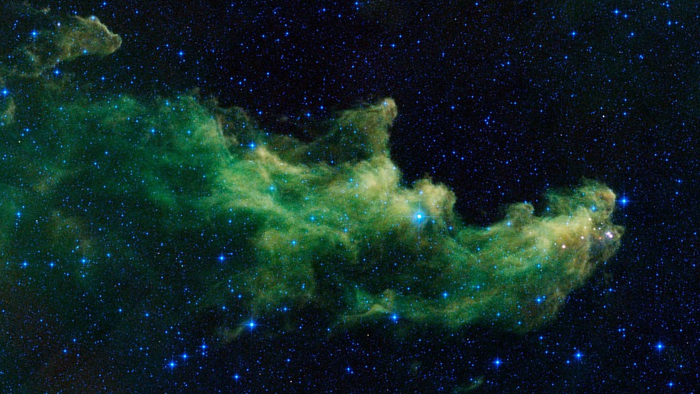
NASA's October Sky Guide Goes Spooky: Algol the "Demon Star" and the Witch Head Nebula (Published September 28)

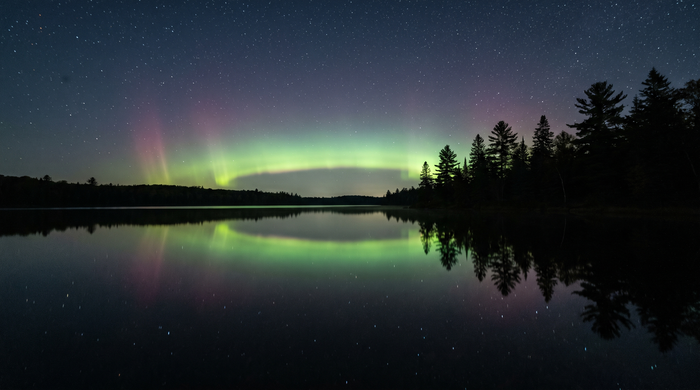
NOAA Issues G1 Geomagnetic Storm Watch for October 2: Auroras Possible Across the Northern U.S.

