





Nagas: Serpent Guardians of Hindu and Buddhist Myth
Nagas are the serpent-shaped guardians of water, earth and hidden knowledge in Hindu and Buddhist tradition - neither good nor evil, but keepers of balance.


Few beings appear in as many cultures as the serpent — and few are regarded with as much wariness and respect as the nagas, the serpent-shaped guardians of Indian and Southeast Asian myth. They are held to be keepers of water, of the earth, and of hidden treasure; a bridge between the visible world and the one behind it. This guide covers who the nagas are in the sources, what the imagery carries, and how people work with it today without borrowing more than they understand.
Contents
Nagas are serpent-shaped, semi-divine beings of Hindu and Buddhist tradition, held to guard water, earth, treasure and hidden knowledge - neither good nor evil, but keepers of balance. The best known story tells how the naga Mucalinda sheltered the meditating Buddha from a storm with his hood; across much of Asia nagas are still honored at temples and water sources today. Across cultures the serpent stands for transformation, healing and renewal - through the shedding of skin, the rod of Asclepius, the ouroboros. In yoga this image joins with kundalini, the so-called serpent force at the base of the spine. Work with the symbolism happens through meditation, contact with nature and respectful ritual - a spiritual approach whose effects are not scientifically demonstrated and which does not replace medical treatment.
Nagas are semi-divine serpent beings in Hinduism and Buddhism who guard water, treasure and sacred knowledge.
Source/tradition: Hindu and Buddhist mythology
The naga Mucalinda sheltered the meditating Buddha from a storm.
Source/tradition: Buddhist tradition (Mucalinda Sutta)
The serpent is a cross-cultural symbol of transformation, healing and rebirth - the rod of Asclepius, the uraeus, the ouroboros.
Source/tradition: Greek, Egyptian and alchemical symbol history
The reading of nagas as extraterrestrials or a hidden reptilian race is a twentieth-century addition with no footing in the Sanskrit or Pali sources.
Source/tradition: Not present in the classical textual tradition
Meditation with naga imagery and clearing a room with smoke are used as spiritual practice.
Source/tradition: Modern spiritual practice, experiential knowledge
An awakened kundalini energy rises through the chakras and brings about spiritual awakening.
Source/tradition: Yogic and tantric teaching; not scientifically demonstrated
VERIFIED = verifiable in scientific or official sources · TRADITIONAL = historically or culturally recorded · LIVED PRACTICE = widely practiced, experiential knowledge · NOT PROVEN = spiritual interpretation, not scientifically established.
Who the nagas are
In Hindu and Buddhist tradition the nagas are powerful semi-divine serpent beings who live in waters, springs and the subterranean realms known as Patala. They are neither purely good nor purely evil but guardians of balance: they watch over treasure and sacred knowledge, and they also bring rain and fertility. Offend one and the traditional consequence is drought or illness; treat one well and the traditional consequence is water.
That double aspect is the whole character. A naga is not a monster to be defeated and not a benevolent spirit to be petitioned. It is a landlord.
The best known story is the one in which the naga Mucalinda shelters the meditating Buddha from a storm, spreading his hood over him for seven days — an image of the guarding, serving power of these beings, and one that turns up in temple sculpture from Sri Lanka to Cambodia. Across Asia nagas are still honored at temples, bridges and water sources, and the stone naga balustrade flanking a temple stairway is one of the most recognizable architectural forms in the region.
What the sources actually say, and what they do not
Worth separating, because English-language spiritual writing often blurs it. The nagas of the Mahabharata and the Puranas are characters in a literature with a long, traceable history. The Mucalinda episode sits in the Pali canon. These are documented texts, and the beings in them have genealogies, names and quarrels — Vasuki, Shesha, Takshaka are individuals, not a category.
What the sources do not contain is the idea, common on the modern spiritual internet, that nagas are a species of extraterrestrial or a hidden race of reptilian overseers. That reading is twentieth-century and has no footing in the Sanskrit or Pali material. It borrows a name and drops the content.
The serpent as a universal symbol
The serpent is an archetype of transformation, and its reasoning is physical. Because it sheds its skin, it has stood worldwide for death and rebirth, healing and renewal. In ancient Greece the serpent wound around the rod of Asclepius — still the sign of medicine today, and still frequently confused with the two-snake caduceus that a good deal of American medical branding uses by mistake. In Egypt the uraeus serpent guarded the pharaoh. The ouroboros, the serpent devouring its own tail, stood for eternal return and the unity of all things.
What runs through all of it is the same association: hidden wisdom, earth force, and the capacity to let go of the old in order to bring forth the new. If you want the animal rather than the deity — snakes as omen and encounter rather than as guardians of Patala — that is a separate subject and we treat it separately in snake symbolism and spiritual meaning.
A sign you can wear
The coiled serpent is one of the oldest pieces of jewelry there is, and it has never really gone out of use. Our Sterling Silver Snake Ring at $23.95 is an adjustable 925 band shaped as a serpent winding around the finger — a wearable version of the shedding-and-renewal image rather than a devotional object. If you are building a practice around naga imagery, treat it as a reminder on your hand, not as a shrine.
Nagas and kundalini
In yoga and tantra the serpent reappears as the image for kundalini — the sleeping life force said to rest coiled at the base of the spine. When it wakes, the teaching goes, it rises like a serpent through the energy centers and leads to a deep spiritual awakening.
The idea ties the mythic nagas to something very personal: an earth force that sleeps inside you and wants to unfold. Traditional instruction is emphatic that groundedness and patience matter here, and that the serpent force is to be woken respectfully and slowly. It is also worth stating plainly that the rising of kundalini through the chakras is a teaching, not a measured process — there is no scientific confirmation of it, and reports of difficult experiences during intensive practice are common enough that gradual work with a teacher is the sensible route. There is more in our guide to kundalini yoga.
Working with the imagery without appropriating the tradition
You do not need to visit a temple to honor serpent power, and you also do not need to pretend to a lineage you do not have. The honest version is smaller than the internet version.
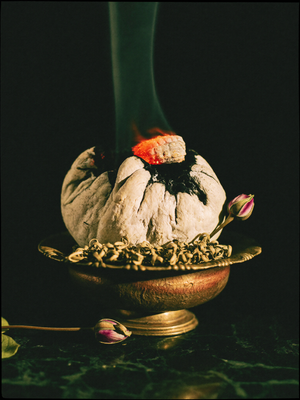
Begin with respect and grounding: a moment of quiet at a body of water, a deliberate breath, a small gesture of thanks to the place. Water is the nagas' own element in the tradition, which makes a riverbank or a lakeshore the natural setting rather than an altar indoors. Many people clear a room with smoke before sitting, and if you do that, our guide to clearing a room covers it.
In meditation you can picture a protective serpent coiling around you, or warm earth force rising along the spine. Both are imaginative exercises. They do something for attention and for calm, and they are not a transaction with a being.
One point of courtesy that the tradition takes seriously and Western practice often skips: in the living cult, nagas are given offerings of milk, water and flowers at their own sites, by people in whose culture that is a continuous practice. Doing a private version of that at home is not forbidden by anybody, but it is worth knowing that you are making something new rather than continuing something old — and worth saying so when you describe it to others.
Where you will actually meet nagas
If you travel, the imagery is unmissable. Naga balustrades line the causeways at Angkor. Multi-headed serpent hoods shelter seated Buddha figures throughout Thailand, Laos and Cambodia. Nagas appear on temple tanks and stepwells across India as the guardians of the water itself. In Nepal, Naga Panchami is still observed with offerings to serpent images.
In American museum collections you are most likely to meet them as sculpture fragments and bronzes, often labeled simply as „serpent deity“. The five- or seven-headed hood is the reliable identifier — a single-headed serpent in Indian art is usually something else.
Frequently asked questions
Who are the nagas?
Serpent-shaped semi-divine beings from Hindu and Buddhist tradition. They are held to guard water, the earth and hidden treasure, and they stand for protection, wisdom and balance.
What does the serpent mean spiritually?
It is an archetype of transformation. By shedding its skin it symbolizes death and rebirth, healing, renewal and hidden earth wisdom.
What do serpents have to do with kundalini?
In yoga, kundalini is the coiled life force at the base of the spine. When it wakes, the teaching says, it rises like a serpent through the chakras and leads to spiritual awakening. This is a teaching, not a demonstrated process.
Are nagas good or evil?
Neither. They are guardians of balance. Treated with respect — along with the places and waters they are associated with — they are held to be protective and blessing.
Is a naga the same as a dragon?
No. Nagas are serpents, usually depicted with one or more cobra hoods. East Asian dragons are a separate tradition with a separate iconography — horns, whiskers, clawed limbs — and the two are regularly confused in Western illustration.
How do I work with naga energy?
With respect and grounding: quiet beside water, thanks to the place, meditation, a cleared room. Keep in mind that you are adapting imagery from a living tradition rather than practicing that tradition.
What we do not promise
- That serpent imagery, meditation or offerings produce an effect in the outside world. There is no evidence for that.
- That kundalini rising through the chakras is a demonstrated physiological process. It is a teaching from yogic and tantric literature.
- That any of this replaces medical or psychological treatment. If intensive practice leaves you agitated, sleepless or disoriented, stop and talk to a professional.
Sources and further reading
- Hindu and Buddhist mythology on the nagas as guardians of water, treasure and sacred knowledge; the naga figures Vasuki, Shesha and Takshaka in the epic literature.
- The Mucalinda episode in the Pali canon: the naga shelters the meditating Buddha from a storm.
- Greek, Egyptian and alchemical symbol history: the rod of Asclepius, the uraeus, the ouroboros.
- Yogic and tantric teaching on kundalini as coiled life force — not scientifically demonstrated.
- More in the magazine: Snake symbolism and spiritual meaning · Kundalini yoga, explained · The seven chakras, explained
This article places traditional ideas in their cultural and historical context. It contains no promise of effect and does not replace medical or psychological treatment. Questions: 28@templeofdesire.com