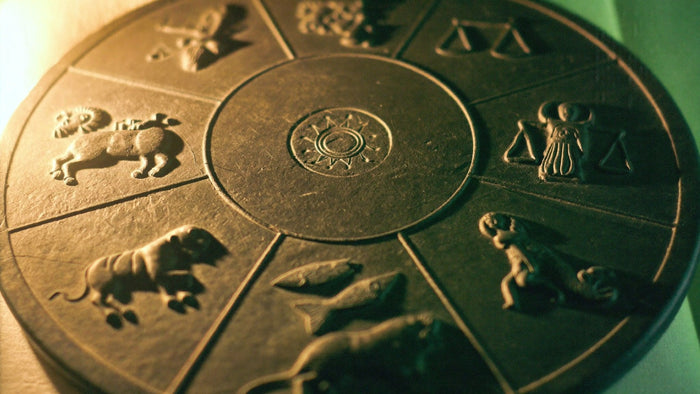
New Moon in Virgo Ritual for Beginners: September 10, 2026
A complete beginner's ritual for the New Moon in Virgo on September 10, 2026 - exact timing, what Virgo signifies and where that meaning comes from, and a thirty-minute structure you can run in a studio apartment. Includes what the evidence actually supports and what it does not.


A complete beginner's ritual for the New Moon in Virgo on September 10, 2026 — the exact timing, what Virgo signifies and where that meaning comes from, and a thirty-minute structure you can run in a studio apartment. This article will not tell you the moon phase makes your intention come true; it will show you the part of the ritual that has actual evidence behind it, and how to build the rest around that.
Contents
The New Moon in Virgo falls on September 10, 2026 at 11:27 PM EDT (8:27 PM PDT), at 18°26′ of Virgo. A beginner ritual for it takes about thirty minutes: clear one surface, light one candle, write one intention in the form "when X happens, I will do Y," read it aloud, and put it somewhere you will see it every day until the Full Moon on September 26. Virgo is traditionally the sign of harvest, discernment and practical service, so this new moon is conventionally worked for routines, health habits, work systems and cleaning things up. The moon phase itself has never been shown to influence whether an intention is fulfilled — the specific, written, if-then form of the intention has been, across hundreds of studies, and that is the part of this ritual doing the measurable work.
A new moon is the moment the Sun and Moon share the same ecliptic longitude as seen from Earth; the Moon's illuminated side faces away from us, so nothing is visible in the sky.
Source/tradition: NASA Science, Moon Phases (science.nasa.gov/moon/moon-phases)
The September 2026 new moon occurs on September 10 at 11:27 PM EDT (September 11, 03:27 UTC) at 18°26′ of Virgo.
Source/tradition: Cafe Astrology, New Moon on September 10, 2026; cross-checked against the Astro-Seek 2026 lunation ephemeris
Because of the precession of the equinoxes, the tropical sign Virgo no longer coincides with the constellation Virgo; the two have drifted roughly one full sign apart since antiquity.
Source/tradition: Hipparchus (c. 130 BCE), transmitted in Ptolemy, Almagest, Book VII; IAU constellation boundaries (1930)
Forming an intention as a specific if-then plan tied to a named cue measurably improves goal attainment, with a medium-to-large effect size across 94 studies.
Source/tradition: Gollwitzer & Sheeran, 'Implementation Intentions and Goal Achievement: A Meta-Analysis', Advances in Experimental Social Psychology 38 (2006), 69-119
Virgo has signified harvest, labor, illness, analysis and discernment since Hellenistic astrology, where the sign was the grain-bearing maiden and Mercury was assigned as its ruler.
Source/tradition: Vettius Valens, Anthologiae (2nd c. CE); Claudius Ptolemy, Tetrabiblos, Book I
Setting a written intention at the new moon and returning to review it at the following full moon is a standard structure taught across contemporary Western moon practice.
Source/tradition: Observed convention across current English-language new moon practice and teaching material
The phase of the Moon at the moment an intention is set influences whether that intention is fulfilled.
Source/tradition: No supporting evidence; Rotton & Kelly, 'Much Ado About the Full Moon', Psychological Bulletin 97:2 (1985), 286-306, found no reliable lunar effect on human behavior
VERIFIED = verifiable in scientific or official sources · TRADITIONAL = historically or culturally recorded · LIVED PRACTICE = widely practiced, experiential knowledge · NOT PROVEN = spiritual interpretation, not scientifically established.
Quick answer: The New Moon in Virgo falls on September 10, 2026 at 11:27 PM EDT (8:27 PM PDT), at 18°26′ of Virgo. A beginner ritual for it takes about thirty minutes: clear one surface, light one candle, write one intention in the form "when X happens, I will do Y," read it aloud, and put it somewhere you will see it every day until the Full Moon on September 26. Virgo is traditionally the sign of harvest, discernment and practical service, so this new moon is conventionally worked for routines, health habits, work systems and cleaning things up. The moon phase itself has never been shown to influence whether an intention is fulfilled — the specific, written, if-then form of the intention has been, across hundreds of studies, and that is the part of this ritual doing the measurable work.
When is the New Moon in Virgo in 2026?
The Sun and Moon meet at 18 degrees and 26 minutes of Virgo on September 10, 2026 at 11:27 PM Eastern — 10:27 PM Central, 9:27 PM Mountain, 8:27 PM Pacific. In Universal Time that is September 11 at 03:27, which is why you will find this listed under both dates depending on which site you read. If you are in the United States, it is a Thursday night.
A new moon is not a phase in the sense of a shape you can go outside and look at. It is a geometric event: the moment the Moon and the Sun share the same ecliptic longitude as seen from Earth. The Moon's illuminated hemisphere is turned away from us, so there is nothing to see. This is worth knowing because it explains why new moon practice is almost always indoor and inward while full moon practice is so often outdoor — one of them gives you something to stand under, and the other gives you the darkest sky of the month.
You do not have to be awake at 11:27 PM. Most practitioners work anywhere in a window of a day or two on either side, and some deliberately work the following morning so the ritual lands at the start of a day rather than the end of one. More on that below.
What Virgo actually signifies — and where that meaning came from
Virgo's associations in contemporary practice are consistent enough to be predictable: order, health, routine, discernment, craft, service, the harvest, editing, the useful over the grand. Those are not modern inventions. They descend from Hellenistic astrology, where Virgo was the grain-bearing maiden, ruled by Mercury, and read for matters of labor, illness and analysis. Vettius Valens is working with recognizably this material in the second century CE, and Ptolemy's Tetrabiblos formalizes the rulership scheme that puts Mercury over the sign.
What has changed is where the sign sits. Western astrology uses the tropical zodiac, which is anchored to the equinoxes rather than to the stars. Because Earth's axis wobbles — the precession of the equinoxes, described by Hipparchus around 130 BCE — the tropical signs have drifted against the background constellations by roughly one full sign since antiquity. The Sun is in tropical Virgo through most of September; it is in the constellation Virgo from mid-September into late October. Both statements are correct, and they are about different things.
This matters for a beginner ritual for one reason only: nobody should sell you the idea that you are drawing down the literal star pattern. You are working inside a symbolic calendar with a two-thousand-year paper trail, and that calendar is genuinely useful for organizing attention across a year. It is just not an astronomical claim.
Temple tip
Write the intention before you light anything. Almost every beginner does it the other way — candle first, atmosphere second, wording third — and by the time they reach the wording they are in a soft, warm, agreeable state and will write something soft, warm and agreeable. Decide the sentence cold, at the kitchen table, in daylight if you can. Then light the candle and give it to the room. The same principle governs the full new-moon-to-full-moon candle cycle: the deciding happens first, the ritual holds it.
Why most beginner new moon rituals quietly fail
They fail for three reasons, and none of them is insufficient belief.
The intention is a mood, not a plan. "I want to feel more organized" cannot be acted on, cannot be checked, and cannot fail — which sounds merciful and is actually the problem. An intention that cannot fail cannot succeed either, so two weeks later there is nothing to look at.
There is no second appointment. A new moon ritual with no scheduled return is a message dropped into a drawer. The whole architecture of moon practice — new moon sets, full moon reviews — exists to create the second appointment. If you skip the return, you have performed the ceremony and thrown away the mechanism.
The intention lives somewhere you never look. Folded into a journal, tucked under a candle, buried in a notes app with four hundred other notes. Whatever else the paper is doing symbolically, it also has to be legible to you on a Tuesday morning in the middle of an ordinary week.
The ritual, step by step
Thirty minutes. One surface. No special equipment beyond a candle and something to write on.
1. Clear one surface completely (5 minutes). Not the room — one surface. A windowsill, a shelf, the corner of a desk. Take everything off it, wipe it, put back only what you are about to use. Virgo practice is fussy about this on purpose: the physical act of clearing is the opening of the ritual, not a chore that precedes it. If you share your space and cannot leave anything set up, the portable altar approach works fine here.
2. Write the intention, in if-then form (10 minutes). This is the load-bearing step. Write it as a specific plan tied to a specific cue: "When I close my laptop on a weekday, I will put the next day's three tasks on a card before I stand up." Not "I will be more organized." The cue has to be something that actually happens, at a time and place you can name.
Write one. Two at most. The temptation at a Virgo new moon is to write eleven, because Virgo material is exactly the material that generates long lists, and a long list is how you guarantee none of them survives to the full moon.
3. Light the candle and read it aloud (5 minutes). Aloud, at normal speaking volume, to the room. Reading it out is not decoration — hearing your own sentence spoken is the fastest way to notice that it is vague. If it sounds like something from a greeting card when you say it, it is not specific enough. Go back to step 2.
4. Place it where you will see it (2 minutes). Taped inside a cabinet door you open daily, propped against the coffee maker, on the bathroom mirror. Somewhere ordinary and unavoidable. The altar is where the ritual happened; the mirror is where the intention lives.
5. Write the return date on it (1 minute). September 26, 2026 — the Full Moon. Put that date on the paper itself. On that night you take the paper down, read it, and write one honest line underneath: what happened, what did not, what you would change. That single line is the difference between a practice and a habit of nice evenings.
6. Let the candle burn its first full session (remainder). If you are using a container candle, give it long enough for the melt pool to reach the edge of the glass on this first burn, or it will tunnel for the rest of its life. Never leave it unattended.
If you want to work with this yourself, this is what we use:

New Moon 7-Day Candle — Intention & New Beginnings
A glass-encased seven-day candle, hand-poured in small batches, dressed for new moon work and topped with rainbow moonstone. We list this one for a structural reason rather than a mystical one: a seven-day candle keeps the intention physically present for a week after the night you set it, which is precisely the window in which most new moon intentions are forgotten. The label carries a blank field for your name and petition. $11.00
See the New Moon candleNew moon work vs. full moon work: what actually differs
Beginners often ask which one they are "supposed" to do. The honest answer is that the difference is a convention, not a force — but it is a well-designed convention, and using both halves is what makes the calendar work.
| New Moon | Full Moon | |
|---|---|---|
| Traditional framing | Beginning, planting, drawing in | Culmination, release, letting go |
| What it is good for structurally | Committing to a specific plan in writing | Reviewing that plan honestly, two weeks later |
| Typical format | Indoors, dark, quiet, written | Often outdoors, visible moon, spoken |
| 2026 September date | Sept 10, 11:27 PM EDT (18°26′ Virgo) | Sept 26 — the Harvest Moon |
| Failure mode | Writing a wish instead of a plan | Never actually returning to the paper |
Does the exact minute matter?
Traditionally, yes — a great deal of astrological practice is built on precise timing, and electional astrology exists specifically to choose moments. In practice, for a beginner, the exact minute is the least important variable in the entire ritual, and treating it as the most important is the single most common way people end up not doing the ritual at all.
Here is a more useful way to hold it. Pick a time in the 48 hours around the event when you will reliably be alone, unhurried and sober. That constraint will produce a better ritual than hitting 11:27 PM exactly while tired, distracted, or with someone waiting for you. If the timing genuinely matters to you, the Thursday night slot is available; if it does not, Friday morning is a fine and arguably better time to begin something Virgoan.
One real astronomical note worth having: the nights around a new moon are the darkest of the month, which is why they are the best nights for seeing stars. If part of your practice involves actually going outside and looking up, this is the week for it.
What the evidence says about moon phases and people
We sell ritual goods, so we would rather be the ones to tell you this than have you find out elsewhere.
The large research literature on lunar effects on human behavior — hospital admissions, crime, births, psychiatric episodes — has been reviewed repeatedly, and the reviews find no reliable effect. Rotton and Kelly's meta-analysis in Psychological Bulletin remains the standard citation, and its conclusion has not been overturned by better data since.
There is one narrow, well-conducted exception worth knowing, because it is genuinely interesting and it is not what the folklore claims. A 2021 study in Science Advances tracked sleep across communities in Argentina and among university students in Seattle and found that in the nights leading up to a full moon, people went to sleep later and slept for less time — an effect visible in both rural communities without electricity and in a fully urban, electrified population. That is a real, measured lunar association. It is about sleep onset. It says nothing about whether a written intention comes true.
And on the other side of the ledger: the if-then structure in step 2 is not folk advice. Forming implementation intentions — pre-committing to a specific action tied to a specific cue — has been tested across roughly a hundred studies and produces a medium-to-large effect on goal attainment. That is the mechanism inside this ritual that actually has numbers behind it, which is exactly why we put it at the center of the structure instead of at the end as a footnote.
Voices from practice
We do not publish invented testimonials or attributed quotes, so what follows is a summary of patterns visible in public practitioner discussion rather than anything put in anyone's mouth.
The most consistent theme in new moon communities is that people report far better results from one intention than from a list — and that they learn this the hard way, usually after two or three cycles of writing six and remembering none. The second recurring pattern is that practitioners who keep the same physical notebook across months describe the notebook, rather than any individual ritual, as where the value turned out to be. The third is a widely shared frustration with Virgo season specifically: the sign's material invites self-criticism, and a meaningful number of practitioners describe having to consciously rewrite their Virgo intentions to be about building a system rather than about fixing a personal flaw.
What we don't promise
The position of the Moon at the moment you write something down has never been shown to affect whether that thing happens. No candle, oil, crystal or spoken petition sold by us or anyone else changes the probability of an outcome, and nothing in this article is a health claim or a substitute for medical or psychological care — a point worth stating plainly given that Virgo's traditional territory includes health and the body.
What a new moon ritual reliably does is put a decision into words, at a fixed time, in a form you can check later. That is a commitment device with a date attached, dressed in a symbolic vocabulary that has been maintained for two thousand years and is genuinely good at holding attention. We think that is worth doing. We do not think it needs to be sold as anything more than it is.
Practically: how to work with this
- Put both dates in your calendar now. September 10 to set, September 26 to review. The second one is the one people skip and the one that makes it work.
- Write one intention, in if-then form. "When [specific cue], I will [specific action]." If you cannot name the cue, the intention is not finished.
- Draft it in daylight, perform it at night. Deciding and ceremony are different states of mind and should not be done in the same twenty minutes.
- Clear one physical surface as the opening move. For a Virgo new moon this is the ritual, not the prep for it.
- Put the paper somewhere unavoidable and boring. Cabinet door, mirror, coffee maker. Not the journal.
- Aim the intention at a system, not at your character. "Build a Sunday reset routine" survives the month; "stop being lazy" does not.
- Candle safety. Heatproof surface, away from curtains and anything that can catch, out of reach of children and pets, never left burning unattended. A seven-day candle is a seven-day fire risk.
If you are assembling the physical side of this for the first time, the ritual candles collection covers the candle end and the spell kits and ritual bath collection covers pre-built sets. And if you are adding stones to the surface, how to cleanse crystals is the honest version of that step.
What should your Virgo new moon intention actually be about?
Four questions. No email required.
Frequently asked questions
When exactly is the New Moon in Virgo in September 2026?
September 10, 2026 at 11:27 PM Eastern Daylight Time — 10:27 PM Central, 9:27 PM Mountain, 8:27 PM Pacific — at 18°26′ of Virgo. In Universal Time that is 03:27 on September 11, which is why some sources date it to the 11th. The corresponding Full Moon, and the natural review point for anything you set, is September 26.
Do I have to perform the ritual at the exact time of the new moon?
No. Most practitioners work anywhere within a day or two of the event, and there is no evidence that precision changes any outcome. The variable that actually affects the quality of the ritual is whether you are alone, unhurried and undistracted — so choose the window that gives you that, even if it means the following morning rather than the exact minute.
What should a Virgo new moon intention be about?
Conventionally: routines, health habits, work systems, decluttering, craft and skill-building, and anything involving editing something down to what is useful. The important qualifier is to aim it at a system rather than at your character. Virgo material invites self-criticism, and "build a Sunday reset routine" is a workable intention where "stop being so disorganized" is a judgment you cannot act on.
Do I need crystals, oils or a full altar to do this?
No. A cleared surface, one candle, paper and a pen is a complete new moon ritual. Additional objects change the texture of the practice and give your hands something to do, which some people find genuinely helps them concentrate — but nothing in the structure depends on them, and a beginner is better served by running the simple version three months in a row than by assembling an elaborate one once.
Is the New Moon in Virgo actually in the constellation Virgo?
No. Western astrology uses the tropical zodiac, which is anchored to the equinoxes rather than to the stars. Because of the precession of the equinoxes — the slow wobble of Earth's axis, described by Hipparchus around 130 BCE — the tropical signs have drifted roughly one full sign against the background constellations since antiquity. The tropical sign and the constellation share a name and are no longer in the same place.
Does the moon phase actually affect people?
The large literature on lunar effects on behavior — hospital admissions, crime, births, psychiatric episodes — has been reviewed repeatedly and finds no reliable effect. One narrow exception has held up: a 2021 study in Science Advances found that people fall asleep later and sleep less in the nights before a full moon, in both non-electrified rural communities and urban students. That is a real measured association about sleep timing, and it is not a claim about intentions being fulfilled.
What do I do at the full moon two weeks later?
Take the paper down, read the sentence out loud, and write one honest line underneath: what actually happened, what did not, and what you would change about the wording. Then keep the paper. Across three or four cycles that stack of pages becomes the most useful object in the practice, because it shows you which kinds of intentions you personally follow through on and which you never do.
Sources & further reading
- NASA Science, Moon Phases — the geometric definition of the new moon as the Sun–Moon conjunction in ecliptic longitude, and why the near side is unlit (science.nasa.gov).
- Cafe Astrology, New Moon on September 10, 2026 — the 11:27 PM EDT timing at 18°26′ Virgo, cross-checked against the Astro-Seek 2026 lunation ephemeris.
- Claudius Ptolemy, Tetrabiblos (2nd century CE), Book I — the classical rulership scheme assigning Mercury to Virgo, and the significations attached to the sign.
- Vettius Valens, Anthologiae (2nd century CE) — Hellenistic-era delineations of Virgo as the grain-bearing maiden, with the labor, illness and analysis significations that modern practice inherits.
- Hipparchus, on the precession of the equinoxes (c. 130 BCE), transmitted in Ptolemy, Almagest, Book VII — the reason the tropical signs and the constellations no longer coincide.
- James Rotton and Ivan W. Kelly, "Much Ado About the Full Moon: A Meta-Analysis of Lunar-Lunacy Research", Psychological Bulletin 97:2 (1985), 286–306 — the standard review finding no reliable lunar effect on human behavior.
- Leandro Casiraghi et al., "Moonstruck sleep: Synchronization of human sleep with the moon cycle under field conditions", Science Advances 7:5 (2021) — later sleep onset and shorter sleep in the nights before a full moon, in both rural and urban populations.
- Peter M. Gollwitzer and Paschal Sheeran, "Implementation Intentions and Goal Achievement: A Meta-Analysis of Effects and Processes", Advances in Experimental Social Psychology 38 (2006), 69–119 — 94 studies on if-then planning and goal attainment.
- National Candle Association, candle burning and fire safety guidance (candles.org) — first-burn melt pool, wick trimming and unattended-burning safety.
More from Astrology & Zodiac
All stories →
NOAA Issues G1 Geomagnetic Storm Watch for October 2: Auroras Possible Across the Northern U.S.

Jupiter Retrograde 2026 and 2027: Dates, Degrees and the Shadow Period