




The Seven Planetary Metals and Their Weekdays
Sun and gold, Moon and silver, Saturn and lead. One of the oldest ordering systems the West produced — where it came from, the logic underneath it, how the English weekdays preserve it, and which two of the seven are genuinely poisonous.


When you say "Thursday," you are naming a planet. Thor, Donar, Jupiter — one sky object, three languages, and behind it a metal: tin. The chain that links seven planets to seven metals is one of the oldest ordering systems the West produced, and it is still sitting in your calendar every Monday morning. Here is where it comes from, the logic underneath it — why lead belongs to Saturn and not to Mars — how the weekdays preserve it, and which two of these metals are genuinely dangerous.
Contents
The seven planetary metals are gold (Sun), silver (Moon), quicksilver (Mercury), copper (Venus), iron (Mars), tin (Jupiter) and lead (Saturn). The basis is a double seven: before the Middle Ages exactly seven metals were known in pure form, and exactly seven moving bodies were visible in the sky to the naked eye. The assignment is attested in Greek alchemical texts of late antiquity and firmly established in the Latin Middle Ages; the alchemical signs for metal and planet are the same. The same sequence of seven sits in the weekday names, in English mediated in several places through Germanic god names, with Saturday still openly naming Saturn. Two of the seven metals, lead and mercury, are toxic and belong neither on the skin nor near food. No effect from wearing them is established.
Before the Middle Ages exactly seven metals were known in pure form: gold, silver, copper, iron, tin, lead and mercury.
Source/tradition: History of metallurgy; archaeological record
The assignment of planet to metal is attested in Greek alchemical texts of late antiquity and firmly established in the Latin Middle Ages; the alchemical signs for metal and planet are identical.
Source/tradition: Alchemical manuscripts and sign tables
The weekday names derive from the seven classical planets; in English several are mediated through Germanic god names (Tuesday, Wednesday, Thursday, Friday) while Saturday still names Saturn directly.
Source/tradition: Historical linguistics of the planetary week
Lead and mercury are toxic; mercury vapor and soluble lead compounds damage the nervous system and internal organs, and there is no known safe blood lead level in children.
Source/tradition: Standard toxicology; US CDC guidance on childhood lead exposure; EPA mercury spill guidance
The orbital periods of the seven classical planets run from about 27 days for the Moon to about 29 years for Saturn, in the same order as the metals were ranked.
Source/tradition: Standard astronomical reference data
The ordering of the metals from base lead to noble gold was read as an image of a path of maturation ending in transformation.
Source/tradition: Alchemical interpretive tradition
Planetary days and planetary hours are still used in ritual practice today to choose the timing of a working.
Source/tradition: Widespread contemporary practice
Wearing a particular metal on its corresponding weekday has an effect on outside events.
Source/tradition: No scientific evidence
Metal applications or metal-containing preparations have a health effect.
Source/tradition: No scientific evidence
VERIFIED = verifiable in scientific or official sources · TRADITIONAL = historically or culturally recorded · LIVED PRACTICE = widely practiced, experiential knowledge · NOT PROVEN = spiritual interpretation, not scientifically established.
A double seven
The whole thing rests on a coincidence that ancient eyes did not read as one. In the sky, visible to the naked eye, exactly seven bodies moved against the fixed stars: Sun, Moon, Mercury, Venus, Mars, Jupiter, Saturn. And in the workshops, well into the Middle Ages, exactly seven metals were known in pure form: gold, silver, copper, iron, tin, lead, mercury.
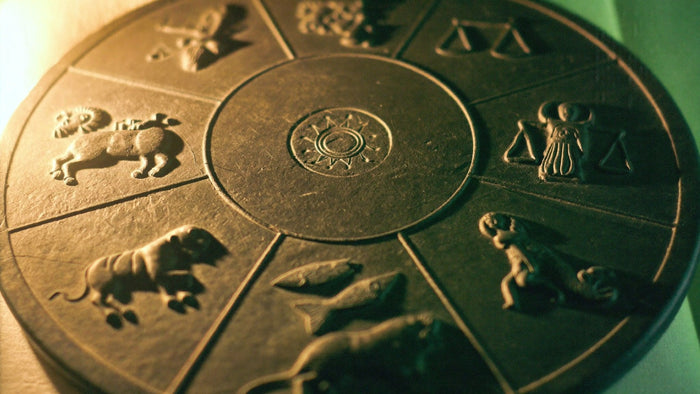
Two sevens, one above and one below. To a way of thinking that treated correspondence as a basic law of the world, linking them was not an invention but a discovery. The assignment is attested in Greek alchemical texts of late antiquity, and by the Latin Middle Ages it is so taken for granted that scribes use the same sign for the planet and for the metal. Open a manuscript, find the sign for Saturn, and you have to work out from context whether the writer means the planet or the lead.
The seven assignments
| Planet | Metal | The logic behind it | Day |
|---|---|---|---|
| Sun | Gold | does not tarnish, keeps its shine — the imperishable | Sunday |
| Moon | Silver | white shine, darkens and brightens again — like lunar phases | Monday |
| Mars | Iron | weapons and tools, rust-red like the planet | Tuesday |
| Mercury | Quicksilver | liquid, volatile, impossible to hold — the fastest planet | Wednesday |
| Jupiter | Tin | bright, soft, ringing; the large benign planet | Thursday |
| Venus | Copper | warm red tone, mirrors of copper; Cyprus gave the metal its name | Friday |
| Saturn | Lead | heavy, dull, sluggish — the slowest visible planet | Saturday |
What stands out is that none of this is arbitrary. The assignments follow a double observation: how the planet behaves in the sky, and how the metal behaves in the hand. Saturn is the slowest naked-eye planet; lead is the heaviest and most sluggish of the seven. Mercury is the fastest; quicksilver is the only liquid one. That is not mysticism. It is a classification system doing the best it can with the instruments of its time — which is to say, with the eye.
The orbital periods make the point better than any argument. The Moon takes about 27 days, and gets silver. Mercury about 88 days, and gets the metal that will not sit still. Venus about 225 days, copper. The Sun a year, gold. Mars about 2 years, iron. Jupiter about 12 years, tin. Saturn about 29 years — and gets the heaviest thing on the bench. Line the two lists up and the ranking is the same ranking.
 |
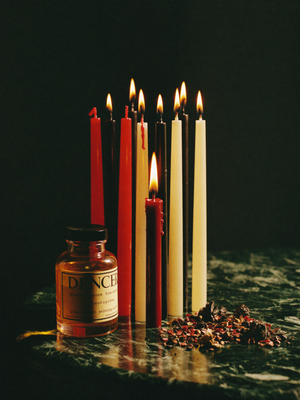
What we hold for this Mars Oil Candle — Refillable, $25.95. Working with planetary days mostly means one thing: fixing a start and fixing an end. Mars is the easiest of the seven to begin with, because its metal is the one you can actually handle — iron is on your railings, your pans and your keys, and it is the only one of the classical seven you could pick up today without a safety warning. A refillable oil candle gives Tuesday a defined twenty minutes instead of a vague intention. One honest note: this is a candle, not a metal. Nothing in it is iron, and nothing about lighting it makes Tuesday behave differently. |
Why the week has seven days
The planetary week is the longest-lived descendant of this system, and English speakers carry an unusually legible version of it.
The Romance languages say it outright: lunedì is Moon-day, martedì Mars-day, venerdì Venus-day. English overwrote the middle of the week with Germanic gods of matching function rather than deleting it. Tuesday is Tiw's day, the Germanic Mars. Wednesday is Woden's day, standing in for Mercury — which is why French still says mercredi and English does not. Thursday is Thor's day, the thunder god who took Jupiter's place. Friday is Frigg's day, for Venus.
And then there is Saturday, which never got overwritten at all. It is simply Saturn's day, the one weekday in English that still names a Roman planet to your face. German lost that one and kept the others differently — Samstag came in by way of the Sabbath. Sunday and Monday need no explanation in either language.
So anyone working with planetary days is not using a modern invention. They are reading the calendar the way it was built. If you want the day-by-day version with something to actually burn, the companion piece on planetary incense by weekday covers the timing side in practice; this article is the metals.
From lead to gold — what that actually meant
The seven metals were never a flat list. They were a ranking: at the bottom lead, which tarnishes, is soft and alloys with anything; at the top gold, which stays what it is. The other five sat in between, in orders that varied by source.
The famous transformation of lead into gold means two things at once inside that ranking — an attempt in the flask, and an image of a maturation path with transformation at the end. Whether a given alchemist was pursuing one, the other, or both was often less clearly separated in his own mind than we would like it to be today. What the work looked like from the inside is the subject of the piece on the gold-makers, where the stakes were considerably higher than a metaphor; the interpretive tradition is covered in spiritual alchemy.
Two of them are poison
Here the poetry stops. Two of the seven classical metals are seriously hazardous, and both were handled casually for centuries.
- Lead accumulates in the body and damages the nervous system, blood formation and kidneys. Children are at markedly higher risk, and there is no known safe blood lead level in children. Old lead-glazed dishes, leaded solder and historic paint pigments do not belong in household use. In the US, lead paint in housing built before 1978 remains the most common domestic exposure route.
- Mercury evaporates at room temperature, and the vapor is the actual problem — it is odorless and it is inhaled. A broken antique thermometer is a case for ventilation and care, not curiosity; it should never be vacuumed, which disperses it. The EPA publishes cleanup guidance for exactly this situation.
None of this means you cannot work with Saturn or Mercury. It means you work with the timing and the sign, not with the substance. That distinction matters more than it sounds: the historical practice of handling these metals directly is precisely the part that does not survive contact with what we now know.
What we don't promise
- That wearing a metal on its day influences outside events. There is no evidence for it.
- That metal applications or metal-containing preparations do anything for health.
- That there is only one correct order of the seven. The sources rank them differently.
- That lead and mercury are harmless if you are careful. They are not.
What remains is a classification system that grew out of observation, survived two thousand years, and is still in your calendar every Monday.
Practically: how to work with this
- Start with the weekday. You do not need any metal to use the system. The day is the metal — put the Mars-shaped task on a Tuesday and notice what that does to how you approach it.
- Work with what you already own. A copper wire, a pewter cup from a flea market, a silver ring from family. The point is assignment, not purity.
- Hands off lead and mercury. Both are toxic. If you want Saturn or Mercury in the scheme, use the sign, the day or a color — never the substance.
- Learn the seven signs. Half an hour of work. Afterwards you read old engravings and manuscripts differently, and you start noticing how often they turn up in modern design.
- Connect it to what you already do. If you work with candle colors, you own half the system already; the correspondences overlap heavily.
- Set an end. Twenty minutes with a fixed beginning is worth more than a whole evening of good intentions.
- One week, seven metals. Each morning, note which planet carries the day. Each evening, find one single place you saw its metal — copper on a pipe, iron on a railing, tin on a lid. Nothing more. After seven days you will not have memorized the assignment, you will have found it, and that holds differently.
Frequently asked questions
What are the seven planetary metals?
Gold for the Sun, silver for the Moon, quicksilver for Mercury, copper for Venus, iron for Mars, tin for Jupiter and lead for Saturn.
Why exactly seven?
Because two sets of seven met. Exactly seven moving bodies were visible to the naked eye, and until the Middle Ages exactly seven metals were known in pure form.
Why does lead belong to Saturn?
Because both behave the same way. Saturn is the slowest naked-eye planet, taking roughly 29 years for one orbit. Lead is the heaviest and most sluggish of the seven — dull, soft, slow.
What do the weekdays have to do with it?
The seven-day week assigns each day one of the seven planets. In English several days were overwritten with Germanic god names — Tuesday for Mars, Wednesday for Mercury, Thursday for Jupiter, Friday for Venus — while Saturday still openly names Saturn.
Are planetary metals dangerous?
Two of them, yes. Lead accumulates in the body and damages the nervous system, blood formation and kidneys. Mercury evaporates at room temperature and the odorless vapor is inhaled. Work with both through sign and timing, never through the substance.
Is the assignment a modern idea?
No. It is already attested in Greek alchemical texts of late antiquity, and by the Latin Middle Ages it is fixed enough that the same sign serves for planet and metal.
Sources & further reading
- History-of-metallurgy literature on the seven metals of antiquity and how they were won and worked.
- Greek alchemical texts of late antiquity and medieval sign tables for planets and metals.
- Historical-linguistic accounts of the planetary week and its Germanic overwriting in the English weekday names.
- Standard toxicology on lead and mercury; US CDC guidance on childhood lead exposure and EPA guidance on mercury spill cleanup.
- Orbital periods from standard astronomical reference data.
- Further reading here: planetary incense by weekday · spiritual alchemy · the gold-makers.
This piece places a historical correspondence system in context. It contains no claim of efficacy and no health claim. Lead and mercury are toxic and do not belong in household use. Questions about an order: 28@templeofdesire.com.
More from Astrology & Zodiac
All stories →
NOAA Issues G1 Geomagnetic Storm Watch for October 2: Auroras Possible Across the Northern U.S.

Jupiter Retrograde 2026 and 2027: Dates, Degrees and the Shadow Period