


Collection: Ritual Oils & Sprays
Anointing oils, condition oils, crystal-infused body oils and smokeless sprays — each blended around one purpose: protection, love, luck, money, road opening.
In short: A ritual oil is a scented oil blended around a single intention, used to anoint candles, objects or skin; the ritual frames your focus, nothing more is claimed.
-
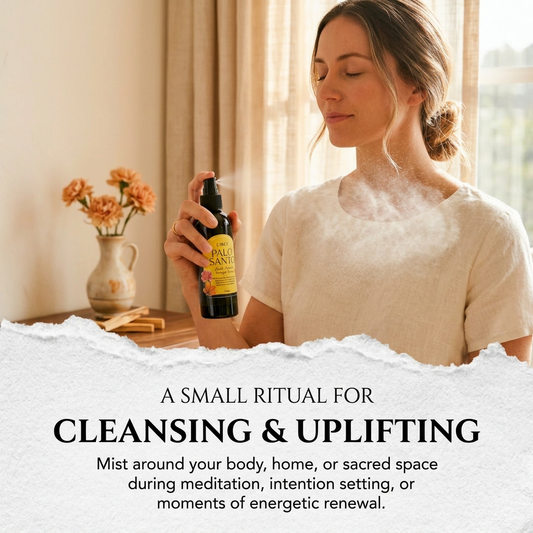
Palo Santo Cleansing Spray — Grounding Smokeless Clearing Mist
Regular price $18.95Regular priceUnit price / perSale price $18.95 -
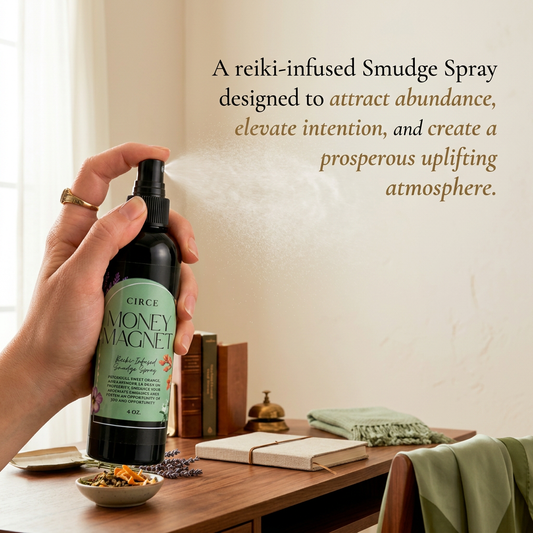
Prosperity Smudge Spray — Money-Drawing Ritual Mist for Abundance
Regular price $18.95Regular priceUnit price / perSale price $18.95 -
Love Potion Ritual Body Oil — Garnet-Infused Attraction & Self-Love Oil
Regular price From $15.95Regular priceUnit price / perSale price From $15.95 -
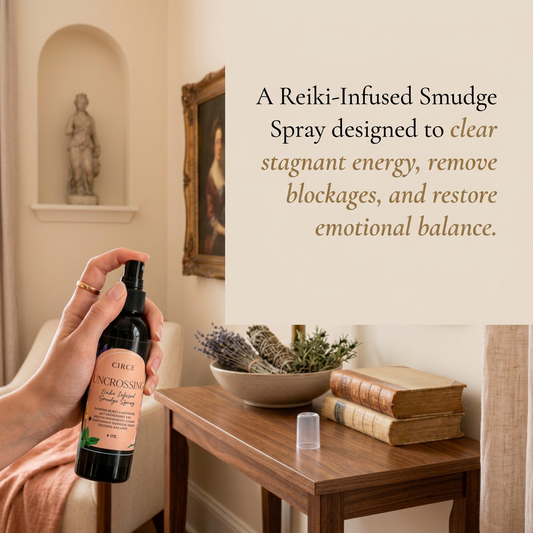
Uncrossing Smudge Spray — Smokeless Energy Clearing Mist (4 oz)
Regular price $18.95Regular priceUnit price / perSale price $18.95 -
Protection Spray — Aura & Space Cleansing Mist
Regular price $23.95Regular priceUnit price / perSale price $23.95 -
Shakti Ritual Oil — Devotional Anointing Oil
Regular price $13.95Regular priceUnit price / perSale price $13.95 -
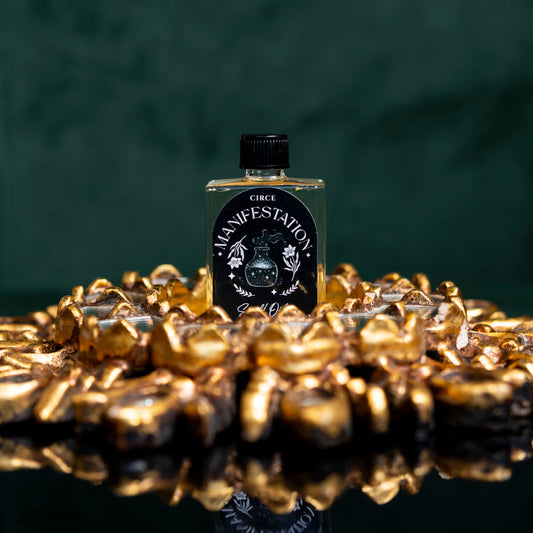
Manifest That Sh*t Ritual Oil — Abundance & Intention Setting
Regular price $13.95Regular priceUnit price / perSale price $13.95 -
Palo Santo Smudge Spray — Smokeless Cleansing & Calm
Regular price $23.95Regular priceUnit price / perSale price $23.95
How to work with Ritual Oils & Sprays

How to Write Your Own Ritual: A Step-by-Step Framework
Seven parts, in order: intention, mode, materials, words, timing, closing, disposal. A working framework for writing a ritual yourself, with a filled-in example - and an honest account...

Spiritual Bath for Cleansing and Protection: How to Actually Do One
A spiritual bath you can run tonight: the herbs, the salt, the direction, the words, a shower version for anyone without a tub, and the three ingredients on...

Which Salt to Use in Witchcraft: Black, Sea, Kosher and the Rest
Black salt, sea salt, kosher, Himalayan, Epsom — what each one actually is, which traditions are genuinely old, and where salt does real damage to soil, floors and...
Browse by type
- Ritual Oils — Anointing and condition oils for dressing candles and ritual work
- Ritual Sprays — Smokeless smudge and cleansing mists for rooms where you cannot light anything
- Essential Oils — Single-note certified organic oils in 10 mL bottles, for diffusing and blending
- Body & Anointing Oils — Crystal-infused oils for the skin that double as anointing oils
The full guide to ritual oils & sprays
Anointing is older than almost any other ritual gesture: oils marked kings and priests in the ancient Near East, chrism still consecrates in churches today, and American folk traditions — hoodoo and rootwork above all — built an entire vocabulary of "condition oils," each blended for one condition of life: Road Opener for blocked paths, Fiery Wall for protection, Come To Me for love, Money Drawing for the obvious. A ritual oil concentrates an intention into scent and gesture. You dress a candle with it, touch it to a doorway, or wear it on your skin, and the act itself does what ritual does best: it makes a decision physical. Any effect beyond scent, atmosphere, and your own focus is not scientifically established.
Oils, body oils, and mists — what each one is
Ritual and condition oils are small bottles of concentrated intention — protection, luck, justice, success, uncrossing — used on candles and objects rather than poured out. Classic hoodoo-lineage formulas like Road Opener, Fast Luck, and Return to Sender sit alongside broader blends for healing, happiness, and manifestation. Gemstone body oils are made for skin: carrier-oil blends with botanicals and a crystal in the bottle — rose quartz for self-love, black obsidian for grounding, citrine for abundance — worn like a perfume oil with a purpose. Sprays and mists do what smoke does without the smoke: sage, palo santo, and resin blends in water you can mist through an apartment, a car, an office, or over yourself when burning anything is not an option.
How to use them: dressing, anointing, misting
The best-known use is dressing a candle: a few drops rubbed along the wax while you hold your intention. The traditional rule of direction — rub toward yourself to draw something in (love, money, luck), away from yourself to send something off (banishing, uncrossing) — is a simple way to keep your attention on what you are actually asking for. Anointing extends the same gesture to other things: a doorframe for protection, a wallet for prosperity, your own pulse points before something that matters. Misting is the fastest ritual in this collection — spray the corners of a room after an argument, before meditation, or between clients, and let scent mark the reset.
Skin, safety, and what oils cannot do
Read the label before skin contact: body oils are formulated for it, while concentrated ritual oils are made for candles and objects — patch-test anything new on your inner arm and keep every oil away from eyes and lips. Never leave a dressed candle unattended; oil-dressed candles can burn livelier than plain ones. None of these blends are medicine: they do not treat illness, change other people's will, or guarantee outcomes — an oil is a tool for your own focus, and an honest maker says so.
Who this collection is for
If you are new to oil work, start with one condition oil that names your situation — the Road Opener ritual oil is the classic first bottle for anyone who feels stuck. Candle workers will want two or three staples for dressing (protection, love, money). And if your home, roommates, or lungs rule out smoke, the sprays carry the whole cleansing practice — the Palo Santo smudge spray is the gentlest way in.
From the Desire Diaries
- How to Cleanse a Room: Smoke, Spray, and the Order That WorksWhen to burn and when to mist
- Fiery Wall of Protection: Where the Formula Comes FromThe history behind the name
- Uncrossing, Banishing, or Protection: Which Comes FirstWhy the order matters
- How to Use a Devotional Oil from a Tradition You Were Not Raised InRespectful practice, honestly discussed
Read more on practical magic and rituals in the magazine
Frequently asked questions
What is anointing oil used for?
Anointing oil is used to mark something with intention: practitioners dress candles with it before burning, touch it to doorways, tools, or talismans, and — if the blend is skin-safe — wear it on pulse points. The oil pairs a scent with a stated purpose, so the act of applying it becomes a small ritual of focus.
How do you dress a candle with oil?
Put a few drops on your fingers and rub them along the candle while holding your intention. The traditional direction rule: stroke toward yourself to draw something in (love, money, luck) and away from yourself to send something away (banishing, uncrossing). Use a light hand — an oil-soaked candle burns unevenly — and never leave it unattended.
Can I put ritual oil directly on my skin?
Only if it is made for skin. Gemstone body oils in this collection are formulated for direct wear; concentrated ritual and condition oils are intended for candles and objects. Patch-test anything new on your inner arm, keep all oils away from eyes and mucous membranes, and stop using any blend that irritates.
What is Road Opener oil?
Road Opener — from the Spanish Abre Camino, "open the way" — is a traditional hoodoo-lineage formula used when things feel blocked: work, love, housing, plans that will not move. It is typically used to dress a candle or anoint a doorway while naming the specific path you want cleared.
What is the difference between a ritual oil and a ritual spray?
An oil is concentrated and applied by touch to candles, objects, or skin; a spray is diluted in water and covers space. Oils suit slow, focused work at the altar, while sprays cleanse a whole room in seconds — the smokeless alternative for apartments, offices, and anyone sensitive to smoke.
Does a smudge spray really replace burning sage?
For the practical side, yes: a sage or palo santo spray resets the scent of a room instantly, with no smoke, no fire risk, and no alarm going off. Practitioners disagree on whether it carries the same ritual weight as smoke — many use spray for daily upkeep and save burning for occasions that call for the full ritual.