Collection: Ceremonial Cacao
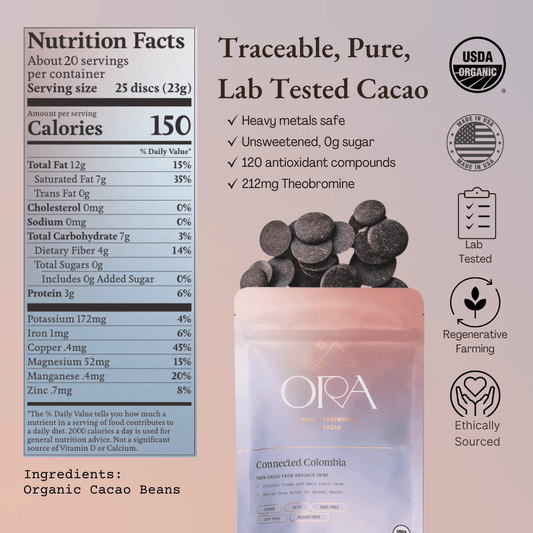
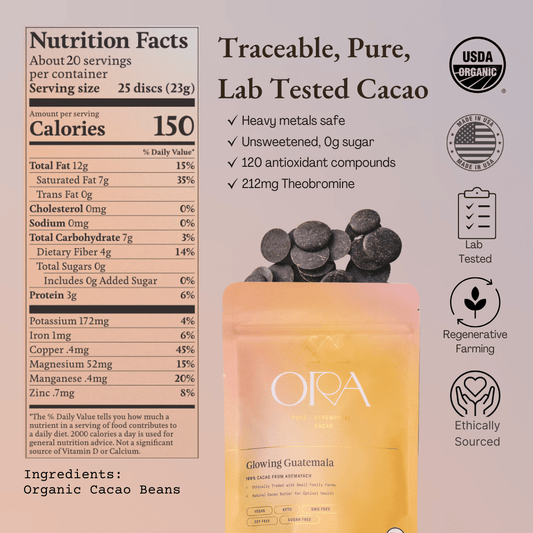
Stone-ground ceremonial cacao from single farms in Guatemala, Colombia, Belize and Oaxaca — 100% cacao paste, blocks, discs, nibs and adaptogen elixirs. No sugar, no milk, nothing to mask the bean. Prepared as a warm drink, not eaten as candy.
-
Cacao Elixir Set of Five — The Complete 8.4 oz Collection
Regular price $249.95Regular priceUnit price / perSale price $249.95 -
Oaxacan Cacao Paste — 1 lb Ceremonial Criollo Block
Regular price $102.95Regular priceUnit price / perSale price $102.95 -
Dominican Republic Cacao Paste — 1 lb Ceremonial Block
Regular price $91.95Regular priceUnit price / perSale price $91.95 -
Ceremonial Cacao Bar — Stone-Ground Three-Ingredient 2 oz Bar
Regular price $18.95Regular priceUnit price / perSale price $18.95Sold out
Ceremonial cacao: what it is and how to choose it
Cacao was a ceremonial drink in Mesoamerica for well over a thousand years before anyone thought to add sugar and press it into a bar. The Maya and Mexica brewed it bitter, frothed it by pouring it between vessels, and used it at births, marriages and offerings. What is sold today as ceremonial cacao tries to return to that form: the whole bean, stone-ground, drunk warm and unhurried. The value is in taste, warmth and the pause you take with the cup — anything beyond that belongs to tradition and personal experience, not to established science.
How it is made
Pods are opened, the wet beans ferment in wooden boxes for five to seven days, then dry in the sun. Fermentation is where most of the flavour is decided; under-fermented beans taste flat and astringent no matter how carefully they are roasted afterwards. The dried beans are lightly toasted, winnowed to remove the husk, and stone-ground for hours until the fat liquefies and the mass turns smooth. Poured into blocks or discs and cooled, that is ceremonial cacao paste. Nothing is added and nothing is taken away, which is why a good block lists one ingredient.
What to look for
Three things separate a serious block from a commodity one. Origin: a named region — Sierra Nevada de Santa Marta, Oaxaca, the Toledo district of Belize — means the maker knows the farms. Variety and ferment: Criollo and fine-flavour Trinitario carry more aroma than bulk Forastero, and a stated fermentation time signals care. Grind: hold a piece against the roof of your mouth; it should melt smooth, not sandy. Colour is a poor guide, since dark colour usually means heavy roasting rather than quality. Price per serving is the honest comparison, not price per package: a 1 lb block is roughly 15 to 18 cups.
Choosing your format
Blocks and paste are the workhorse — cheapest per cup, longest keeping, fully under your control. Elixir powders blend cacao with mushrooms or adaptogens and dissolve quickly, which makes them the practical weekday option. Discs and bars suit travel and gifting. Nibs are roasted, cracked bean for eating and baking; they will not brew into a proper drink. Cacao butter is the pure fat, used to enrich a cup or to make your own blends.
Frequently asked questions
What makes cacao “ceremonial grade”?
There is no legal standard behind the term, so read it as a description of processing rather than a certification. What people mean by it is whole cacao — bean, fat and all — stone-ground into a paste with nothing added: no sugar, no milk powder, no cocoa butter removed or added back. Good ceremonial cacao is single-origin, lightly fermented and gently toasted, and it lists exactly one ingredient.
How is ceremonial cacao different from cocoa powder or a chocolate bar?
Cocoa powder is what remains after the cacao butter has been pressed out, which is why it is dry and bitter. A chocolate bar is cacao with sugar, milk and extra butter added. Ceremonial cacao is the whole bean kept intact, so roughly half of it is naturally cacao fat — that is what makes the drink thick, glossy and filling rather than thin and sweet.
How do you prepare it?
Chop or grate 25–40 g of paste per cup, add about 200 ml of hot water at roughly 160–170 °F — below a simmer, since boiling scorches it — and whisk or froth until it emulsifies and turns glossy. Cinnamon, cayenne, cardamom, a pinch of salt or a little maple syrup all work. Then sit down with the cup instead of drinking it at your desk.
Does it contain caffeine?
A small amount. The dominant compound in cacao is theobromine, a gentler and longer-acting relative of caffeine, which is why most people describe the effect as warm and steady rather than sharp. Start with a half serving if you are sensitive to stimulants, and speak to your doctor if you are pregnant, nursing or on medication. Cacao is a food, not a medicine, and nothing here is sold to treat any condition.
Paste, disc, powder or elixir — which should I buy?
Blocks and paste give you the most control and the best price per serving, and they keep for a year or more in a cool cupboard. Elixir powders are pre-blended with adaptogens and dissolve faster, which suits a weekday morning. Nibs are for eating and baking, not brewing. If you are starting out, a 1 lb block plus a frother covers everything.
How should I store it?
Cool, dark and dry, wrapped tightly — cacao fat picks up other smells easily, so keep it away from spices and coffee. It does not need refrigeration and generally keeps 12 to 24 months. A pale bloom on the surface is cacao butter migrating in warmth; it affects appearance only, not taste or usability.