Collection: Altar & Home
The furniture of a working space: incense, oil and wax burners, altar bells, deity candles, carved stone bowls, pocket brass figures and moon-phase and evil-eye tapestries. From $3.95.
In short: One light, one vessel, one anchor object and one way to clear the air is a complete altar — everything after that is accumulation, not a starter kit.
-
Jalini Hamsa Moon Phase Incense Holder — Hand-Painted Ceramic
Regular price $20.99Regular priceUnit price / perSale price $20.99 -
Dream Big by Emily Starck — Framed Canvas Art Print
Regular price From $1,238.95Regular priceUnit price / perSale price From $1,238.95Sold out -
Butterfly and Flower Print — Vintage Art in Beaded Pewter Frame
Regular price $137.95Regular priceUnit price / perSale price $137.95 -
Blue Angelite Catchall — Hand-Carved Gemstone Jewelry Dish
Regular price $68.95Regular priceUnit price / perSale price $68.95 -
Kira Small Glass Cups — Set of 4 for Tea Ceremony
Regular price $86.95Regular priceUnit price / perSale price $86.95 -
White Marble Platter — Gray-Veined Serving Board
Regular price $138.95Regular priceUnit price / perSale price $138.95 -
Epa Stoneware Coffee Cups — Set of 4, Matte Handmade Stoneware
Regular price $126.99Regular priceUnit price / perSale price $126.99 -
Moon Phase Incense Holder — Hand-Carved White Marble with Brass
Regular price $42.95Regular priceUnit price / perSale price $42.95Sold out -
Warding Salt — Threshold Protection Blend with Black Salt & Rosemary (8 oz)
Regular price $18.99Regular priceUnit price / perSale price $18.99 -
Eve Incense Holder — Handmade Stoneware Dish for Incense
Regular price From $34.95Regular priceUnit price / perSale price From $34.95 -
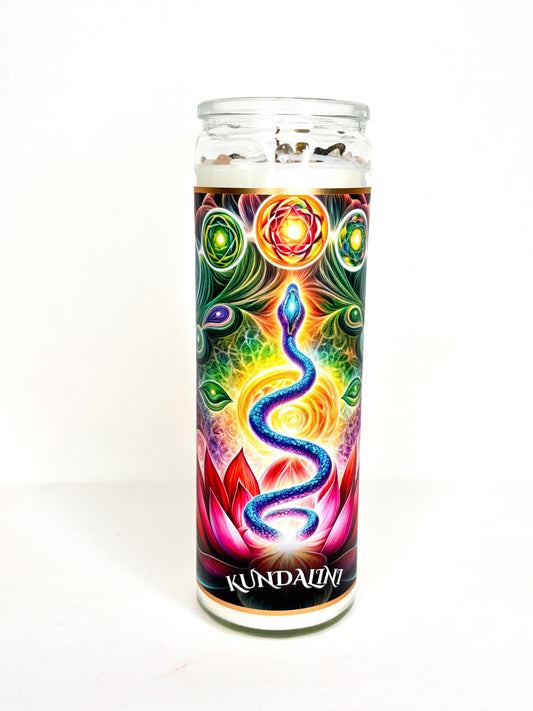
Kundalini Shakti Crystal Altar Candle — Awakening & Vitality, 168-Hour Burn
Regular price $34.95Regular priceUnit price / perSale price $34.95 -
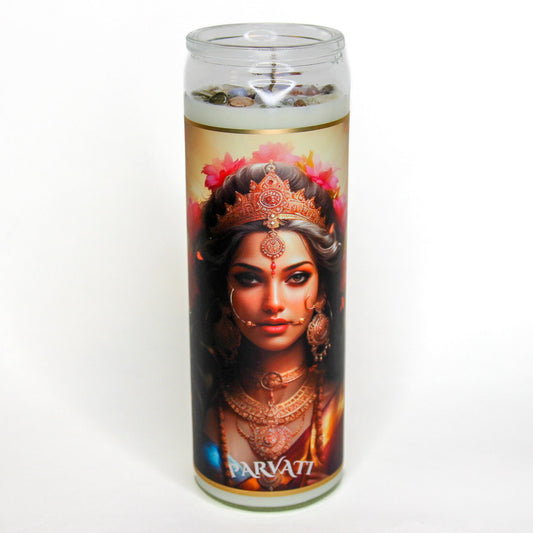
Parvati Crystal Altar Candle — Love & Devotion, 168-Hour Burn
Regular price $34.95Regular priceUnit price / perSale price $34.95
The full guide to altar and home pieces
An altar is a surface with a job. Every settled culture has kept one in some form — a shelf of household gods in a Roman atrium, a butsudan in a Japanese living room, a kamidana, a corner icon, a table of photographs for the dead — and the objects on them are strikingly consistent across traditions that never met: a light, a vessel, a figure, something that makes smoke or sound. What that does is not mysterious. A fixed surface, returned to at a fixed time, is a cue; the objects hold the cue in place. This collection is the furniture of that idea rather than any single tradition's kit, and none of it is a substitute for medical, psychological or financial advice.
What actually belongs on an altar
Almost every tradition that keeps a household shrine converges on the same four functions, whether or not it names them as elements. Something that burns — a candle, a stick of incense, a tealight under a carved soapstone oil burner. Something that holds — a bowl of water, a dish for offerings, a place to put the things you take out of your pockets. Something that anchors — a stone, a photograph, a small brass figure of Ganesha or Tara. And something that clears — smoke, a mist, or the ring of a bell. That is the whole grammar. The most common mistake is buying the objects first and finding the practice afterwards; the reliable order is the reverse. Set the surface, use it for a month, and let the gaps tell you what is missing. An altar that gets touched daily with three objects on it does more than a beautifully dressed one you walk past.
Burners: match the vessel to what you actually burn
This is where most first purchases go wrong, because the four things people call incense need four different vessels. Sticks need a long ash catcher — the ten-inch flower-of-life wooden burner is exactly that, and the length is not decorative; it is what stops ash landing on the shelf. Resins — frankincense, myrrh, copal — need a heatproof bowl with a sand layer and a charcoal disc, and they get genuinely hot; do not use a wooden or thin ceramic dish for them, and do not use the stone bowls on this page either. Essential oils need a two-part burner with a water dish above a tealight, like the soapstone one here, and the dish must never be run dry. Wax melts go in a hanging cauldron burner — the hanging design keeps the flame away from the surface underneath, which is the point of it. In every case: a heatproof base, nothing flammable within a hand's width, and no burner left alone in a room. Tapestries and curtains are the usual culprit in altar fires, so keep fabric and flame on opposite sides of the shelf.
Stone bowls, and why none of them should hold water
Three of the vessels here are cut from natural stone, and each has a real limit that is easy to miss because they all look like dishes. The six-inch selenite bowl is gypsum at about 2 on the Mohs scale — it is soft enough to mark with a fingernail and it will dissolve if it gets wet, so it takes dry items only: rings, tumbled stones, a pendulum. The eight-inch green onyx bowl and the Moroccan orthoceras fossil bowl are both calcite-based and will etch dull wherever anything acidic touches them — vinegar, citrus, wine, even some cleaning sprays. Treat all three as catchalls and offering dishes rather than as tableware, wipe them with a dry or barely damp cloth, and put the water bowl your practice needs in ordinary glass or ceramic.
Candles, figures and the two large quartz pieces
The five crystal altar candles — Ganesha, Lakshmi, Saraswati, Radha and Buddha — are 16 oz unscented pours with stones set into the wax, and they are the simplest way to give a surface both its light and its figure at once. You do not have to have been raised in a tradition to light one, but it is worth knowing whose image you are keeping: Ganesha is invoked at beginnings and obstacles, Lakshmi with prosperity and household wellbeing, Saraswati with study, music and speech, Radha with devotion, and the Buddha figure is a reminder of practice rather than a deity to petition. Burn them the way you would any candle: trim the wick, level the first burn, never leave one unattended. The brass figures run the opposite way — an inch tall, made to be carried rather than displayed, and useful precisely because they turn up in a coat pocket when you had forgotten them. At the other extreme sit two pieces that are furniture in their own right: a 25-inch Brazilian quartz cluster with an XL point and a polished 17.5-inch clear quartz obelisk at 5.35 kg. Both need a surface that can take the weight and a spot out of direct afternoon sun.
Bells, wall pieces and the two antiques
A bell is the oldest attention device there is. Roman Catholic servers ring one at the elevation; Tibetan practice pairs a bell with a vajra; folk practice across Europe rings one at a threshold to mark a change. What they share is function rather than metaphysics — a clear tone ends one state and begins another, which is why it works equally well as a start-of-practice signal and as a full stop. These stand about twelve inches with a crystal charm on the handle in one of five stones, so the charm can be chosen to match what the surface is for. On the wall, the moon-phase tapestries come in six styles and sizes — measure before ordering, because the largest covers most of a bedroom wall — and the evil eye piece carries a symbol with more than five thousand years behind it, usually hung facing the door it is meant to watch. The moon phase suncatcher is the cheapest way to get moving light into a room, and it wants an east or south window to do anything at all. Finally, two pieces that are not altar supplies in any sense: a four-panel Chinese screen with dragons carved and gilded on both faces and an embossed Tibetan board in hand-painted pine. Both are genuine antiques rather than reproductions, sold as single items with the wear that implies — age lines, small losses, and on the Tibetan board a previous owner's alteration at the back where it was used as a headboard. Neither is a repeatable stock item, and the individual product pages describe the specific condition of each.
Which piece for which job
| Piece | Function | Notes before you buy |
|---|---|---|
| Flower of Life Incense Burner | Burns — sticks | Ten-inch ash catcher, five colors; the cheapest useful thing here |
| Carved Soapstone Oil Burner | Burns — oils | Tealight below, water dish above; never run the dish dry |
| Hanging Cauldron Wax Burner | Burns — wax melts | Hanging design keeps the flame off the surface below |
| Ganesha Crystal Altar Candle | Burns + anchors | 16 oz unscented; beginnings and obstacles |
| Lakshmi Crystal Altar Candle | Burns + anchors | 16 oz unscented; prosperity and the household |
| Saraswati Crystal Altar Candle | Burns + anchors | 16 oz unscented; study, music and speech |
| Radha Crystal Altar Candle | Burns + anchors | 16 oz unscented; devotional practice |
| Buddha Crystal Altar Candle | Burns + anchors | 16 oz unscented; a reminder of practice, not a petition |
| Selenite Bowl, 6 in | Holds — dry only | Mohs 2; dissolves in water. Rings, tumbles, a pendulum |
| Green Onyx Bowl, 8 in | Holds — dry only | Calcite-based; etches on contact with anything acidic |
| Orthoceras Fossil Bowl | Holds + anchors | Moroccan limestone with fossil cephalopods; acid-sensitive |
| Pocket Mini Brass Statues | Anchors — portable | One inch tall; made to be carried, not displayed |
| Crystal Skulls | Anchors | Carved memento mori; several stones, one per order |
| Crystal Snakes | Anchors | Carved serpents; shedding and transformation imagery |
| Crystal Cauldrons | Anchors + holds | Small carved cauldron; a stone bowl in miniature |
| Crystal Charm Altar Bell | Clears — sound | About twelve inches; choose the charm stone to suit the surface |
| Moon Phase Suncatcher | Light in the room | Needs an east or south window to throw anything |
| Moon Phase Tapestries | Defines the space | Six styles and sizes; measure the wall first, keep away from flame |
| Evil Eye Tapestry | Defines the space | Traditionally hung facing the entrance it watches |
| Clear Quartz Obelisk, 17.5 in | Centerpiece | 5.35 kg; needs a surface that takes the weight |
| Quartz Cluster with XL Point | Centerpiece | 25 in Brazilian specimen; a floor or console piece |
| Antique Chinese Dragon Screen | Architecture | Genuine antique, four panels, single item, carved both sides |
| Antique Tibetan Dragon Panel | Architecture | Genuine antique in hand-painted pine; previous headboard alteration |
The other half of this collection: what the practice sits on
Everything above is the ritual core — the burners, the bowls, the bell, the figures. It is roughly a quarter of what is actually filed here. The other three quarters are the furniture the practice sits on: holders, trays, vessels, lamps and wall pieces, most of them made by hand and most of them bought for a room rather than for a rite. They are listed here because an altar is a surface, and a surface needs objects that behave. This part of the page is written in plain price order so you can see where the line between a shelf and a room actually falls.
Holders for what you burn
Nine incense holders, none of them a stick burner in the ten-inch sense — these are ash catchers and cone dishes, and most are cut or painted by hand. The cheapest three are ceramic and wood: the Jalini hamsa moon-phase holder and the Jyotisha celestial holder in mango wood with brass inlay at $20.99 each, and the Lalita evil eye holder in Jaipur blue pottery at $27.99. In stone: the reclaimed marble holder at $23.95 in an oval and a square, and the Indukala moon holder in white marble with brass inlay at $38.95. Above that the pieces become objects in their own right — the $48.95 Motifs nine-inch painted ash tray, the $68.95 Smile holder carved from black onyx and its cream onyx sphere counterpart (both currently out of stock), and the $80.95 Anka brass tray with a marble sphere. For resin rather than sticks, the $48.95 ceramic smudge bowl is the one vessel on this page rated for charcoal discs — the stone bowls higher up are not. And the $39.95 air-dry clay kit is the outlier: you make the holder yourself, which is the cheapest way to get one that fits your shelf exactly.
The white marble Moon Phase Incense Holder at $42.95 is listed but sold out at the moment; the Indukala version above is the same idea in stock.
Holders for what you light
Nine taper holders and a snuffer, and the spread is wide because the material does the pricing. Glass and leather at the bottom: the leather-wrapped Moroccan ceramic holder from $22.95, the Whirl matte ceramic pair at $51.95 for two, and the colored glass pair — Gigi in amber and Siri in pink, both from $45.95. Stone in the middle: the $64.95 single-block marble holder, then sandstone in two heights, Pilar Small at $80.95 and Pilar Tear at $115.95. At the top the $92.95 Kira borosilicate lanterns, a pair with an enclosed flame, which is the sensible choice if the shelf has fabric anywhere near it, and the $103.95 Centro terrazzo holder. The $80.95 Anka snuffer in brass and white marble is the one accessory here that is genuinely functional rather than decorative: blowing a candle out scatters wax and smoke, snuffing it does neither.
Light without a flame, and scent without smoke
Five crystal lamps, none of which is consumed: the $49.95 Stress Shield with seven stones, the $59.95 two-tower selenite lamp and My Aura selenite and hamsa lamp, the $69.95 clear quartz tower lamp, and the Cleanse-All selenite lamp from $69.95 to $119.95 for the two-pound size. In the same spirit the $29.95 all-seeing-eye pyramid in labradorite and obsidian and the $9.95 selenite charging plate, which is the cheapest object on the page that has a job every week rather than every day.
If you want the room to smell of something without lighting it, there are three: the $30.00 200 mL ultrasonic diffuser, which runs on water and essential oil, and two $10.00 reed diffusers, Desert Rose and The Wind of Summer, each rated at about 120 days. Reeds are the right answer in a rented flat, a room with a smoke detector, or anywhere a flame is a bad idea. The $20.95 Warding Salt is the one consumable here that is neither burnt nor diffused — a threshold blend of black salt, rosemary and activated charcoal, laid at a doorway rather than put in a dish.
Trays, vessels and boxes: where the practice is put away
A tray is the most underrated altar object there is, because it turns a practice into something you can carry to another room and close down in seconds. The stone ones are the Tauro black marble tray at $173.95 and the Less is More travertine tray at $231.95; in wood, the hand-carved granadillo leaf trays run $126.95 to $243.95 by size. For serving rather than holding, the $138.95 gray-veined marble platter and the $169.95 hand-cast Kansa bronze platter. Drinking vessels for a ceremony you actually sit down for: the Kira glass cups, four for $86.95, and the matte Epa stoneware cups, four for $126.99.
For the things that come off before you begin: the $150.95 round jewel box in carved wood with black onyx and the $161.95 oval version with green serpentine — both lidded, which the selenite and onyx bowls above are not. The $220.95 handwoven two-tone basket is the largest storage piece here. Three vessels are sculpture first and container second: the $103.95 hand-blown fluted glass vase, the $220.95 Ines terracotta vessel, the $231.95 ceramic Her Vase and the $255.95 scalloped Ella terracotta vessel from Honduras. The $220.95 Burr Star puzzle in cream onyx and green serpentine is not a container at all — it is a stone object to take apart and put back together, and the only thing on this page that asks for your hands rather than your attention.
The $68.95 Blue Angelite Catchall, a hand-carved gemstone jewelry dish, is listed but sold out; the selenite bowl higher up is the closest in-stock equivalent for dry items.
The wall, and one chair
Beyond the moon-phase and evil eye tapestries already covered, eight wall pieces and one piece of furniture, and this is where the collection stops being about altars. Framed prints first: the $137.95 butterfly and flower print in a beaded pewter frame and the $184.95 butterfly print in beaded black. In woven fiber, the $150.95 Sun Circle handwoven in Malawi. In carved pine, the $464.95 Andre panel and the $698.95 Planos I in a walnut finish. Then three pieces that are priced as art rather than as decor: the $1,255.95 framed canvas Dream Big by Emily Starck, and two handwoven cotton tapestries, Calendario Azteca at $2,677.95 and Campo de Arroz at $3,027.95, each a single woven piece rather than a print. The $697.95 Malawi cane chair is the only seat in the shop, and it is here for the obvious reason: a practice you sit for needs somewhere to sit.
Honestly named: what is not buyable today
Eighty-one listings on this page are live and seventy-four of them are buyable. The seven you can see but cannot order are the $61.95 green onyx bowl, the $68.95 blue angelite catchall, the $68.95 black onyx Smile incense holder and its $68.95 cream onyx sphere counterpart, the $42.95 white marble moon-phase incense holder, and both antique dragon panels — the $12,609.95 Chinese screen and the $7,705.95 Tibetan board, which are single antiques and will not come back. Two further pieces, a malachite bowl and a mango wood jewelry box, are held back and not shown. Prices across what you can actually buy run from $3.95 to $7,355.95, and the median sits at $59.95 — which is the honest summary of this page: a handful of things under ten dollars, and a long tail of handmade objects that cost what handmade objects cost.
Who this collection is for
If you are building a first altar, the honest answer is that you need very little from this page: a burner that suits what you burn, and one anchor object. A three-dollar stick burner and a twelve-dollar brass figure is a complete, working setup, and it is a better start than a hundred dollars of things you have not yet found a use for. If you already keep a practice and it has outgrown a windowsill, the bell, a deity candle and one of the tapestries are the pieces that turn a shelf into a defined space. If you live with people who do not share the practice, small and portable is the whole strategy — pocket figures, a carved skull or snake, and a tray-sized setup travel between rooms and pack away in seconds. And if you are furnishing rather than practicing, the second half of this page is the part to read — the woven tapestries, the carved pine panels, the cane chair and the quartz pieces are the objects here that change a room on their own. The two antique dragon panels would do it too, but both are sold out and neither is coming back.
From the Desire Diaries
- How to Set Up an Altar in a Shared RoomSmall, private, and real
- How to Set Up an Ancestor AltarWhat the history supports, and what to leave off
- Evil Eye Protection: Symbols and TraditionsWhich are genuinely old, which are modern
- How to Use a Devotional Oil from a Tradition You Were Not Raised InThe etiquette question, before you light a deity candle
- How to Cleanse a Room: Smoke or SprayThe order that actually works
- Planetary Incense by Day of the WeekA scheduling system, not a rule
More on altars, incense and clearing a space in the magazine
Frequently asked questions
What do you actually need to set up an altar at home?
Four functions, not four purchases: something that burns, something that holds, something that anchors, and something that clears the air. A candle or stick of incense, a small dish, one object that means something to you, and a bell or a mist covers all of it. The surface matters less than the return — a windowsill, a tray, or one shelf of a bookcase all work. Add pieces when the practice asks for them rather than in advance.
Which incense burner do I need for sticks, cones, resin or wax melts?
They are four different vessels. Sticks need a long ash catcher, so a ten-inch wooden burner is the standard choice. Cones need a small heatproof dish they can sit in and burn down. Resins such as frankincense and myrrh need a bowl with a sand layer and a charcoal disc, and that setup gets hot enough that wood, thin ceramic and natural stone are all unsafe. Essential oils need a two-part burner with a water dish over a tealight. Wax melts need a burner with an enclosed flame space, which is what a hanging cauldron burner is for.
Can a selenite, malachite or onyx bowl hold water?
No, and this is the most common way these get ruined. Selenite is gypsum at roughly 2 on the Mohs scale and will literally dissolve in water, so it takes dry items only. Malachite is a copper carbonate: fine to handle and display, but it should never hold water, food or drink and should not be scrubbed, since it is wet contact and abraded dust that make copper minerals a concern. Green onyx and the Moroccan orthoceras limestone are both calcite-based and will etch dull wherever anything acidic touches them. Use any of them as catchalls and offering dishes, wipe them dry, and keep a glass or ceramic vessel for water.
Do you have to follow a tradition to use a Ganesha or Buddha candle?
No, but it is worth knowing whose image you are keeping rather than treating it as decor. Ganesha is invoked at beginnings and obstacles, Lakshmi with prosperity and the household, Saraswati with study, music and speech, Radha with devotion; a Buddha figure is a reminder of practice rather than a deity to petition. Keeping the image respectfully — off the floor, not in a bathroom, not used as a coaster — is the part that most traditions would actually care about. Beyond that, light it, sit with it, and read a little about the figure you have chosen.
Where should you hang a moon phase or evil eye tapestry?
Behind or above the altar if you want it to frame the space, or facing the entrance if you are hanging it as a protective symbol, which is the traditional placement for the eye. Measure first: these come in several sizes and the largest covers most of a bedroom wall. They are fabric, so keep them well away from candles and incense, and hang them flat rather than draped near a heat source.
Can you keep an altar in a bedroom or a room you share?
Yes, and it is the most common arrangement. Nothing in the practice requires a dedicated room. A tray that comes out and goes away again, a drawer, or a single shelf all hold a practice perfectly well, and being able to close it is often what keeps it going in a shared apartment. If you burn anything, ventilate the room and keep the burner away from bedding and curtains.
Browse by type
- Candle Holders — Taper and tealight holders in glass, ceramic, marble and leather — $22.95 to $92.95
- Home Fragrance & Diffusers — Reed diffusers, an ultrasonic mist unit and tealight oil and wax burners — scent without smoke
- Exceptional Pieces — Over $500 — Collector specimens, room-scale quartz, tuned bowls and gongs, sculptural silver
- Wall Art & Tapestries — Pin-up fabric hangings from $17.95, framed prints, carved pine panels and one antique Tibetan panel
- Moon & Lunar Magic — Moon phase objects, moonstone, lunar oracle decks and a New Moon seven-day candle
- Calm & Grounding — Pale stones for a mind that will not stop, dark stones for feeling scattered — plus smudge, oils and crystal lamps
- Quartz — One mineral under ten names — clear, rose, smoky, golden healer — from $3.95 pocket stones to singing bowls
- Bowls, Trays & Vases — Stone bowls, marble and wood trays, terracotta and glass vases and ash dishes — from $24.95
- Obsidian — Volcanic glass rather than a crystal — black and snowflake stones, and the only scrying mirror in the shop
- Drums, Gongs & Bells — The struck instruments — Thai and soundscape gongs, frame and ocean drums, steel tongue drums, a handpan and an altar bell
- Gods & Goddesses — Named figures across three traditions — Hindu and Buddhist altar candles at $34.95, Greco-Roman oil candles and ritual sets, brass statues and the Tibetan incense that names seven more
- Sacred Symbols — The evil eye, the hamsa, the pentacle, the triple moon and the flower of life — one sign at a time, across every product form
- Gift Sets & Ritual Kits — Boxed sets and ready-made kits — stone trios, herb-and-oil pairs, four-format smoke boxes and a complete cacao ceremony
- Onyx — One name, two different stones — hard black chalcedony that absorbs the light, and banded cream and green onyx that glows at a thin edge
- Between $100 and $500 — The band where the shop stops selling things that get used up — jewelry, altar objects, stone and instruments that stay
- Animal Totems — Snake, panther, luna moth, skull and phoenix — one creature per piece, $15.95 to $12,609.95
- One of a Kind — Sixty-one pieces whose maker says the one you receive will not be the one photographed — natural stone, handwork and salvaged material, from $4.95
- Desk & Workspace — Forty-nine pieces whose maker names the desk — pocket stones for a drawer, smokeless sprays for a shared office, obelisks and lamps sized for a working surface, from $4.95
- Bedside & Nightstand — Thirty-five pieces our makers put next to a bed — stones to hold, lamps that double as a night light, and lidded dishes for what you take off, from $2.95
- Entryway & Front Door — Twenty-nine pieces our makers put at a threshold — warding salt, protection sprays, a door bell, draft-fed diffusers and a bowl for the keys
- Bathroom & Vanity — Sixteen pieces that survive a wet room — soap, stainless chains and carved stone vanity trays, plus the crystals that must never go there